

Eye Care Resources
Visual Field Testing in North York: What the Test Measures and How to Prepare
July 30, 2025
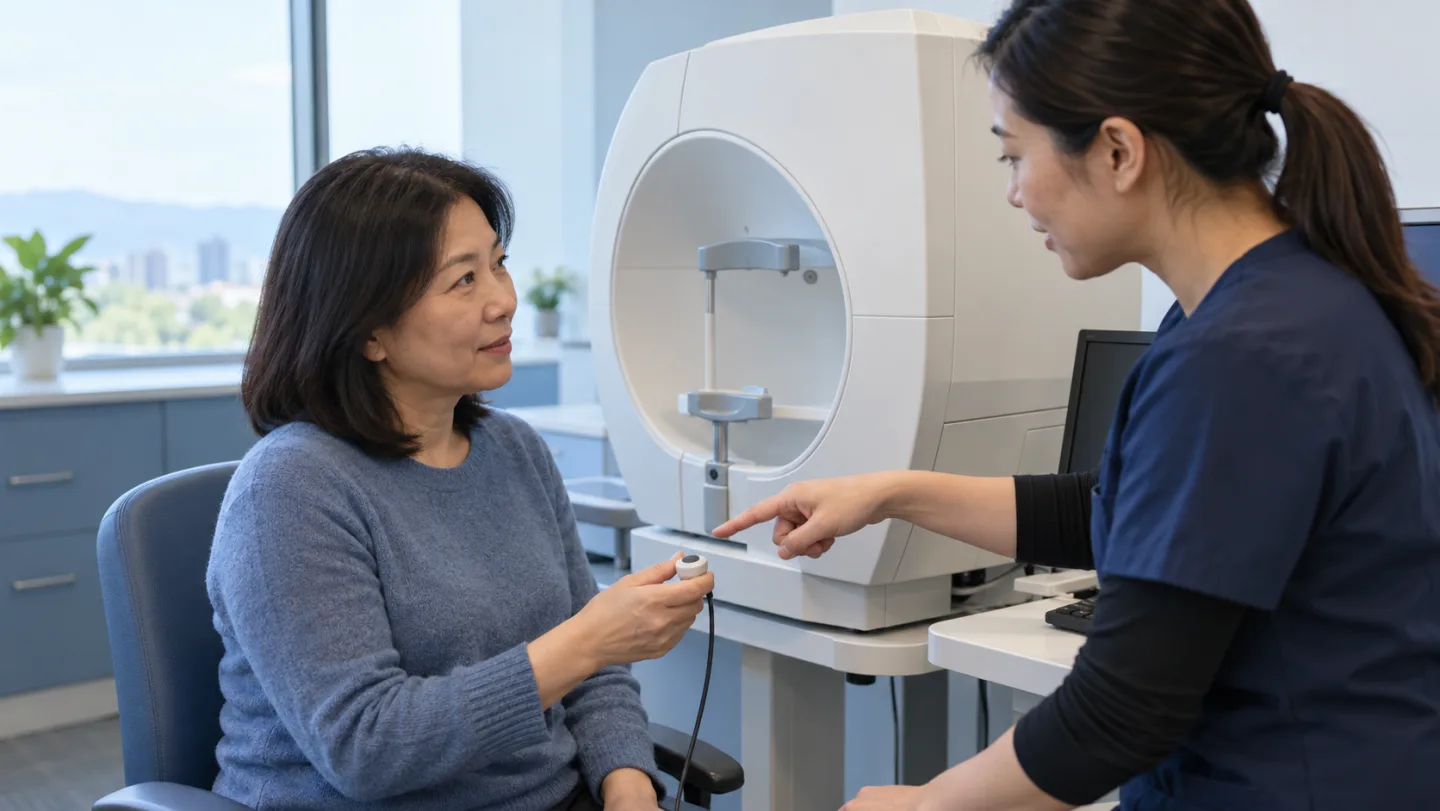
Being asked to press a button whenever a small light appears sounds simple. During a visual field test, however, the lights may be faint, pauses may feel long and you may wonder whether you are doing it correctly. Understanding the purpose can make the experience less stressful.
The test is not an examination you pass by spotting every light. It helps measure visual sensitivity in different locations while you look at a fixed point. The clinician uses the result alongside the rest of your eye examination and, when available, earlier tests.
If you are scheduled for visual field testing in North York, bring your current correction and ask what question the test is intended to answer. A little preparation can improve comfort and communication without turning the appointment into something you need to practise or study for.
What is a visual field?
Your visual field includes the area you can perceive while looking straight ahead. Testing can assess central and peripheral regions, depending on the method and program used. It provides information about visual function that is different from reading letters on a chart. The Moorfields guide to eye tests explains this distinction.
You might read small letters clearly and still need an assessment of another part of the field. Conversely, difficulty with a letter chart does not tell the clinician exactly which areas are less sensitive. Each test contributes a different piece of information.
Ask which area will be assessed and why. A central-field program, a broader assessment and a simple screening test are not interchangeable. The choice should fit the clinical question rather than the patient’s impression that a longer test must be more thorough.
If you have had testing elsewhere, bring the report or arrange transfer of records. The name of the program and the previous results may help the clinician decide how to compare future measurements.
Why might an eye-care professional order the test?
Visual field testing is used to investigate and monitor conditions affecting the optic nerve or visual pathways, including glaucoma and certain neurological concerns. It may be requested for other specific reasons as well. The Cambridge University Hospitals visual fields information describes these uses.
Being booked for a field test does not automatically mean that glaucoma has been diagnosed. The clinician may be investigating a finding, establishing a baseline or checking whether a known condition has changed. Ask which of those purposes applies to you.
If the referral came from another provider, bring the request and explain any symptoms that prompted it. A test ordered for a specific concern needs to be interpreted in that context. Do not assume that the testing staff already know every detail of a recent medical visit.
For glaucoma monitoring, keep using prescribed treatment unless your clinician gives different instructions. The National Eye Institute glaucoma overview explains that diagnosis and monitoring involve more than symptoms alone.
What usually happens during automated testing?
In a common automated test, one eye is covered while the other looks into a bowl-shaped instrument. You look toward a central target and press a response button when a light appears. The lights vary in brightness and location. The Newcastle Hospitals visual field guide describes the basic procedure.
The technician will position you and explain the response button. Ask for the instructions again if anything is unclear. It is better to clarify before starting than to spend the test wondering whether a sound, a light or a particular timing pattern is the cue.
Tell the technician if you cannot see the central target clearly or if the position feels unstable. The chair, chin rest or other setup may need adjustment. Do not try to tolerate an awkward position simply because the test has already begun.
Different devices and testing methods exist, so follow the instructions given for the actual test. A previous experience is useful background, but it should not override the current technician’s explanation.
Keep looking at the target, rather than searching for lights
The central fixation point gives the test a consistent reference. Moving your eyes toward each flash changes what is being measured. Continue looking at the target and respond to lights you notice elsewhere without chasing them.
Blink normally. Trying to hold the eye open for a long time can make you uncomfortable and distract you. Some lights will be difficult to see, and there may be periods when you notice none. These are normal features of threshold testing, as explained in the Newcastle patient instructions.
Press when you see the light rather than guessing a rhythm. If you make a mistake, do not abandon the instructions or start compensating with extra presses. Tell the technician if you are confused and continue as directed.
If the target seems to disappear or you feel you have lost your place, speak up. The technician can help you regain the position and decide whether a pause is needed. The goal is a usable measurement, not silent endurance.
Prepare for comfort and accessibility
Bring your usual glasses, including reading or progressive glasses, and tell the staff about contact lenses. The team may use your prescription information to set up the appropriate correction. Follow the clinic’s instructions about what to wear during the test.
Mention neck or back pain, limited mobility, hearing difficulty or trouble using a handheld button. If you need an interpreter or another communication arrangement, ask in advance. Planning for those needs can make the appointment more effective.
If dry eye, fatigue or anxiety affected an earlier test, describe what happened. Ask whether a break, positioning change or other accommodation is possible. Do not change prescribed drops or use extra medication to prepare without advice.
Ask whether other tests or dilation are planned at the same visit. The visual field test itself is only one part of the appointment, and the total time may be longer. Arrange transportation if the clinic advises that later procedures may blur vision.
Why a test may need to be repeated
Automated perimetry depends on consistent fixation and responses. Fatigue, unfamiliarity, positioning and other factors can affect reliability. Clinicians review those features before interpreting a field pattern. The AAO EyeWiki guide to standard automated perimetry explains reliability measures and interpretation.
A request to repeat the test does not necessarily mean that your eyes have worsened. The clinician may need to confirm a pattern or obtain a more dependable baseline. Ask what the repeat is intended to clarify.
Describe any difficulty you experienced during the first test. If the button was hard to use, your head slipped or you misunderstood the instructions, that information matters. There is no benefit in hiding the problem because you feel you should have performed better.
For the repeat, follow the same basic instructions rather than trying to produce a particular result. Practising an imagined response pattern or pressing more often to improve the score makes the information less useful.
A printout is a measurement, not a diagnosis by itself
Visual field reports can contain shaded maps, numerical summaries and reliability indicators. A dark area on a plot is not a photograph of what you see, and one number does not describe the whole condition. The clinician needs to interpret the pattern with the examination and testing context.
Ask for a plain-language explanation. Was the result reliable enough to use? Is there an area of reduced sensitivity? Does it match the optic nerve or retinal findings? Is the next step observation, another test or a treatment discussion?
Avoid comparing your printout with an internet image and assuming that matching shading establishes the same diagnosis. Different programs and display scales can make superficially similar reports mean different things.
If you receive results through a portal before the appointment, write down questions rather than making a treatment decision yourself. Continue the existing plan unless your clinician advises otherwise or a new urgent symptom requires assessment.
Follow-up looks for meaningful change over time
A sequence of tests can help distinguish a persistent pattern from ordinary variability and assess whether a condition is changing. The comparison needs appropriate context, including the test program, reliability and other eye findings. This is part of the approach described in the AAO perimetry review.
Ask when the next test is due and why that interval was chosen. Some people need closer follow-up while a baseline is established or a concern is investigated. Others may have a different schedule. A friend’s testing frequency is not a reliable guide to your own needs.
If you move or change clinics, arrange transfer of previous fields and relevant scans. Longitudinal records are more useful than remembering that the last test was fine. Ask the receiving clinic which records it needs and how they should be sent.
Do not postpone a scheduled test solely because everyday vision seems unchanged. The purpose may be to detect a change that is not obvious during familiar activities. If attendance is difficult, contact the team to discuss the timing rather than silently dropping the review.
Testing should connect with daily function
Tell the clinician if you are missing objects, having difficulty navigating or noticing a consistent gap in vision. Describe the activity and whether the problem is new. A test result and a functional concern should be discussed together.
If the field assessment is part of an occupational or driving-related evaluation, clarify the exact requested test and how the result will be used. A routine clinical field is not automatically a substitute for every required assessment. Ask the responsible clinician about the relevant process.
For established difficulties, practical support may be useful alongside medical care. Our low vision rehabilitation guide explains how to discuss daily tasks, mobility and appropriate training.
Sudden loss of part of your vision, a new curtain-like shadow or visual change with neurological symptoms should not wait for routine field testing. Seek urgent medical assessment. A booked test is not a substitute for evaluating an acute change.
Leave knowing the next step
Before leaving, ask when and how you will receive the interpretation, whether another appointment is needed and whom to contact with questions. If the test was requested elsewhere, confirm that the report will reach the correct clinician.
To discuss visual field testing in North York, call Optima Eye Care at (416) 497-3705 or request an appointment, mentioning the reason for the test or any referral. Confirm testing arrangements when booking. Clear instructions, comfortable positioning and a result explained in context make the appointment more useful than worrying about catching every flash.