

Eye Care Resources
Travel Eye Care in North York: Prepare Your Eyes Before You Leave
June 15, 2025
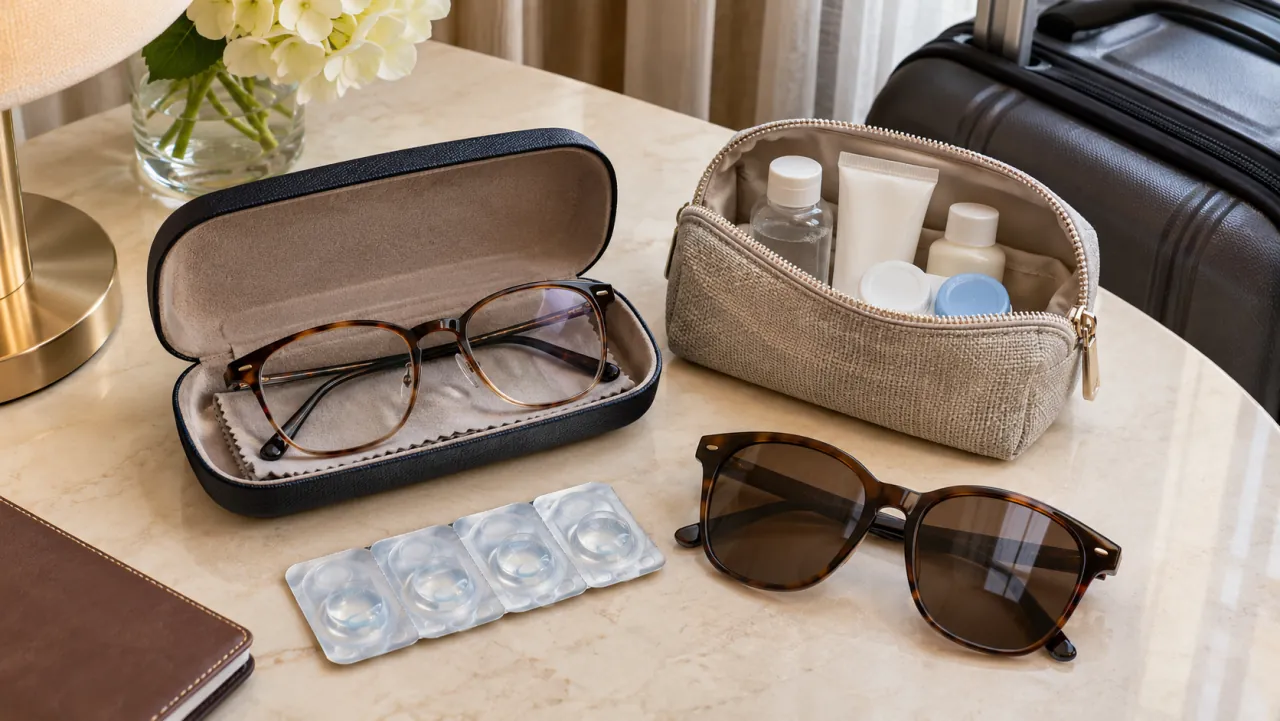
A trip changes the small routines that usually make eye care easy. The bathroom is unfamiliar, your normal supplies are in another bag, and the time you would ordinarily remove contact lenses may arrive while you are still in transit. A pair of glasses that rarely leaves your bedside table suddenly becomes essential equipment in a hotel room.
Most preparation is practical rather than complicated. You need a dependable way to see if one option fails, enough of the supplies you already use, and a plan for any treatment that should continue while you are away. It is easier to make those decisions at home than in an airport shop after a delay.
Travel eye care in North York starts before departure, whether the itinerary involves a flight, a road trip or a weekend with family. This guide focuses on preserving ordinary good habits when the surroundings change, and recognizing when a new symptom deserves care at your destination.
Begin with the trip you are actually taking
An overnight business visit and several weeks in a remote area create different practical needs. Consider the duration, access to clean facilities, outdoor activities and distance from medical care. Think about the parts of your normal routine that may be harder to maintain.
If you already have an eye condition, ask whether the itinerary affects follow-up or treatment. A trip should not automatically interrupt monitoring, and a destination with limited medical access may deserve additional planning. Bring those details to the clinician who manages the condition rather than asking for a generic travel clearance.
Do not wait until the day before departure to address persistent blur or uncomfortable glasses. A prescription review may identify a straightforward change, but new eyewear can also require fitting and adjustment. Allow time to use the pair in ordinary life before relying on it throughout a trip.
Pack a usable backup, not merely an old pair
A spare pair of glasses is valuable only if you can use it safely for the tasks the trip requires. Check it before packing. Make sure the frame is intact, the lenses are reasonably clear and the prescription still provides useful vision.
If you drive, consider whether the spare is suitable for distance viewing. Reading glasses that work beautifully for a menu will not replace distance correction on an unfamiliar road. If you use different pairs for different tasks, label their cases so they are easy to identify when tired.
Keep essential eyewear accessible during transit. A pair at the bottom of a checked suitcase cannot help when a contact lens becomes uncomfortable before arrival. Use protective cases and avoid placing the spare where it could be crushed by heavier items in the bag.
Keep the information needed to replace something
Save a readable copy of the current glasses prescription and the details of any prescribed contact lenses. Include the prescriber’s contact information and the date of the prescription. A photograph of lens packaging can help identify the exact product you wear.
These records do not guarantee that a replacement can be supplied immediately or without a local assessment. Availability and professional requirements vary. They do, however, provide a clearer starting point than trying to remember a brand name or a series of numbers after the original item is lost.
Store the information somewhere you can access if a device is unavailable. A secure digital copy and a simple paper copy may be useful for longer trips. Keep medical information private and avoid placing full records in an openly visible luggage tag.
Give contact-lens supplies their own space
Bring enough prescribed lenses for the trip, with a reasonable allowance for a damaged or lost lens. Pack a compatible case and the recommended care solution for reusable lenses. Check expiry dates and make sure bottles will remain identifiable.
The CDC’s travel guidance for contact-lens wearers emphasizes backup glasses and supplies, fresh solution, and maintaining the prescribed replacement schedule. Travel is not a reason to extend the life of a lens or improvise a storage liquid.
Do not transfer solution into an unlabelled household container simply to save space. Manufacturer-packaged travel sizes can be easier to identify and use as directed. Check the current transport and security rules for your route with the responsible authority, especially for medically necessary liquids, rather than relying on an old packing rule remembered from another trip.
Make handwashing possible before handling lenses
Before touching contacts, wash your hands and dry them thoroughly with a clean method. A cramped public washroom or a moving vehicle may not be a good setting for lens handling. If the conditions are unsuitable, use glasses until you have a better place to manage the lenses.
Set supplies on a clean surface away from splashes and drains. Opening the case beside a wet sink or balancing a lens on luggage creates avoidable opportunities for loss or contamination. A small clean surface organizer can be useful, provided it is itself maintained appropriately.
Never use water or saliva to rinse or store contact lenses. If the proper solution is unavailable, do not invent a substitute. Use your glasses and obtain the correct supplies. The inconvenience of changing plans is smaller than the consequences of an avoidable eye infection.
Plan for sleeping before you become sleepy
Travel days can turn an intended short rest into a long nap. If you are likely to sleep on a plane, train or bus, consider wearing glasses from the start. It removes the need to handle lenses in an awkward environment just as you are becoming tired.
Follow the wearing schedule prescribed for your lenses. Do not assume that sleeping in them is harmless because the nap is short or because you have done it before. The CDC’s contact-lens prevention guidance advises removing lenses before sleep and maintaining recommended care habits.
If a lens becomes dry or uncomfortable, stop wearing it and follow your clinician’s instructions. Do not pull forcefully on a lens that seems stuck. Seek professional advice if removal is difficult or symptoms persist, and obtain prompt assessment for pain, marked redness, light sensitivity or reduced vision.
Separate swimming plans from contact-lens wear
Pool, lake, ocean and hot-tub water should not be treated as safe contact-lens environments. Remove contacts before swimming or showering. A holiday does not change the risk associated with exposing lenses to water.
If you need correction in the water, consider appropriate prescription swim goggles arranged before departure. Check their fit and optical suitability ahead of time rather than discovering a problem during the activity. Ordinary spectacles on a strap are not a substitute for protective equipment suited to the sport.
If water contacts your lenses accidentally, follow your eye-care professional’s advice on removal and replacement. Do not continue wearing a painful lens to avoid interrupting the outing. A red or sore eye in a contact-lens wearer deserves particular attention, especially if vision is affected.
Keep medicines on their usual clinical plan
If you use prescribed eye drops, pack enough for the intended trip and discuss a practical allowance for delays. Keep them labelled and follow the storage instructions. Some medicines have specific temperature requirements or limits after opening that should be confirmed with the pharmacist.
Ask how to handle time-zone changes when the schedule matters. Do not skip doses, double them, or compress several applications together without advice. A written plan is easier to follow after a long travel day than an instruction remembered only approximately.
Avoid leaving medicines in a hot car or freezing luggage compartment. Keep the treatment accessible and separate it from non-eye products that could be confused with a drop bottle. If several family members use eye drops, clear labelling can prevent an error in an unfamiliar bathroom.
Discuss flying after eye procedures
Travel after surgery depends on the procedure, recovery and follow-up needs. The operating clinician should give the relevant advice. Do not borrow a timeline from a friend whose surgery had a similar name but different details.
An air or gas bubble inside the eye is a particularly important exception. Changes in altitude can expand the bubble and dangerously raise eye pressure. The American Academy of Ophthalmology explains why flying must wait until the treating surgeon confirms it is safe.
Mention the entire route, including travel through higher elevations, and follow the surgeon’s restrictions. Do not estimate clearance from how small the bubble looks to you. Keep scheduled postoperative appointments and ask how urgent concerns should be handled if you will be away from the surgical team.
Prepare for light, wind and long travel days
Take sunglasses with verified UV protection and a fit that suits your activities. A brimmed hat can help outdoors. If you need prescription correction, make sure the sun-protection plan preserves clear vision rather than leaving you to choose between glare and blur.
Dry environments and prolonged screen use may make the eyes feel less comfortable. Take breaks from close tasks, blink normally and avoid directing strong airflow at the face where practical. If lubricating drops have been recommended, confirm that they are appropriate for your eyes and compatible with any lenses you wear.
Do not treat a new painful or light-sensitive eye as ordinary travel dryness. Comfort measures can help familiar mild symptoms, but they should not mask a problem that needs assessment. The pattern and severity matter more than whether the symptom began on a travel day.
Know when local care should replace the itinerary
Sudden vision loss, a curtain or shadow, a new shower of floaters with flashes, significant eye pain, a chemical exposure or an eye injury should prompt urgent medical or eye-care assessment. Do not wait for the return flight simply because your usual clinician is at home.
New double vision also needs advice, especially when sudden. Visual symptoms with weakness, facial drooping, speech difficulty or a severe sudden headache require emergency medical attention. Avoid driving yourself if vision or other symptoms make that unsafe.
Before a longer or remote trip, identify how to reach local emergency services and suitable medical care. Keep insurance and assistance information accessible if relevant. A hotel recommendation or internet search can help locate services, but it should not delay emergency action when symptoms are serious.
Return to your routine with useful notes
If an eye problem was assessed away from home, ask for a record of the findings and treatment. Keep medication names and dates rather than relying on the appearance of a bottle. Arrange any recommended follow-up after returning.
Notice which parts of the packing plan worked. A backup pair that never fit comfortably or a case that repeatedly leaked deserves attention before the next trip. Improving those small details is more useful than rebuilding the whole routine each time.
For pre-travel concerns, you can request an eye appointment in North York and explain your departure date and itinerary. An eye examination can address relevant symptoms and ongoing care, while sensible packing keeps the daily work of looking after your eyes manageable wherever the trip takes you.