

Eye Care Resources
Spring Eye Allergies in North York: Allergy, Infection, or Something Else?
March 19, 2026
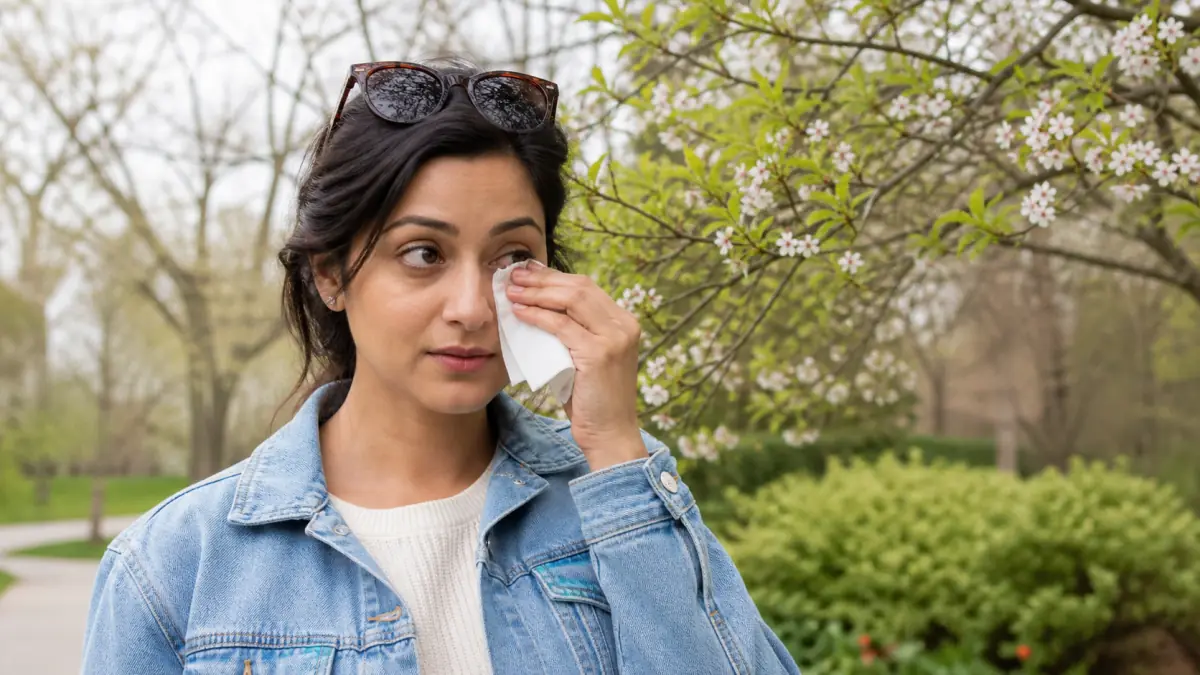
The first mild days of spring can be a relief after a North York winter, but they can also bring a familiar set of eye symptoms. Your eyes may itch on a walk, water after opening a window, look puffy in the morning, or feel irritated after time in a park. If you also sneeze or have a runny nose, seasonal allergy can seem like the obvious explanation.
Often it is. Pollen from trees, grasses, and weeds can trigger allergic conjunctivitis, an inflammatory reaction involving the thin tissue that covers the white of the eye and lines the eyelids. Yet allergy is not the only cause of a red, watery, or uncomfortable eye. Viral and bacterial infections, dry eye, contact lens complications, eyelid inflammation, a foreign particle, chemical irritation, and more serious corneal or internal eye problems can overlap with “allergy” symptoms.
The pattern provides clues, but a mirror cannot make the diagnosis. If symptoms are painful, affect vision, are strongly one-sided, or do not follow your usual seasonal pattern, an eye examination is the safer next step. Optima Eye Care provides eye exams and emergency eye care for North York patients who need help separating a routine allergy flare from something that requires treatment.
What happens during an eye allergy reaction?
Allergic conjunctivitis occurs when the immune system reacts to a substance that is normally harmless. Pollen, mould, dust mites, animal dander, and other allergens can trigger the release of inflammatory chemicals. The conjunctiva and eyelids may become itchy, watery, red, or swollen.
Itching is one of the strongest clues. People often describe an intense urge to rub both eyes. Nasal allergy symptoms—sneezing, congestion, clear runny nose, or an itchy throat—may occur at the same time. Symptoms can rise and fall with outdoor exposure, open windows, yard work, pets, or the season.
Allergic conjunctivitis is not contagious. You cannot pass a pollen reaction to someone else. However, rubbing itchy eyes with unwashed hands can introduce irritants or germs, and families can have allergy and infection circulating at the same time.
An allergy flare can also worsen dry eye. Inflammation destabilizes the tear film, while some oral allergy medications may reduce tear production. The result can be a confusing mixture of itching, burning, watering, and fluctuating vision.
Typical spring eye-allergy symptoms
Common features include:
- itching that affects both eyes;
- watery or stringy clear discharge;
- mild to moderate redness;
- puffy eyelids, particularly after rubbing;
- burning or a gritty sensation;
- symptoms that track with pollen exposure;
- sneezing, nasal itching, or congestion; and
- temporary blur that clears after blinking or wiping tears.
Not everyone has every symptom, and allergy can be worse in one eye. A person may touch one side more often, sleep with one eye near an open window, or have an uneven eye-surface condition. One-sided symptoms do not automatically rule allergy out, but persistent or pronounced asymmetry deserves closer attention.
Pain, strong light sensitivity, reduced vision, thick pus, a very red eye, or the feeling that a sharp object is present are not features to casually treat as seasonal allergy. Contact the clinic for guidance, especially if you wear contact lenses.
Viral conjunctivitis can begin like an allergy
Viral conjunctivitis often produces redness, watering, burning, or a sandy sensation. It may begin in one eye and spread to the other over several days. A cold, sore throat, fever, or recent contact with someone who had a red eye can support an infectious pattern, though respiratory symptoms are not always present.
Many viral forms are highly contagious. The virus can spread through tears, respiratory secretions, hands, towels, pillowcases, makeup, and contaminated objects. Touching an affected eye and then a shared surface gives the virus another route to the next person.
Itching can occur with viral irritation, so it does not prove that a red eye is allergic. Likewise, watery discharge is common in both allergy and viral conjunctivitis. The history, examination, and appearance of the eye help distinguish them.
Antibiotic drops do not treat a viral infection. Some viral conjunctivitis improves with supportive care, while certain herpes-family infections and severe corneal involvement need specific medical treatment. Using leftover drops without a diagnosis can delay appropriate care or create additional risk.
Bacterial conjunctivitis and thick discharge
Bacterial conjunctivitis may cause red eyes with thick yellow, green, or white discharge. The eyelids can stick together after sleep, and discharge may return soon after it is wiped away. Swelling, irritation, and a gritty feeling can occur.
These features are helpful but not perfect. Viral and allergic conjunctivitis can produce mucus, and bacterial cases do not all look identical. Some bacterial infections are mild; others are aggressive and can threaten the cornea or vision.
Antibiotics are not automatically needed for every red eye. The choice depends on the likely cause, severity, risk factors, and examination. A clinician may prescribe an antibiotic for selected bacterial cases, but the wrong medication will not treat allergy or most viral infections.
Rapidly increasing swelling, heavy discharge, significant pain, reduced vision, or an intensely red eye needs prompt assessment. Newborns with conjunctivitis symptoms require immediate medical care because the possible causes and risks differ from those in older children and adults.
Dry eye can look watery and allergic
Dry eye does not always feel dry. An unstable tear film can cause burning, grittiness, redness, fluctuating vision, and reflex watering. Windy spring days, indoor air conditioning, long screen sessions, and medication can increase symptoms.
Itching tends to point more toward allergy, while burning and blur that briefly improve with blinking may suggest tear-film instability. Both conditions can occur together. Repeatedly using an antihistamine drop when dryness is the main problem may not provide the expected relief.
An optometrist can examine the tear film, cornea, eyelid margins, blink, and oil glands. Management may include preservative-free lubricating drops, environmental changes, eyelid care, or other treatment based on the findings.
If your eyes water outdoors all spring but also burn during screens and feel gritty at night, describe the complete pattern. Treating only one part may leave the other symptoms unchanged.
Contact lenses change the urgency
A red or painful eye in a contact lens wearer deserves extra caution because lenses can be associated with corneal inflammation and infection. Remove the lenses promptly if you develop pain, significant redness, light sensitivity, sudden blur, discharge, or worsening irritation.
Do not reinsert the lens to test whether the eye feels better. Wear current backup glasses and contact an eye care professional. Bring the lenses, case, and solutions if the clinic asks, since the care routine may help explain the problem.
Allergy can also make contact lenses less comfortable. Inflammatory material and deposits may collect on the lens surface, and rubbing can dislodge or damage a lens. A temporary break, daily disposable design, modified wearing time, or targeted allergy treatment may help selected patients, but the eye should be assessed before making a major change.
Keep lenses away from tap water, showers, pools, and hot tubs. Do not use saliva, homemade saline, or an unapproved drop. If infection is suspected, ask what should be discarded and when contact lens wear can safely resume.
Why rubbing makes things worse
Rubbing provides a few seconds of relief because pressure temporarily changes the nerve signal, but it can intensify inflammation and swelling. Hands also transfer pollen, makeup, skin oil, and germs directly to the eye area.
Forceful rubbing may scratch the surface, especially if a small particle is trapped under an eyelid. People with certain corneal conditions should be particularly careful about chronic rubbing because repeated mechanical stress is undesirable.
Instead of rubbing, close the eyes and apply a clean cool compress. Use a fresh cloth and do not share it. Preservative-free artificial tears can rinse allergens from the surface and support lubrication when they are appropriate for you.
If the sensation remains sharply localized, does not improve with blinking, or began during yard work or another particle-producing activity, a foreign body may be present. Do not dig under the eyelid with fingers or tools. Arrange an assessment.
Practical ways to reduce pollen exposure
No one can remove spring pollen from the outdoor environment, but small habits may lower how much reaches the eyes and home:
- Check local pollen conditions when planning extended outdoor activities.
- Keep windows closed when outdoor triggers are high and use well-maintained filtration where available.
- Wear well-fitting sunglasses outdoors to reduce wind and direct exposure.
- Avoid rubbing the eyes during walks or yard work.
- Wash hands and face after being outside.
- Shower and change clothes after high-exposure activities.
- Keep outdoor clothing away from pillows and bedding.
- Clean frequently touched surfaces and follow an appropriate home dust-control routine.
- Have someone else handle mowing or leaf work when those activities consistently trigger severe symptoms.
Sunglasses are a barrier, not a treatment. They cannot seal out all airborne pollen, but larger frames may reduce direct wind and debris. They should also provide proper ultraviolet protection for daytime use.
Avoid placing unwashed garden compresses, tea bags, plant extracts, or other homemade mixtures on the eyes. “Natural” does not mean sterile or non-allergenic.
Cool compresses and artificial tears
A cool compress can reduce the sensation of itching and help with mild eyelid puffiness. Use a clean, soft cloth with cool water, wring it out, and rest it over closed eyelids without pressure. Do not use the same cloth between family members when infection is possible.
Artificial tears can dilute allergens and improve lubrication. Preservative-free drops may be preferable when used frequently or when the eye surface is sensitive. The bottle tip must not touch the eyelids, lashes, fingers, or eye.
Not every over-the-counter drop is a simple lubricant. Some products combine antihistamines, decongestants, or other active ingredients. Read the label and ask an optometrist or pharmacist if you are uncertain, particularly for children, pregnancy, glaucoma risk, other health conditions, or concurrent medication.
Cold drops may feel soothing, but store them only as directed by the manufacturer. Do not share a bottle, and do not use a product that is expired, contaminated, or has changed appearance.
Allergy eye drops and oral medication
Topical antihistamine and mast-cell-stabilizing drops can help control allergic conjunctivitis. Some are available without prescription, while others require one. The best choice and schedule depend on age, symptoms, contact lens use, eye health, and other medication.
Many allergy drops work best when used consistently during exposure rather than only after the eyes become severely inflamed. That does not mean you should start every spring product on your own. An examination can confirm that allergy is the likely cause and identify a plan for prevention and flare management.
Redness-relief drops that constrict surface blood vessels may make the eye look whiter temporarily without addressing the underlying allergy. Frequent use can lead to rebound redness with some products. Cosmetic whitening is not the same as treating inflammation.
Oral antihistamines may help nasal symptoms but can worsen dryness for some people. If your nose improves while your eyes feel drier, discuss the balance with the prescribing professional, pharmacist, or optometrist rather than stopping necessary medication on your own.
Never use leftover steroid eye drops
Steroid eye drops can be valuable for selected inflammatory eye conditions when prescribed and monitored. They are not a safe general-purpose solution for a red eye. Steroids can raise eye pressure, promote cataract development with certain use patterns, delay healing, and worsen or mask some infections.
A bottle left from an earlier episode may also be expired or contaminated. The fact that it quickly reduced redness last time does not prove that the current problem has the same cause.
Combination antibiotic-steroid drops deserve the same caution. The antibiotic does not protect against every organism, and the steroid portion can complicate an undiagnosed corneal infection.
Use prescription eye medication only for the person, condition, dose, and duration directed. If symptoms return, arrange reassessment rather than repeating an old course.
Makeup, lashes, and spring irritation
Cosmetics, removers, adhesives, lash products, and skin care can irritate the eyes or trigger contact allergy. Symptoms may begin after a new product, formulation, or application method and can overlap with seasonal allergy.
Stop using a suspected product and bring its name or ingredient list to the appointment. Do not apply eyeliner to the inner eyelid margin when the eyes are inflamed, and avoid sharing makeup. Products used during a confirmed contagious infection may need to be discarded according to professional advice.
Eyelid dermatitis can cause itching, scaling, and swelling around the eyes rather than primarily on the white surface. Blepharitis can produce crusting and irritation along the lash line. These conditions may need different care from allergic conjunctivitis.
If swelling affects the face, breathing, throat, or tongue, seek emergency medical help. That pattern can signal a more serious systemic allergic reaction.
Hygiene when infection is possible
Until you know whether a red eye is contagious, wash hands frequently and avoid touching the eyes. Use separate towels, washcloths, pillowcases, and makeup. Clean commonly handled objects such as phones, keyboards, and doorknobs.
Do not share eye drops. Even when two people have similar symptoms, touching a bottle tip to an infected eye can contaminate the product and spread disease.
Follow current professional or public-health advice about school and work. The need to stay home depends on the cause, symptoms, ability to maintain hygiene, systemic illness, workplace, and local policy. A blanket rule based only on eye colour is not reliable.
If symptoms began after close contact with someone who had conjunctivitis, mention that history. If several family members are affected, a contagious cause becomes more likely than a shared seasonal allergy—though both are possible.
When a red eye needs prompt care
Seek timely assessment when redness comes with:
- eye pain rather than mild irritation;
- sensitivity to light;
- blurred or reduced vision that does not clear with blinking or wiping discharge;
- intense or rapidly worsening redness;
- thick or heavy discharge;
- a recent injury, chemical splash, or foreign particle;
- contact lens wear;
- a new rash or blisters around the eye;
- significant eyelid or facial swelling;
- unequal pupils, double vision, or a drooping eyelid; or
- symptoms that keep worsening or fail to follow the expected course.
Sudden vision loss, severe trauma, or visual symptoms with weakness, confusion, difficulty speaking, or another neurological sign require emergency medical attention.
For chemical exposure, begin flushing the eye immediately with clean lukewarm water and seek urgent poison-control or medical direction. Do not wait to finish reading instructions or try to neutralize one chemical with another.
What an eye examination can clarify
The optometrist will ask when symptoms began, whether one or both eyes are affected, what the discharge looks like, how severe the itching is, and whether you have nasal allergy or respiratory symptoms. Contact lens wear, medication, recent illness, new cosmetics, injury, travel, sick contacts, and previous episodes all matter.
The examination can assess vision, pupils, eyelids, conjunctiva, cornea, tear film, and the front of the eye under magnification. Fluorescein dye may be used to highlight areas of surface damage. Eye pressure or other tests may be needed depending on the findings.
The result may point toward allergy, viral or bacterial conjunctivitis, dry eye, blepharitis, a foreign body, contact lens inflammation, corneal infection, or another cause. Treatment is then matched to the diagnosis rather than to the broad appearance of “pink eye.”
If allergy is confirmed, a plan can include exposure reduction, lubricants, appropriate allergy drops, contact lens changes, and guidance on when a future flare can be managed at home versus when it needs reassessment.
Spring eye-allergy care in North York
Itchy, watery eyes that return with spring pollen are often allergic, especially when both eyes and the nose are involved. But redness is a shared symptom, not a diagnosis. Infection, dryness, lens complications, foreign material, and more serious inflammation can look similar at first.
Optima Eye Care assesses red, itchy, watery, and uncomfortable eyes for patients in North York. We can examine the eye surface, review allergy and contact lens history, recommend appropriate relief, and identify when medication or urgent referral is needed.
If your usual spring routine is no longer working, one eye is much worse, discharge has changed, or you are unsure whether you could spread the condition to others, request an appointment or call for guidance. The safest treatment begins by knowing what is actually making the eye red.