

Eye Care Resources
Sports Eye Protection in North York: Choosing Eyewear for the Court, Field, and Rink
October 18, 2025
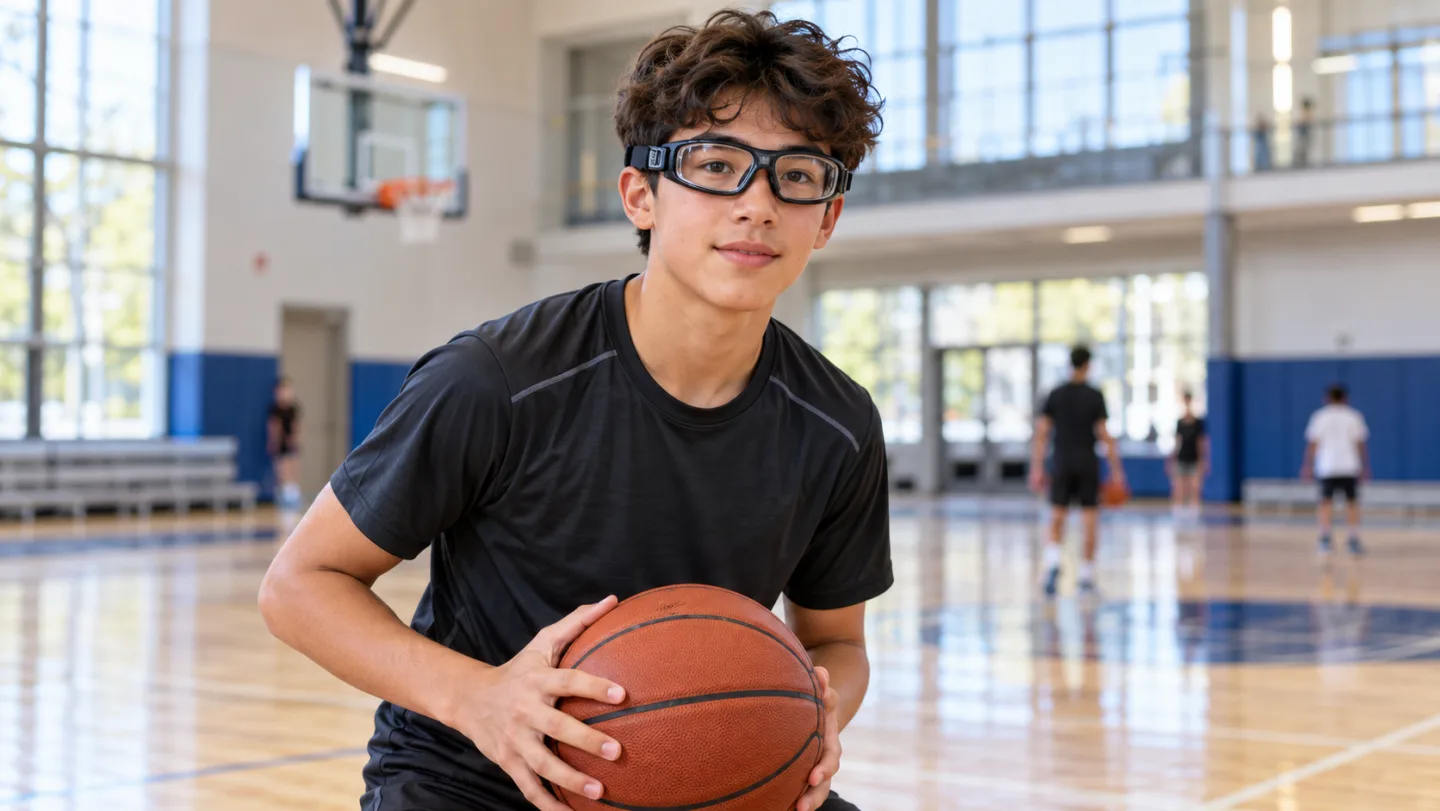
A ball changes direction, a racquet follows through, or an opponent’s hand reaches across your face. Eye injuries do not require elite competition or unusually aggressive play. They can happen during a school practice, a recreational basketball game, a weekend hockey session, or an informal match with friends.
Most athletes already think carefully about footwear, helmets, and other equipment. Eye protection deserves the same planning. The right device depends on the activity and the person’s visual needs; a pair of everyday glasses is not automatically suitable just because the lenses feel strong.
For sports eye protection in North York, start with the sport you actually play and the conditions in which you play it. The Canadian Association of Optometrists’ sports eyewear guidance recommends treating appropriate protective eyewear as part of sports equipment. An optometrist or qualified eyewear professional can help connect that advice with your prescription and the requirements of the activity.
A sports frame is different from an everyday frame
Ordinary glasses are designed primarily to correct vision and function in daily use. Sports protection must also address impact, coverage, retention, and the way the complete frame-and-lens assembly behaves. A lens material alone does not establish that the entire product is appropriate for a sport.
Polycarbonate is commonly used in protective eyewear because of its impact resistance, but no lens should be described as impossible to break. The frame, lens mounting, fit, and relevant testing matter as well. Avoid choosing solely on an advertising word such as “tough” or “sporty.”
When shopping, ask what activity the eyewear is intended for and which applicable standard it meets. If the answer only describes the lens material, ask about the complete device. A clear explanation is more useful than assuming that a familiar-looking wraparound style provides the same protection as a tested sports protector.
Match the protection to the activity
Different sports create different hazards. A small fast-moving ball, a stick, a puck, an elbow, and airborne grit do not all reach the eye in the same way. Equipment appropriate for one activity may leave important gaps in another.
ASTM publishes F803, a standard for eye protectors for selected sports. The phrase “selected sports” matters: do not treat one standard or marking as universal approval for every activity. Other sports use different protective systems or governing requirements.
Tell the dispenser the exact sport, age group, level of play, and other equipment you wear. If you play several sports, ask whether one device is suitable for all of them or whether separate protection is needed. Buying one item that does not properly suit either activity is not a useful saving.
Basketball and racquet sports need secure, clear viewing
On a court, protection must stay in place during quick changes of direction and close interaction with other players. A frame that shifts when you look down or jump can distract you and leave the intended protective position.
Try the eyewear with the movements you normally make, within the limits of a safe fitting area. Look down, turn your head, and check whether the strap or temples remain comfortable. Ask about peripheral visibility and how the prescription works across the useful viewing area.
For racquet sports, be especially careful not to confuse an open eye guard with a complete protective lens system. The product should be designed and tested for the activity. Ask the club or league about its current requirements, and keep the manufacturer’s instructions. Do not remove lenses, alter the frame, or make improvised modifications to solve a comfort problem.
Hockey protection is a complete equipment question
Hockey involves the helmet, facial protection, fit, and the rules of the particular programme. Prescription needs should be considered within that system rather than added afterward in a way that changes how the helmet or protector sits.
Hockey Canada’s equipment-fitting resources provide sport-specific guidance. Confirm the current certification and face-protection requirements with the league or governing organization. Do not assume a professional player’s equipment is appropriate for a child or for a different category of play.
Bring the helmet and relevant face protection to a fitting discussion when possible. Check whether any prescription eyewear presses at the temples, shifts the helmet, or interferes with the protector. A solution that seems comfortable without the helmet may behave differently once everything is worn together. Avoid altering certified equipment to create space without manufacturer and governing-body guidance.
Contact lenses improve vision but do not shield the eye
Contact lenses may be convenient for some athletes, but they do not protect against a ball, finger, or other impact. Wearing contacts does not remove the need for appropriate protective equipment.
If you use contacts during sport, plan for lens discomfort or displacement. Carry backup glasses and the supplies recommended for your lens type. Wash and dry your hands before handling lenses, and avoid trying to solve a lens problem with sweaty fingers on the sideline.
Water sports require a separate discussion. Swimming or showering in contact lenses increases infection risk, so prescription swim goggles may be a better way to obtain useful vision in the water. Our swimming and contact-lens guide explains the practical alternatives. A protective sports goggle for a dry court and a swimming goggle are different products with different purposes.
Prescription choices should fit the task
The prescription used for everyday glasses is a starting point, but the frame design and viewing demands still need attention. A curved sports frame, a strong prescription, or a particular helmet arrangement may affect which options are suitable.
Explain whether your main difficulty is distance detail, tracking a ball, seeing a scoreboard, or reading close information during the activity. For adults who use progressive lenses, discuss whether the usual design is appropriate for the sport. Do not assume that the lens you prefer for office work will feel equally natural during rapid movement.
Ask for enough time to become familiar with new eyewear before an important event. A practice session can reveal issues with fit, glare, or adaptation that are difficult to judge while standing still in a store. If the view feels distorted or the equipment is uncomfortable, return for assessment rather than simply learning to tolerate it.
A child’s fit can change before the prescription does
Children grow, straps loosen, and equipment gets passed between bags or siblings. A protector that fitted well at the start of a season may need review later. Check the fit periodically, especially after a growth spurt or a change in helmet size.
Let the child describe pressure points, fogging, or areas where the frame slips. These details matter because uncomfortable equipment is more likely to be removed during play. Choosing a style the child is willing to wear can help, but appearance should be considered within the appropriate protective options.
Make wearing the equipment part of the routine from the first practice rather than reserving it for games. Coaches and other adults can reinforce the habit without turning it into a debate each time. Keep the case in the sports bag and teach the child where to place the goggles when they are not being worn.
Fogging and scratches are practical safety problems
Equipment that blocks your view is unlikely to be used consistently. If lenses fog, ask about ventilation, fit, and cleaning methods approved by the manufacturer. Do not drill holes, remove protective parts, or apply household chemicals in an attempt to fix the problem.
Clean lenses with the recommended materials and store them in a protective case. A scratched surface may scatter light or make it harder to see detail. Replace damaged components according to the manufacturer’s instructions, and ask for inspection after a significant impact even if the device still looks mostly intact.
Keep spare straps or other approved replaceable parts if your sport makes them likely to be needed. A small maintenance kit can be useful, but it should contain appropriate components rather than tape and improvised fasteners intended to keep damaged protection in service indefinitely.
Outdoor glare and ultraviolet protection are separate considerations
An outdoor athlete may need both impact protection and protection from ultraviolet light. A dark tint alone does not establish either one. Look for documented UV protection and a product appropriate for the activity.
Lens tint should also suit the conditions. A lens that feels comfortable in bright sunlight may be too dark for an evening session. Ask about changes in light during your usual schedule and whether the chosen lens remains suitable throughout it.
The Canadian Association of Optometrists’ statement on UV and eye protection discusses coverage and ultraviolet protection. For everyday background, our prescription sunglasses article explains why UV protection and visual comfort should both be considered. Neither substitutes for the impact protection required by the sport.
Extra planning when one eye sees much better
If you rely mainly on one eye, have had previous eye surgery, or have an eye condition that affects participation, discuss sport-specific precautions with your treating professional. The question is not only whether you can see the ball clearly. The consequences of an injury and the suitability of the activity may require individualized advice.
Bring a description of the sport and any protective equipment you already own. Ask whether the activity is appropriate, what protection is recommended, and whether any restrictions apply. A general clearance from years earlier may not reflect a new condition or a different sport.
Do not interpret an article or a product label as personal medical clearance. The clinician who knows the eye history can help weigh the activity and equipment together. This discussion is especially worthwhile before enrolling in a new contact sport or returning after an injury.
What to do after an eye impact
Stop playing if an impact causes pain, blurred or double vision, light sensitivity, a new floater, flashes, or a missing part of the view. Do not assume that being able to read a nearby sign rules out an internal injury. Eye damage can be present even when the outside appearance is not dramatic.
Seek prompt professional assessment for concerning symptoms. Do not rub or press on the eye, and do not try to remove an embedded object. A suspected penetrating injury needs emergency care and protection from further pressure. Severe vision loss or an obvious serious injury should not wait for the next routine clinic opening.
Returning to play is a medical decision when an eye injury has occurred, not simply a matter of whether the swelling has improved. Follow the treating professional’s advice and have damaged equipment assessed or replaced before using it again. Our emergency eye-care information explains how to seek help for urgent concerns.
Build eye protection into the season plan
Before the season begins, check the prescription, inspect existing eyewear, confirm the activity’s requirements, and test how all equipment fits together. This is easier than trying to solve a problem on the morning of a tournament.
Optima Eye Care can discuss visual needs and eyewear considerations for North York athletes. Call (416) 497-3705 or request an eye examination and mention the sports you play. Bring your existing glasses and, where practical, the helmet or protective system that must work with them.
The best choice is equipment that is appropriate for the activity, fits securely, provides useful vision, and is worn consistently. Making that choice before the first whistle gives eye protection a proper place alongside the rest of your sports preparation.