

Eye Care Resources
Scleral Lenses in North York: Who They May Help and What a Fitting Involves
September 30, 2026
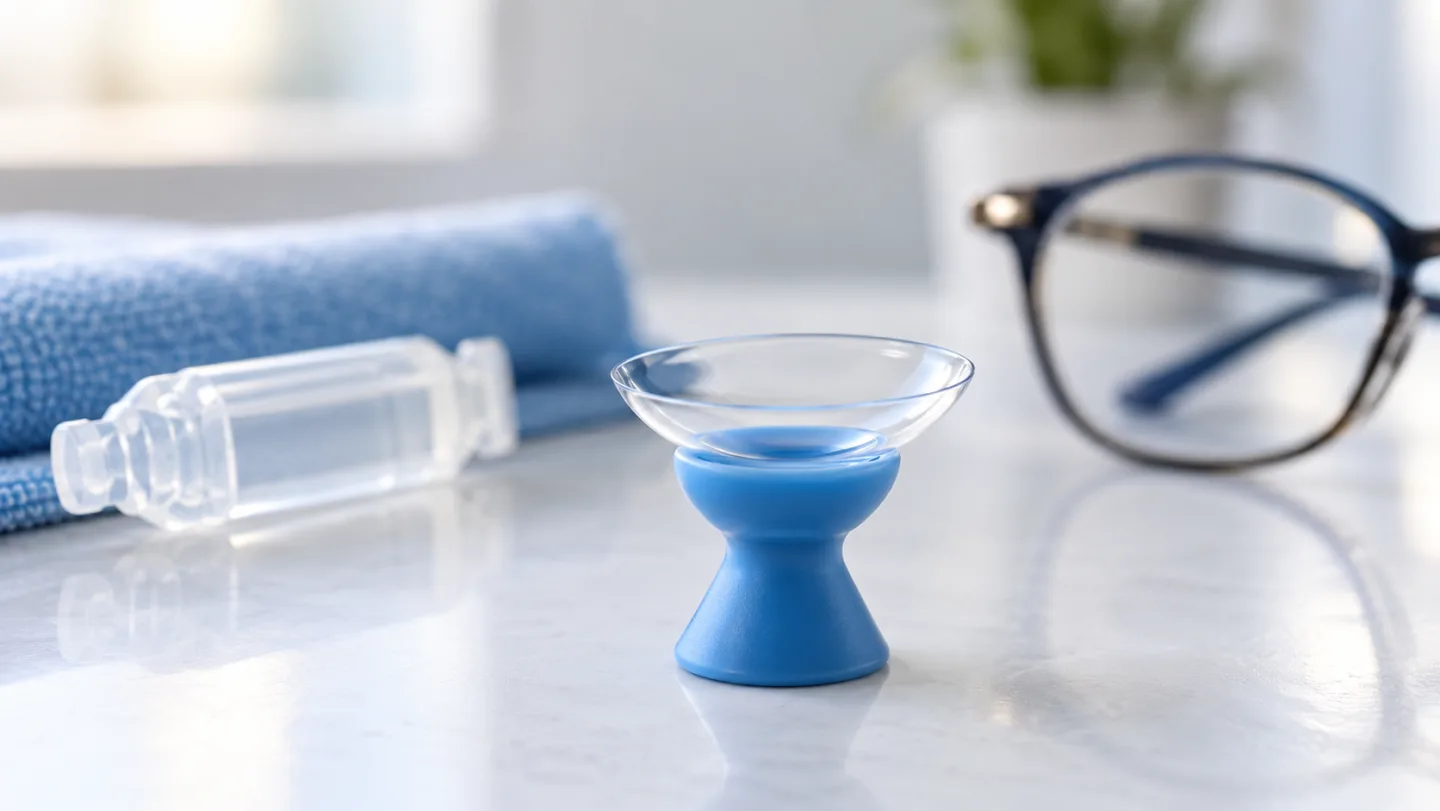
When ordinary glasses leave vision distorted, or conventional contact lenses are difficult to tolerate, a recommendation for scleral lenses can sound both promising and unfamiliar. They are larger than many people expect, require their own care routine, and are fitted through a process rather than selected from a simple box of standard powers.
Scleral lenses can be valuable for suitable eyes, but they are not a universal upgrade or a guarantee of perfect vision. The right starting point is an examination that establishes the problem you are trying to solve. For anyone considering scleral lenses in North York, understanding the practical commitment is just as important as understanding the potential optical benefit.
This guide explains the questions worth asking before a fitting, the difference between comfort and a healthy fit, and the everyday details that help people manage specialty lenses safely. Specific lens availability and referral arrangements should be confirmed with the clinic providing your assessment.
What makes a scleral lens different?
A scleral lens is a rigid, gas-permeable lens designed to vault over the cornea and rest on the surrounding eye surface. The space beneath the lens is filled with an appropriate sterile, preservative-free solution during application. Its shape and fit can create a more regular optical surface for selected eyes.
The Scleral Lens Education Society’s introduction describes these lenses as custom medical devices that require professional evaluation and ongoing care. Their specifications include much more than prescription power.
This is why a glasses prescription, or even the parameters of an ordinary soft lens, cannot be used to choose a scleral lens independently. The device must work with the shape and health of the individual eye. Two people with similar glasses prescriptions may need very different designs, or only one may be a suitable candidate at all.
Which problems may lead to a discussion?
Scleral lenses may be considered for irregular corneal shape, including some cases of keratoconus, changes after corneal surgery, or selected ocular-surface conditions. The reason for considering them should be clear in your consultation: improving the quality of vision, supporting the eye surface, or addressing a combination of needs.
Ask what is limiting your vision now. Is the blur mainly related to an irregular cornea, or are there other issues involving the lens inside the eye, the retina, or the optic nerve? A contact lens cannot resolve every source of reduced sight simply by making the front surface more regular.
If you have keratoconus, also distinguish visual correction from treatment intended to slow progression. A lens may improve how you see without stopping the underlying condition from changing. Our keratoconus article discusses why corneal monitoring and a separate treatment conversation may still be necessary.
Start with a goal you can describe
“I want better vision” is understandable, but a more specific goal helps the practitioner judge whether the proposed lens is worthwhile. Perhaps road signs remain doubled with your glasses, faces are difficult to recognize across a room, or reading becomes uncomfortable despite several conventional lens fittings.
Describe the tasks that matter, how long you need to perform them, and what currently stops you. Include the times when your present correction works reasonably well. A fitting should consider real life, not just whether you can read a smaller line during a short demonstration.
It can help to choose two or three priorities before the appointment. For example: clearer computer text, a manageable morning routine, and sufficient comfort for a normal workday. These goals give you and the practitioner something concrete to revisit when deciding whether a trial has been successful.
What a fitting may involve
The process begins with eye-health assessment and measurements. A practitioner may apply diagnostic lenses, evaluate the space over the cornea, assess how the lens lands on the surrounding tissue, and refine the prescription. The fit may need to be checked again after the lens has settled.
Custom adjustments are common, so ask how the fitting process is organized. How many appointments are usually needed? Which visits are included? What happens if the first ordered lens requires modification? Clear answers prevent normal refinement from feeling like an unexpected failure.
Bring your current glasses and lenses, previous surgical information, medication details, and any earlier corneal measurements you can obtain. If you are travelling across North York or taking time away from work, ask how long each visit may take and whether you should arrive wearing the lenses for a specified period. Do not guess; different stages of the fitting may have different instructions.
Comfort alone does not confirm a healthy fit
A lens can feel surprisingly comfortable and still need a professional adjustment. Conversely, initial awareness of a new handling routine does not necessarily mean the design is unsuitable. The practitioner evaluates findings that you cannot reliably judge in a mirror.
Report pressure, redness after removal, fogging, variable clarity, or difficulty taking the lens out. Note how long you have worn it before these problems begin. A description such as “clear for the first hour, then hazy by lunch” gives more useful information than “the lens is not working.”
Do not attempt to reshape, polish, trim, or otherwise modify a lens yourself. If it is damaged or no longer behaving as expected, stop wearing it and contact the prescribing team. Keep any packaging or identification information so the clinic can confirm which lens is involved, particularly when the two eyes have different designs.
Learning application and removal is part of treatment
Handling instruction is not a minor extra at the end of the fitting. You need a method you can perform safely and reliably before the lenses become part of daily life. Some people learn quickly; others need several teaching sessions or an adapted setup.
Tell the practitioner about hand tremor, limited dexterity, neck or back problems, difficulty seeing close objects, or anxiety about touching near the eye. These are practical fitting considerations, not reasons to feel embarrassed. A stable surface, suitable mirror position, and the right application aid can make a substantial difference.
The Scleral Lens Education Society’s handling guide offers general support, but your own team should demonstrate the method intended for your lenses. Ask what to do if application repeatedly traps a bubble or removal feels difficult. Repeated forceful attempts are not an appropriate substitute for further instruction.
Filling solution and disinfecting solution have different jobs
The fluid placed in the lens bowl before application is not interchangeable with every bottle labelled for contact lenses. Filling requires a solution specifically approved for that purpose, typically sterile and preservative-free. Cleaning and disinfection are separate steps using the system prescribed for the lens material and any surface coating.
The Scleral Lens Education Society’s care guide explains this distinction. Ask the clinic to label or list each product by job: filling, cleaning, disinfecting, and any additional care. Photographing the approved products can be useful when shopping, especially when similarly named versions are sold beside one another.
Do not fill a lens with tap water, homemade saline, or an improvised substitute. If your usual supplies become unavailable, contact the prescribing team for an approved alternative. A missed day of lens wear is safer than experimenting with a solution that remains against the eye under the lens.
Keep water away from lenses
Contact lenses and water are an unsafe combination because water can carry organisms that cause serious eye infection. Remove lenses before swimming or showering, and do not rinse or store them in tap water. The CDC’s guidance on water and contact lenses explains the infection risk.
Plan your routine so this is easy to follow. If you normally shower immediately after waking, apply lenses afterward rather than trying to keep your eyes tightly closed in the shower. For a pool visit, discuss suitable prescription swim goggles rather than assuming a large scleral lens will protect the eye from water.
Travel deserves similar planning. Pack the approved supplies, a clean storage arrangement, and backup glasses. Do not decant solutions into unlabelled containers or assume any small bottle sold at an airport will be suitable. Keep enough information to contact your fitter if a lens or care product is lost away from home.
Peroxide systems require complete neutralization
Some prescribed cleaning systems use hydrogen peroxide and a special neutralizing case. These systems must be used exactly as directed. Unneutralized peroxide must never be placed directly in the eye or used as a filling solution.
Follow the full required soaking and neutralization time, use the correct case, and do not substitute an ordinary storage case. If the cycle has not finished, do not try to shorten it with a quick rinse before inserting the lens. Ask the prescribing team how to manage the situation safely.
Keep care products away from children and make the different bottles easy to distinguish. If another person helps with your routine, teach them the entire process rather than only the application step. When a system changes, request updated written instructions so old habits do not carry over into an incompatible method.
Fogging needs troubleshooting, not endless tolerance
Some wearers notice haze or debris building during the day. The explanation can involve the lens surface, the fluid reservoir, the fit, or the condition of the eye. It is not possible to identify the cause from the word “fogging” alone.
Record when it happens, whether it affects one or both eyes, and whether there is discomfort or redness. Ask your fitter what to do during an episode and whether they want to examine the lens before you remove it. The Scleral Lens Education Society’s handling FAQs address common wear and care questions.
Avoid adding unapproved drops to the reservoir or extending wear through worsening symptoms. A repeated need to stop work, remove lenses, and restart the routine deserves review. The goal is a workable visual correction, not a daily endurance test.
Costs and replacement questions to settle early
Specialty lens care can include an assessment, custom devices, teaching, follow-up visits, modifications, and replacement lenses. Ask for a written explanation of what is included and what is charged separately. Do not assume that every clinic uses the same fitting period or exchange policy.
Insurance coverage varies by plan and circumstances. Ask your insurer which documents are needed and whether the fitting and the devices are considered separately. The clinic can explain its fees, but it cannot guarantee what an individual benefits plan will reimburse.
Also discuss what happens if a lens breaks or is lost, how long a replacement may take, and whether keeping a backup is sensible. If glasses provide limited vision, that replacement interval can affect work and transport. Planning for it before an accident is more useful than discovering the process when your only lens is unavailable.
Ongoing care remains necessary
Continue the examination schedule set by your practitioner even if vision is clear. The eye, lens surface, and fit can change, and an underlying condition may need separate monitoring. Bring all current products to review visits if there is any uncertainty about your routine.
Pain, increasing redness, light sensitivity, discharge, or reduced vision are reasons to remove the lens and seek prompt eye-care advice. Do not sleep in scleral lenses unless a specialist has explicitly prescribed a supervised therapeutic regimen. Routine unsupervised overnight wear is not a shortcut for avoiding morning application.
If you want to explore whether specialty contact lenses are appropriate, contact Optima Eye Care at (416) 497-3705 or request an eye examination. The team can assess the visual concern and discuss fitting options or referral as appropriate; ask specifically about scleral lens arrangements when booking. A thoughtful assessment, realistic goals, and a safe care routine are the foundations of a useful long-term result.