

Eye Care Resources
Prism Glasses in North York: A Practical Guide to Your First Pair
March 22, 2025
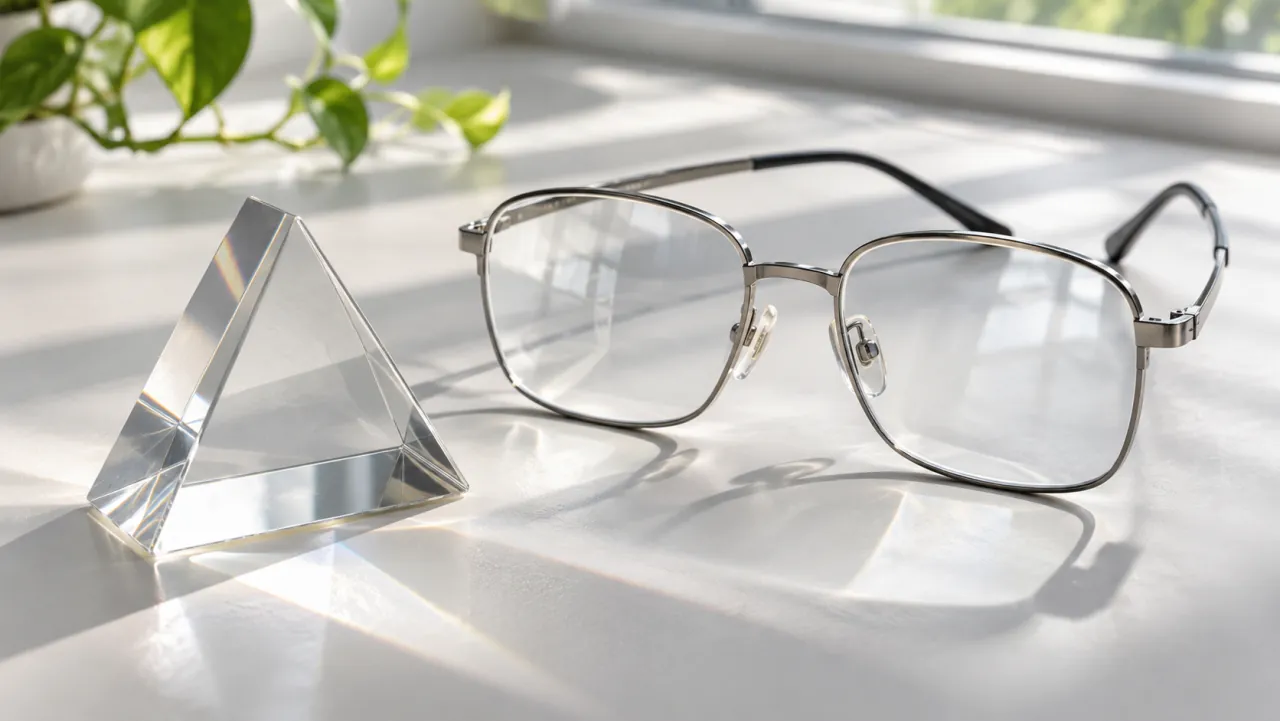
A prism prescription introduces a new set of terms to the familiar process of choosing glasses. You may hear about base direction, prism dioptres, a temporary film or lenses with the prism built into them. Before deciding on frames, it helps to understand what the prescription is trying to accomplish and how the first pair will be evaluated.
Prism can help selected people whose eyes are not aligning comfortably to produce a single image. It is prescribed after an assessment of the visual problem, not simply because someone has tired eyes or occasional headaches. The reason for the prescription matters as much as the number printed on it.
For patients in North York, this guide focuses on the practical stage after prism has been recommended: choosing between formats, preparing for the fitting, testing real tasks and communicating problems. New double vision still needs an assessment of its cause; ordering prism independently should never be the first response to a sudden change.
What prism changes in the view through glasses
A prism bends light so that an image is shifted. In appropriate cases, this helps the two eyes combine their views into a single image more comfortably. Prism does not strengthen eye muscles or cure the underlying cause of an eye alignment problem. The American Association for Pediatric Ophthalmology and Strabismus explains how prism works.
Ask the prescriber to explain the goal in terms of your daily experience. Is the intended benefit single vision at a distance, comfortable reading or support for a particular gaze position? A clear goal gives you something meaningful to report at follow-up.
Avoid assuming that a stronger prism is automatically better. The prescription is selected from measurements and your response during testing. More correction than needed can be uncomfortable. The task is to find an appropriate balance for your situation, not to maximize a number.
The cause of double vision still matters
Prism is one possible way to manage certain forms of binocular double vision, meaning double vision arising when both eyes are used together. Other visual problems can have different causes and treatments. An assessment helps establish whether prism is appropriate and whether medical investigation is also required.
Sudden double vision needs urgent assessment the same day. If it occurs with a severe headache, newly unequal pupils, a new drooping eyelid, weakness, trouble speaking, loss of balance, or after a head injury, seek emergency care immediately. Call 911 for neurological symptoms or if you cannot reach emergency care safely. Do not drive yourself. The NHS double-vision guidance also identifies severe headache, an enlarged pupil, and head injury as reasons for immediate emergency assessment.
Do not put on someone else’s prism glasses to see whether the problem goes away. Temporary symptom relief would not establish the cause or make it safe to delay assessment.
If you already wear prism and develop a marked new change, contact your clinician rather than simply ordering a stronger pair. The existing diagnosis does not explain every future symptom. Tell the office what is new and when it began.
Our guide to double vision in North York discusses the assessment stage. Once a plan has been established, keep any specialist or medical appointments even if the glasses make daily vision more comfortable.
Temporary Fresnel prism can make a trial adjustable
A Fresnel prism is a thin film applied to a spectacle lens. It can be changed more easily than a prism made into the lens itself, which can be useful while a prescription is being trialled or the alignment is changing. The film has visible lines and can reduce image sharpness or contrast.
Ask why a temporary prism is being recommended and what the trial is intended to establish. You may be checking comfort during specific tasks, waiting for measurements to stabilize or evaluating whether a different approach is needed. Knowing the purpose helps you interpret the experience.
Find out which pair of glasses should carry the film and when to wear them. If you have separate distance and reading pairs, do not assume the same arrangement applies to both. Bring all relevant glasses so that the clinician can give instructions based on the actual lenses you use.
At collection, ask to see the film’s correct position and learn what to do if it comes loose. Avoid moving, trimming or replacing it yourself without guidance. A small change in orientation can alter how the prism affects your view.
Built-in prism has a different fitting conversation
Ground-in prism is incorporated into the spectacle lens. It may offer a clearer appearance than a temporary film, but lens thickness and weight can change depending on the prescription. The optical team can explain how frame size and lens selection affect the finished pair.
Do not choose a frame only because it hides a thick edge in a display sample. Ask whether it suits the full prescription and can be positioned consistently on your face. Comfort, stability and accurate measurements are central to a useful result.
If a temporary prism trial has been successful, ask whether the alignment is stable enough to order permanent lenses. The timing is a clinical decision as well as an optical purchase decision. Clarify whether another measurement is planned before the order is finalized.
Keep a copy of the prescription and understand which glasses it applies to. If you later order sunglasses or a second pair, provide the current information and explain that prism is included. A routine prescription update should account for all components rather than copying only the focusing numbers.
Measurements should reflect the tasks you actually do
Eye alignment may be tested at different distances and in different gaze positions. A cover test and prism measurements help the examiner understand how the eyes work together. AAPOS describes the purpose of strabismus measurements.
Bring useful examples from daily life. A desktop monitor, a phone held close and a television across the room are different visual demands. Tell the examiner where double vision or strain occurs, how long it takes to appear and whether turning the head changes the experience.
If your work requires an unusual viewing distance, measure it or take a simple note before the visit. You do not need a technical drawing of your workstation. Approximate distance, screen height and the amount of time spent on the task can help make the discussion specific.
Ask whether the prescribed pair is intended for general use or a particular activity. A task-specific solution can be useful, but only if the wearing instructions are clear. Otherwise, you may judge a reading pair by how it performs while walking outdoors or using a distant sign.
Give the first fitting enough attention
When collecting glasses, ask the optical team to check their position and explain the expected adaptation process. Look at a suitable near target and a distant target if those tasks are part of the prescription’s purpose. Mention immediately if the frame slips, pinches or sits unevenly.
Avoid leaving with the assumption that every problem must be endured for weeks. Some adjustment may be expected, but the prescriber should explain what is reasonable and when to call. Persistent double vision, significant nausea, eye pain or a sense that walking is unsafe deserves contact.
Start unfamiliar activities cautiously. Before using stairs, driving or working with machinery, make sure the vision is reliable and follow the clinician’s advice. A successful moment of reading in the office does not automatically answer every safety question about daily life.
Our article about adapting to new glasses offers additional practical questions. With prism, make sure any follow-up conversation includes the alignment goal as well as the frame fit and ordinary prescription.
Report problems in a way that helps adjustment
Instead of saying only that the glasses feel strange, describe a few situations. Perhaps distance signs are single but text separates after ten minutes, or the view is comfortable straight ahead but difficult when looking to one side. Specific observations help the clinician decide what to reassess.
Note whether the difficulty happens with the new pair, the old pair or both. Bring the glasses to the appointment rather than relying on a verbal description of the lenses. The team may need to verify the prescription, orientation, fitting measurements and frame position.
Keep any symptom diary brief. A short note after a relevant activity is enough; constant comparison between pairs can become confusing. Follow the wearing instructions you were given and ask before changing them substantially.
If the correction improves one task but leaves another difficult, say both. Partial benefit is useful information. It can guide a discussion about whether the prescription, lens format, task setup or overall treatment plan needs revision.
Caring for the glasses protects consistent use
Ask for cleaning instructions appropriate to the lenses and any applied film. A Fresnel prism may need a different approach from an ordinary smooth spectacle lens. Learn whether and how the film should be removed for cleaning, rather than discovering the procedure by trial and error.
Use a protective case and avoid bending the frame. If it becomes loose or crooked, arrange an adjustment. The glasses need to sit as intended for the prescription to perform consistently, and repeated home bending can make the fit harder to restore.
Keep a practical backup plan. Ask whether your previous glasses are suitable for any tasks if the new pair breaks, and know whom to contact for repair. Do not assume an old non-prism pair will provide the same single vision or be safe for driving.
For a child, share the wearing and storage instructions with caregivers or school staff as appropriate. Explain the glasses simply and avoid suggesting that the child must try harder to keep images together. The useful focus is comfortable use and reporting difficulties.
Plan the next review before the novelty wears off
A follow-up visit should assess whether the original goal has been met and whether the prescription remains appropriate. Ask when that review should occur and whether you need to bring a record of particular tasks. Keep any separate specialist appointments for the underlying condition.
For North York residents using transit, reading at work and driving at other times, mention that range of activities during the assessment. A workable plan reflects how you actually use your eyes throughout the week.
Learn about prescription assessments or request an appointment to discuss established visual concerns. If double vision starts suddenly or changes significantly, seek prompt assessment directly. The best first pair begins with a clear diagnosis, an agreed purpose and feedback specific enough to guide the next decision.