

Eye Care Resources
Prescription Safety Glasses in North York: Match Protection to the Job
June 30, 2025
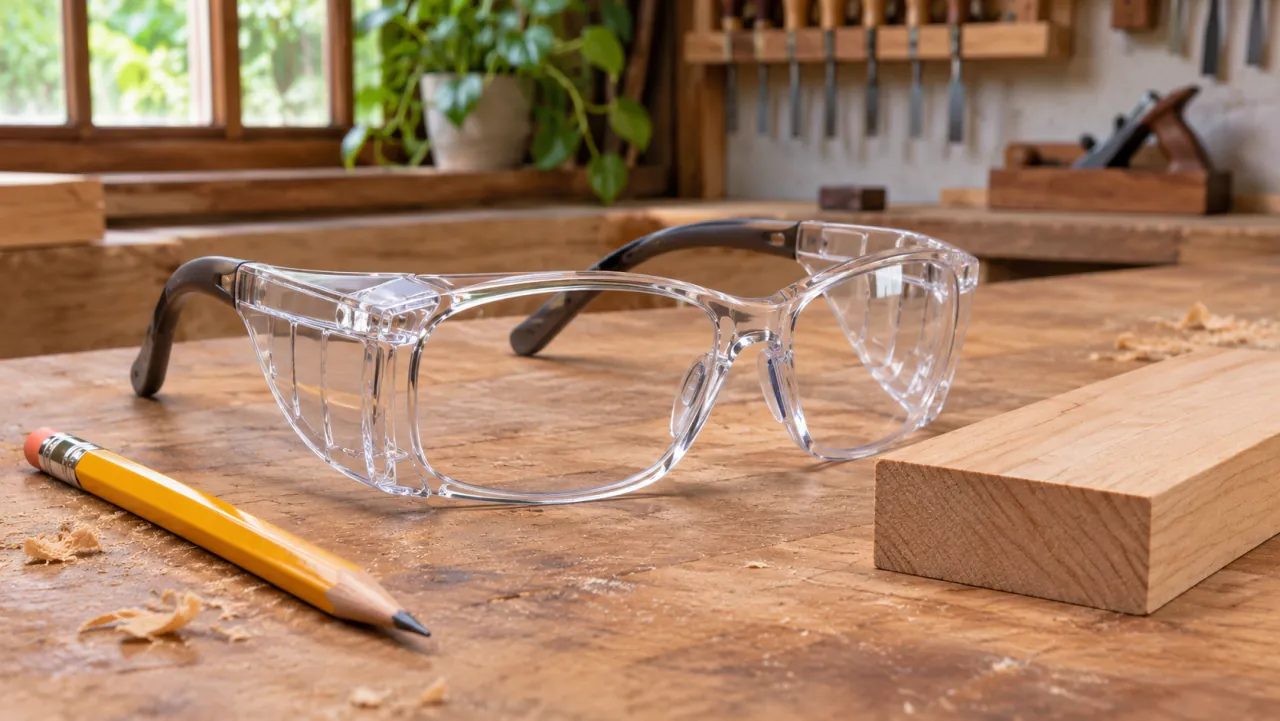
Reading a small measurement and protecting your eyes from a flying particle are separate requirements. On many jobs, both must be met at the same time. Everyday prescription glasses may provide the first, but their familiar shape should not be mistaken for evidence that they provide the second.
Prescription safety eyewear is selected as a complete protective device. Its lenses, frame, side protection and markings work together within a defined purpose. Choosing it therefore starts with understanding the job, rather than browsing for a frame that happens to look sturdy.
For workers considering prescription safety glasses in North York, the most productive preparation is to bring the workplace requirements and a clear description of visual tasks to an optical discussion. The employer or safety representative determines the required protection through the workplace’s hazard assessment. The eye-care and dispensing professionals help address vision and fit within those requirements.
Start with the hazard assessment
Different hazards require different protective arrangements. Flying particles, chemical splashes, fine dust, radiation and molten material cannot be treated as a single category. A pair suitable for one exposure may leave important gaps for another.
The Canadian Centre for Occupational Health and Safety explains the main types of eye and face protectors. Its guidance distinguishes safety spectacles, goggles, shields and other devices, and emphasizes selection for the particular hazard and applicable requirements.
Before buying, ask your workplace for its written specifications. A casual instruction to “get safety glasses” may leave too much unresolved. Clarify the required certification, whether side protection is needed, whether goggles or a face shield are also required, and whether there are approved suppliers or models within the programme.
Everyday glasses do not become safety glasses by appearance
A thick frame can look protective without having the required construction or certification. Similarly, a lens material known for impact resistance does not make every frame fitted with that material a certified safety device. The assembled product and its intended use matter.
Do not improvise by adding unapproved parts to ordinary glasses. A removable shield from one model may not be approved for another. Altering the frame or replacing a component with an unrelated part can change the protection and make the markings misleading.
Ask the supplier to identify the relevant markings and explain how they correspond to your workplace requirement. Keep the documentation with the order. If a specification is unclear, resolve it with the safety representative before purchase, rather than asking the wearer to judge compliance from appearance alone.
Prescription protection can take different forms
Some workers use prescription safety spectacles. Others use appropriately selected protective goggles over their prescription glasses, or a protective device with a compatible prescription insert. The most suitable arrangement depends on the hazard, fit, required equipment and visual task.
Over-glasses protection needs enough space to avoid pressing the everyday frame into the face or shifting it out of position. An insert has its own positioning and maintenance considerations. Neither approach should be assumed to fit well merely because the dimensions seem large enough on paper.
Try the complete arrangement. Look forward, down and to the sides, and check whether the prescription lenses remain stable. If the protective device forces the glasses into an uncomfortable position, report that problem. Removing protection to see or work comfortably is not an acceptable long-term workaround.
Bring the distances you actually work at
An eye prescription optimized for ordinary distance viewing may not fully address close inspection or an instrument panel at an unusual distance. Measure the approximate distance from your eyes to the task, and note where it sits relative to your normal gaze.
Consider whether you move between near work and distant hazards. Someone inspecting a component may also need to monitor moving equipment across the room. Someone working overhead may need clear near vision above the usual line of sight. Those details can affect the lens design discussion.
Do not select a lens solely because it works well for reading a phone. Explain the job’s posture and visual demands during a prescription review. If photographs would help, use images that do not reveal confidential workplace information and that the employer permits you to share.
Progressives require a task-specific conversation
Progressive lenses distribute powers across different areas. They can be useful, but their viewing zones need to match how the wearer looks at the task. An ordinary near zone positioned low in the lens may not suit prolonged work above eye level.
Repeatedly lifting the chin, bending the neck or peering through the edge of the lens is useful information to report. It may indicate that the lens design, fitting position or work setup needs review. Do not assume that persistent awkward posture is simply the price of wearing multifocal glasses.
Any alternative must still meet the job’s visual and protective needs. A close-work pair that makes distant surroundings unclear may be unsuitable where situational awareness is essential. The goal is a deliberate plan developed with the relevant professionals, including the workplace when safety requirements are involved.
Check compatibility with the rest of your equipment
Safety eyewear rarely operates alone. Hearing protection, respirators, hard hats, face shields and communication headsets can change how it fits. Pressure from one item may shift another, and an eyewear arm may interfere with a seal or create discomfort.
Bring the equipment or its exact model information when a fitting is arranged, subject to workplace rules. A comfortable frame in isolation can behave differently once the full set is worn. Required respirator fit testing and programme instructions must still be followed; an optical fitting does not replace them.
The CCOHS guidance on designing a PPE programme treats selection, fitting, training, maintenance and review as connected responsibilities. That is a useful approach to eyewear too: the purchase is one step in a system, not the entire protective plan.
Fogging needs a solution that preserves protection
Fogging can make a worker tempted to lift the glasses or loosen a seal. Instead, report when it happens and under which conditions. A change in temperature, exertion, mask fit or airflow may help explain the problem and guide an approved solution.
Ask whether the selected device has suitable anti-fog options and which treatments are compatible with its lenses. Do not drill ventilation holes, remove seals or apply an unapproved chemical coating. A modification that improves visibility can also compromise the function for which the device was selected.
If visibility becomes unsafe during work, stop according to the workplace’s procedures and move to a safe location before adjusting or cleaning the equipment. The need for uninterrupted production should not turn poor visibility into a normal operating condition.
Tints and filters must match the exposure
Bright outdoor work, welding and laser exposure are different situations. Ordinary tinted or polarized sunglasses do not substitute for filters selected for hazardous optical radiation. The required filter characteristics belong in the workplace specifications.
Discuss changes between indoor and outdoor areas as well. A very dark lens may be uncomfortable or unsuitable when the job moves into a dim space. Some photochromic designs change tint with exposure, but their response does not automatically make them suitable for every workplace or protective assembly.
If colour recognition or screen visibility matters, mention it. The wearer may need to distinguish warning indicators, wiring or display information reliably. Testing the relevant tasks with an approved option can reveal difficulties that a simple distance chart will not show.
Inspect the equipment before relying on it
Look for loose components, cracks, significant scratches, a distorted frame and missing side protection. A device that has been struck or otherwise damaged should be handled according to the manufacturer’s and workplace’s replacement instructions, even if it still looks usable at a quick glance.
Keep the lenses clean enough to maintain a dependable view. Use approved cleaning methods, and store the eyewear where it will not be crushed, contaminated or exposed to unsuitable heat. A clean case or designated storage location is more reliable than a shared pile of tools.
Report damage promptly. Do not repair a safety device with improvised glue, tape or parts from another frame and assume its rating remains intact. Ask how replacement is arranged and what approved backup is available while the damaged pair is out of use.
Plan for a prescription change before the old pair fails
Gradual blur can become easy to work around by moving closer, increasing the light or asking someone else to read a label. Those adjustments may hide a growing problem until a more demanding task exposes it. Arrange a review when vision changes rather than waiting for the frame to break.
Bring the safety pair and ordinary glasses to an appointment. Comparing them can help identify whether the problem involves the prescription, lens position, surface condition or design. Note whether the issue appears at one distance, with one eye, or only when other equipment is worn.
After a replacement, confirm both the visual performance and the protective specifications. A familiar frame style does not guarantee that every later order has the same configuration. Keep the current order separate from old paperwork so there is a clear record of what is being used.
Know the response to an exposure
Eye protection reduces risk but does not remove the need for emergency procedures. Know where the eyewash station is and how to activate it before a chemical incident occurs. The CCOHS emergency eyewash guidance stresses immediate flushing after exposure rather than delaying while searching for supplies or removing contact lenses.
For a chemical splash, begin immediate irrigation with the appropriate available flushing fluid and obtain urgent medical assistance, following the workplace procedure and product safety data sheet. Do not try to neutralize one chemical with another. For an embedded object or suspected penetrating injury, avoid pressure and do not attempt removal; seek emergency care.
Report the incident through the workplace process, even if discomfort seems to settle. The event may reveal a gap in equipment selection, fit or work practices that needs review before the next person performs the same task.
Turn the appointment into a useful work discussion
Bring the current prescription, protective equipment requirements, your usual glasses and a description of the tasks that are difficult. Ask the clinic or supplier in advance whether it can support the specific prescription safety programme you need; do not assume every optical practice supplies every category of protective device.
Optima Eye Care’s eye examination service can be a starting point for reviewing vision and eye health. When you request an appointment in North York, explain that your concern involves workplace eyewear and give the important details. Clear vision and appropriate protection are most achievable when the job’s requirements are available before the final eyewear decision is made.