

Eye Care Resources
Vision Changes During Pregnancy in North York: What Is Common and What Is Urgent?
August 27, 2026
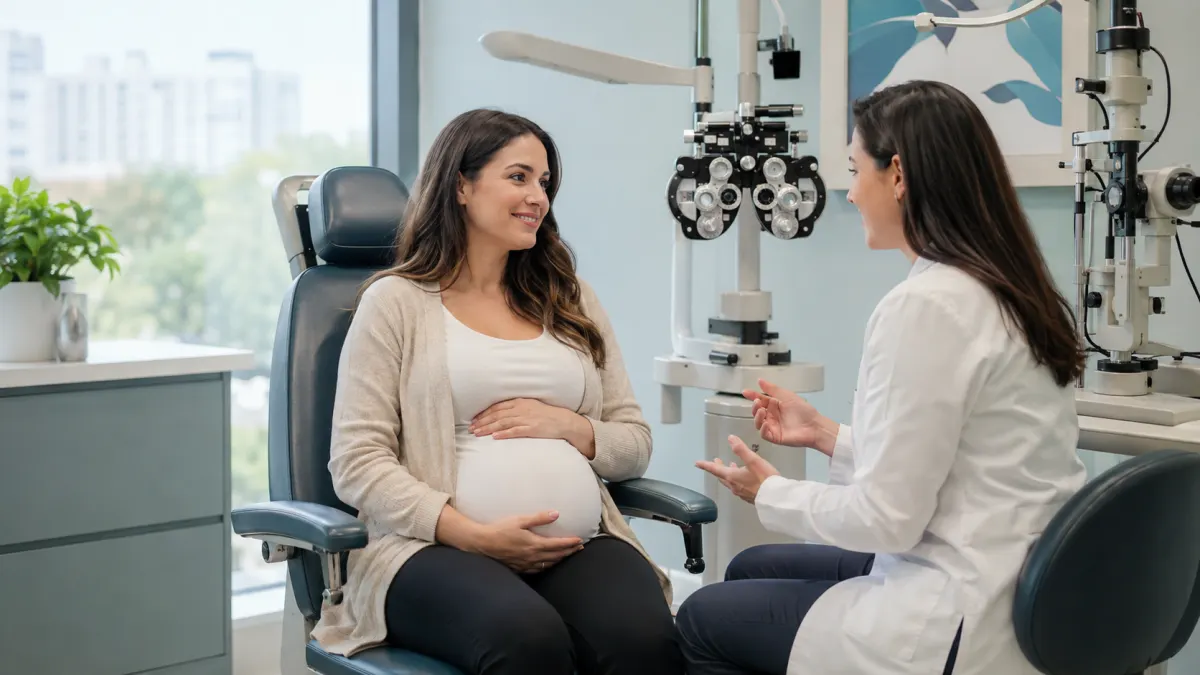
Pregnancy changes circulation, fluid balance, hormones, metabolism, and immune activity. The eyes can respond too. Contact lenses may feel dry, a familiar prescription may seem slightly off, or near work may become less comfortable. These changes are often temporary—but not every new visual symptom should be attributed to pregnancy.
Sudden or persistent blur, flashing lights, a dark spot, loss of side vision, double vision, severe headache, marked swelling, or elevated blood pressure can be warning signs of a pregnancy complication requiring urgent medical care. The right first call may be the obstetrical team, emergency department, or 911 rather than a routine glasses appointment.
Eye care during pregnancy is safest when the optometrist knows the gestational stage, obstetrical history, medications, diabetes status, blood pressure concerns, and exact symptoms. General information cannot decide what is normal for an individual pregnancy.
Mild focusing changes can occur
Fluid and hormonal changes may alter corneal thickness or curvature and affect the way light focuses. Some people notice mild nearsighted shift, intermittent blur, or a prescription that feels different. Findings are not consistent in every pregnancy, and substantial or rapid change needs investigation.
If current glasses remain functional and eye health is normal, it may be reasonable to postpone an elective permanent prescription change until vision stabilizes after delivery and, in some cases, breastfeeding. If blur interferes with driving, work, or safety, a temporary lens update may be worthwhile.
Do not assume a major shift is hormonal. Blood sugar changes, blood pressure disorders, retinal problems, migraine, dry eye, and neurological conditions can also change vision. An examination can determine whether refraction restores clarity or whether another cause is present.
Dry eye and contact-lens intolerance are common complaints
Hormonal and tear-film changes can make eyes burn, feel gritty, water, or fluctuate in clarity. Contact lenses that were comfortable before pregnancy may become noticeable sooner in the day. Changes in corneal sensitivity and shape may also affect lens fit.
Helpful steps can include reducing wearing time, using glasses more often, avoiding direct fans and vents, blinking fully during screens, and using a pregnancy-appropriate lubricating drop confirmed by the healthcare team. “Natural” does not automatically mean safe, sterile, or suitable for the eye.
Remove contacts and seek same-day eye care for redness, pain, light sensitivity, discharge, or reduced vision. A corneal infection is not an ordinary pregnancy discomfort. Never sleep, shower, or swim in lenses unless specifically directed for a medically managed reason.
If fit and comfort have changed, a contact lens examination can evaluate the lens on the eye. Avoid stocking a long supply of a new prescription until vision and the ocular surface are expected to be stable.
Preeclampsia can affect vision
Preeclampsia is a pregnancy-related blood-pressure disorder that can affect organs including the brain, kidneys, liver, and eyes. Visual symptoms may include persistent blur, flashing lights, spots, light sensitivity, double vision, or temporary loss of vision. Severe headache, upper abdominal pain, shortness of breath, nausea or vomiting, and sudden swelling may occur as well.
If you are pregnant or recently postpartum and develop new visual disturbance—especially with headache or known blood-pressure elevation—contact your obstetrical team immediately or seek emergency care according to their instructions. Do not wait for a routine eye appointment to decide whether it is serious.
Preeclampsia can arise after delivery as well as during pregnancy. Continue to treat postpartum warning symptoms urgently. An eye examination may document retinal or optic-nerve effects, but medical stabilization of the underlying condition is the priority.
Call 911 for severe neurological symptoms, seizure, loss of consciousness, sudden major vision loss, weakness, or speech difficulty.
Diabetes requires planned retinal monitoring
Pregnancy can change the course of pre-existing diabetes and diabetic retinopathy. People with type 1 or type 2 diabetes should coordinate eye monitoring with their diabetes and obstetrical teams before pregnancy when possible, early in pregnancy, and at the follow-up intervals recommended from their retinal findings.
Gestational diabetes is not the same risk context as diabetes that existed before pregnancy, but it still requires medical management. High or changing blood glucose can temporarily shift the glasses prescription. Ordering permanent lenses while glucose is changing may produce a correction that soon feels inaccurate.
Diabetic retinal disease can progress without obvious symptoms. A dilated eye examination evaluates blood vessels, bleeding, swelling, and the macula before vision necessarily changes. Optical coherence tomography may be used when macular swelling is suspected.
Do not delay a recommended retinal exam because vision feels clear. Our diabetic eye-exam guide explains why acuity alone cannot monitor retinal health.
Existing eye conditions need coordinated care
Glaucoma, uveitis, retinal disease, keratoconus, severe dry eye, and other conditions may require adjusted monitoring during pregnancy. Some diseases become quieter, some flare, and some remain unchanged. Treatment decisions balance ocular risk, pregnancy stage, route and dose of medication, and available alternatives.
Do not stop prescription eye drops after a positive pregnancy test without speaking to the prescriber and prenatal team. Abruptly stopping glaucoma or inflammatory treatment may harm vision. Equally, do not begin an over-the-counter eye product without checking whether it fits the pregnancy and your other medications.
The optometrist, ophthalmologist, family physician, pharmacist, and obstetrical clinician may need to communicate. Bring an accurate medication list, including supplements and non-prescription drops.
Migraine and visual aura may change
Migraine patterns can improve, worsen, or change during pregnancy and postpartum. A typical visual aura often builds gradually as a shimmering or zigzag pattern across both eyes’ shared visual field and resolves. However, a first event, a major pattern change, one-eyed loss, or aura-like symptoms with blood-pressure concerns cannot be safely self-diagnosed.
Pregnancy and the postpartum period alter vascular risk. Sudden loss of vision, weakness, numbness, speech trouble, severe imbalance, confusion, seizure, or a sudden severe headache requires emergency assessment.
Do not take a familiar migraine medicine during pregnancy unless the prenatal prescriber has confirmed it is appropriate. Medication safety can depend on the drug, dose, timing, health history, and feeding plans after delivery.
Puffy eyelids are usually benign—but not always
Mild facial or eyelid puffiness can accompany general fluid retention. Cool compresses and ordinary comfort measures may help when symptoms are mild and the prenatal team has no concerns.
Sudden swelling, especially with headache, visual change, high blood pressure, or swelling of the hands and face, needs immediate obstetrical advice because of possible preeclampsia. One-sided red, hot, tender swelling with fever, pain on eye movement, or reduced vision can suggest infection around the eye and needs emergency assessment.
A tender localized eyelid bump may be a stye. Warm compresses are often used, but do not squeeze it or apply non-sterile remedies. Persistent or spreading swelling should be examined.
Dilated eye examinations may be appropriate
Pregnancy is not an automatic reason to avoid all eye examinations or dilation. The decision depends on the clinical need, the agent considered, timing, and the patient’s medical context. When a retinal or optic-nerve problem is suspected, the benefit of obtaining essential diagnostic information may outweigh theoretical or limited risks.
Tell the clinic that you are pregnant or breastfeeding before drops are used. The optometrist can explain what is recommended and, when appropriate, coordinate with the prenatal clinician. Techniques such as gentle pressure over the tear drainage area after a drop may reduce systemic absorption, but follow the professional’s instructions.
Do not skip urgent evaluation of flashes, a curtain, field loss, or sudden blur because you assume no testing can be performed during pregnancy. Safe diagnostic planning is possible.
Retinal imaging and OCT do not use X-rays
Retinal photography captures images of the back of the eye using visible light and a camera system. Optical coherence tomography uses light to create cross-sectional images of retinal or optic-nerve layers. These are not X-ray tests and do not expose the patient to ionizing radiation.
Imaging can help document diabetic macular swelling, optic-nerve changes, or other retinal findings. It complements rather than automatically replaces dilation and clinical examination. The test chosen should answer a specific question.
Tell the operator if positioning is uncomfortable, particularly later in pregnancy. The scan is brief and can often be adjusted around posture and mobility.
Laser vision correction is generally postponed
Elective LASIK, PRK, and similar refractive procedures are generally deferred during pregnancy because prescription and corneal measurements may be less stable, medications are involved, and there is no urgency to perform elective surgery during this period. Surgeons may also recommend waiting after delivery and breastfeeding until refraction and the ocular surface stabilize.
Pregnancy does not mean a previous laser procedure will necessarily reverse, but new blur should be assessed instead of immediately planning an enhancement. Dry eye and temporary refractive change can affect how the result feels.
If you are considering surgery in the future, retain previous prescriptions and surgical records. A laser consultation can be timed when measurements are reliable.
Ordinary eye care still matters
Broken glasses, uncomfortable contacts, dry eye, and routine eye disease do not pause during pregnancy. An examination can be adapted to the person’s comfort, mobility, nausea, light sensitivity, and medical needs.
Bring:
- estimated due date or weeks postpartum;
- obstetrical and general medical history;
- blood-pressure or diabetes concerns;
- all medications, drops, and supplements;
- current glasses and contact-lens details;
- the start, duration, and pattern of visual symptoms; and
- names of clinicians who should receive findings.
If nausea makes a long visit difficult, tell the clinic when booking. Necessary testing can be prioritized, and routine components may sometimes be staged.
Vision changes after delivery deserve attention too
Sleep disruption, dehydration, medication changes, migraine, dry eye, and hormonal shifts can affect comfort postpartum. Prescription changes may take time to stabilize. Yet new headache and vision disturbance after delivery can be a medical warning, not simply exhaustion.
Urgently report flashes, persistent blur, spots, double vision, a dark field, severe headache, shortness of breath, sudden swelling, or high blood pressure to the obstetrical team or emergency service. Postpartum preeclampsia and vascular events must be considered.
If vision is mildly blurred but stable, an eye exam can determine whether dry eye, refraction, or another ocular factor is involved. Do not drive until vision is reliably clear.
When to seek urgent care
Contact the obstetrical team urgently or seek emergency assessment for:
- sudden or persistent visual blur;
- flashes, spots, a curtain, or missing vision;
- severe or new headache with visual symptoms;
- double vision;
- sudden swelling or known elevated blood pressure;
- neurological symptoms;
- sudden major change during the postpartum period; or
- any symptom the prenatal care plan identifies as a warning.
Seek same-day eye care for pain, a red eye, light sensitivity, contact-lens-related symptoms, trauma, or reduced vision. Call 911 for seizure, loss of consciousness, weakness, speech trouble, severe confusion, or sudden major vision loss.
Pregnancy-related eye care in North York
Many mild focus and comfort changes are temporary, but pregnancy is never a reason to dismiss sudden visual symptoms. The eye findings and the wider medical picture must be considered together.
Optima Eye Care can assess refraction, dry eye, contact-lens fit, retina, optic nerves, and other ocular causes for North York patients while coordinating with medical care when necessary. For stable concerns, request an eye examination and note that you are pregnant or postpartum. For sudden visual change, severe headache, neurological symptoms, or blood-pressure concerns, contact your obstetrical team or emergency services immediately.