

Eye Care Resources
Orthokeratology in North York: Is an Overnight Lens Routine Right for Your Family?
October 8, 2025
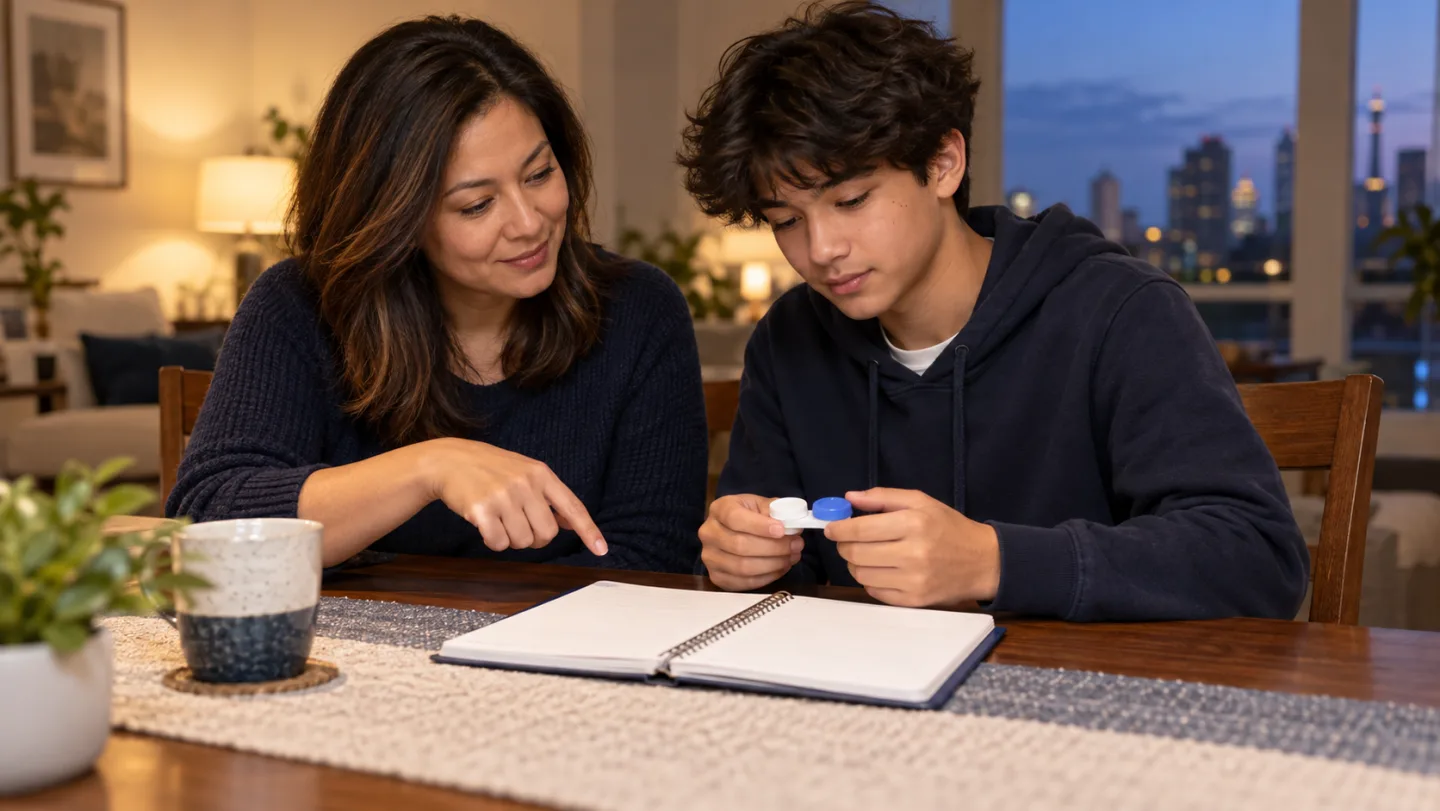
The idea is appealing: wear a specially fitted lens overnight, take it out in the morning, and spend the day less dependent on glasses. For a teenager carrying a backpack, an instrument case and sports equipment through North York, that can sound wonderfully convenient. For a parent watching a prescription change, it can also raise a more important question: could this help manage myopia?
Orthokeratology, often shortened to ortho-k, deserves a careful conversation before anyone purchases lenses. The decision involves the eyes, the purpose of treatment and the household routine that will support it. A child who wants daytime freedom still needs an adult who understands the care instructions, knows when to stop lens wear and can arrange follow-up appointments.
This guide explains what to discuss when exploring orthokeratology in North York. Availability, suitability and the specific lens system need to be confirmed with the prescribing eye-care professional. An educational article cannot establish whether an individual cornea is suitable for overnight treatment.
What changes while the lens is on the eye?
Ortho-k uses specially designed rigid gas-permeable lenses to alter the shape of the cornea, the clear front surface of the eye. That changes how light is focused. The daytime correction is temporary: when treatment is discontinued, the cornea returns toward its previous shape and the original nearsightedness returns. The wearing schedule must be prescribed individually. These points are outlined in the FDA overview of contact lens types.
That temporary effect is useful to understand before discussing benefits. It means the result depends on ongoing treatment. It also means someone should have a plan for illness, a damaged lens, travel or a decision to stop. The appropriate backup correction may change during a transition, so an old pair of glasses is not automatically the right answer at every stage.
Think of the consultation as planning a continuing routine. Ask how the clinician will establish the starting measurements, assess the early response and decide whether the daytime vision is adequate for school, work and activities. A promise of perfect vision after a fixed number of nights is less helpful than a clear explanation of what will be checked.
Separate daytime correction from myopia management
Families may approach ortho-k for two different reasons: reducing the need for daytime correction and trying to slow a child’s myopia progression. Those goals need separate discussion. Seeing clearly on a classroom board does not, by itself, tell you how the eye is growing over time.
Orthokeratology is among the approaches considered in myopia management. Treatment selection should account for the child’s age, progression, eye findings, safety, cost and ability to follow instructions. The International Myopia Institute clinical management report describes this individualized approach. No option should be presented as a guaranteed way to stop all future prescription change.
Bring previous prescriptions if you have them. Ask what measurements will be used to follow progress, whether eye-length measurements are available or appropriate, and how the clinician will decide that the plan needs adjustment. Request an explanation in ordinary language so that both the parent and child understand the goal.
Our myopia management information can help you prepare for that conversation. The useful question is not simply which product sounds most advanced. It is which plan fits the child’s findings and can be followed reliably over time.
Is the household ready for the routine?
Age alone does not describe readiness. A younger child with consistent adult help may have a different level of support from an older teenager who moves between households and frequently forgets supplies. Be honest about the actual routine rather than the routine everyone hopes will happen.
Consider a typical school evening. Who checks that hands have been washed and dried? Where are the instructions kept? Is there a clean, dry place to handle lenses? Who notices when the correct solution is running low? If a parent works evenings, does another adult know the procedure rather than relying on a verbal summary from the child?
Discuss weekends as well. Sleepovers, school trips and late sports practices can interrupt habits. Make a written plan with the prescriber for missed wear and unexpected problems. Do not invent a catch-up schedule or extend wearing time because a busy night disrupted the usual routine.
The child should feel able to say that something hurts or that a step was missed. Turning lens care into a test of maturity can make it harder to report mistakes. A calm conversation about what happened gives the clinician more useful information than reassurance that the routine was probably followed.
What should happen before lenses are prescribed?
A fitting is more than choosing a prescription number. Ask about the examination of the eye surface, corneal shape measurements and the checks used to judge the lens response. Previous eye injuries, surgery, allergies, dryness and contact lens problems belong in that discussion.
Bring the products already used around the eyes, including prescription drops, allergy drops and contact lens solutions. A phone photograph of the packaging is helpful when the name is difficult to remember. Do not stop prescribed medicine just to simplify the appointment; ask how it affects the proposed plan.
Use the visit to clarify practical expectations. How many early appointments might be needed? When should the lenses be worn before a review? What happens if the initial fit needs revision? Who provides care if the usual clinician is away? Written answers reduce confusion once the family is managing a new routine at home.
If a clinic refers you elsewhere for a particular lens system, ask how records will be shared and which clinician will oversee ongoing care. Knowing who is responsible is more useful than assuming every eye-care visit covers every part of the treatment.
Overnight wear requires a specific prescription and safety plan
Prescribed overnight ortho-k is a distinct treatment. It does not make sleeping in ordinary daily-wear contacts safe. Contact lenses can cause serious infection and corneal ulcers, and symptoms should not be dismissed because a lens was prescribed professionally. The FDA contact lens risk guidance advises removing lenses and contacting an eye-care professional when problems occur.
Pain, unusual redness, light sensitivity, discharge or reduced vision call for prompt assessment. Stop lens wear and seek urgent advice rather than reinserting the lens to see whether the problem settles. Significant pain or vision loss warrants urgent eye care, including an emergency department if appropriate care cannot be reached promptly.
Keep the clinic number somewhere that does not depend on finding an appointment email. A teenager should know the symptoms that require telling an adult immediately. For travel, identify how to access care at the destination before departure rather than searching for help only after discomfort develops.
When reporting a problem, give concrete details: which eye, when symptoms began, whether the lens is still in place and whether vision has changed. Mention water exposure or a missed cleaning step honestly. Those details help guide care; they are not a reason to feel embarrassed.
Build lens care around clear written instructions
Follow the exact cleaning and disinfection system prescribed for the lens. Water and saliva are not substitutes for lens solution. The CDC guidance on contact lenses and water explains why water exposure can introduce harmful organisms. Keep lenses away from swimming, showering and rinsing with tap water.
Ask the clinician to watch you demonstrate the routine. Reading a leaflet and successfully handling a lens are different tasks. The person supervising a child should also be able to identify the correct products, explain the sequence and recognize when a lens or case needs replacement.
Storage deserves attention. Avoid leaving supplies beside an open sink where splashes are likely. Keep the written instructions with the care kit, and check product expiry dates before a trip. Do not transfer solutions into unlabelled travel containers or substitute a similar-looking bottle without checking that it is compatible.
If more than one household is involved, duplicate the agreed instructions rather than creating slightly different routines. A shared checklist can cover supplies and appointments without turning the process into constant monitoring. The aim is consistency that remains manageable during ordinary busy weeks.
Plan for school, sports and changing vision
Ask what the child should do if vision is clear in the morning but less comfortable later. The time of day matters. A short note about classroom distance, evening homework and outdoor activities can make a review more informative than saying that vision was generally fine.
Do not use a sports practice or a driving lesson as the first test of uncertain vision. The clinician should advise when vision is adequate for demanding activities. Contact lens treatment also does not replace protective sports eyewear. Protection and prescription correction solve different problems.
For North York families balancing transit, school pickup and after-school activities, scheduling the first fitting period thoughtfully can help. Avoid beginning immediately before an extended trip if follow-up access will be difficult. Ask how much flexibility is available and which appointments are particularly important during the early phase.
Create a backup plan that the school or another caregiver can understand. It might include whom to contact, where an appropriate pair of glasses is kept and what to do if the child reports discomfort. The prescribing clinician should determine the optical details of that plan.
Understand the full commitment before deciding
Request a written explanation of fees and what they include. Initial fitting, follow-up visits, replacement lenses, care products and additional testing may be billed differently. Ask about a lost or damaged lens and what happens if the treatment proves unsuitable. Coverage depends on the actual benefit plan, so verify it rather than assuming a general vision allowance applies.
Compare the practical commitment with other options discussed during the examination. A plan that looks convenient during the day may require more organization at night. Another option may suit a child’s preferences or a family’s schedule better. Choosing an approach that can be maintained reliably is a reasonable outcome of a careful consultation.
Bring three priorities to the appointment: what you hope to improve, what concerns you and what would make the routine difficult. That keeps the conversation connected to daily life instead of becoming a list of product features.
To discuss your child’s prescription and next steps, request an appointment at Optima Eye Care or call (416) 497-3705. Ask specifically about orthokeratology assessment and availability when booking. A useful decision begins with a clear goal, an appropriate examination and a care plan your family understands.