

Eye Care Resources
Nutrition and Eye Health in North York: Building a Useful Food Routine
March 7, 2025
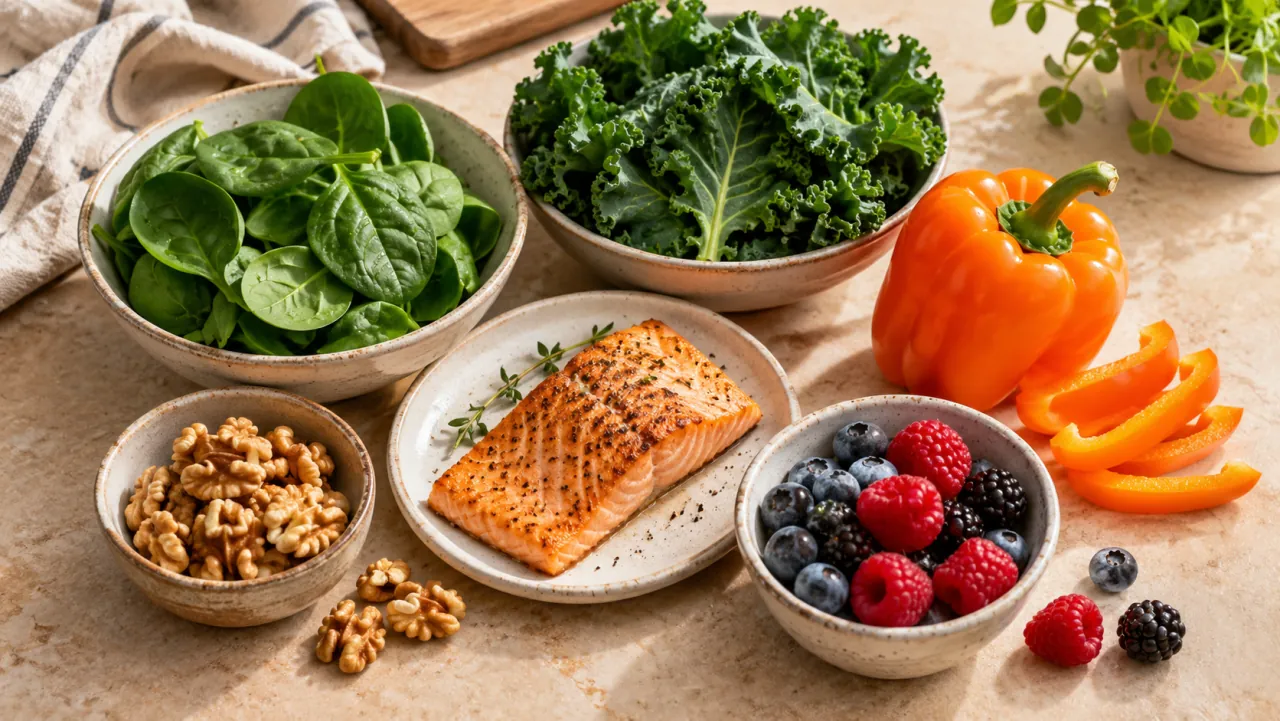
The grocery aisle and the supplement shelf tell very different stories about eye health. One encourages colourful meals; the other offers bottles labelled for vision support, often with unfamiliar ingredients and confident claims. It is easy to wonder whether ordinary food is enough or whether you are missing something essential by leaving a product on the shelf.
The answer begins with a distinction. A varied eating pattern supports general health, including health factors that matter to the eyes. A supplement may have a specific role for a particular diagnosed condition. Neither approach replaces an eye examination, and a food marketed as good for vision cannot correct a glasses prescription or treat a new retinal symptom.
For North York households, useful nutrition advice should fit the food you enjoy, the shops you can reach, your budget and any medical restrictions. You do not need an elaborate menu of expensive ingredients. You need a sustainable routine and a clear reason for any supplement added to it.
Begin with the whole eating pattern
Canada’s Food Guide recommends a variety of vegetables and fruits, whole grain foods and protein foods, with plant-based protein choices included more often. It also recognizes the importance of cooking, enjoying food and cultural traditions. These are general healthy-eating recommendations, not a prescription to prevent a specific eye disease. Health Canada outlines the recommendations.
Look first at the meals you already repeat. Is there a vegetable you could add to a familiar lunch? Could a bean or lentil dish become part of a regular dinner? A small change to an established meal is often easier to keep than a completely new weekly menu.
Avoid grading foods as either eye-saving or eye-damaging. That framing can make eating feel like a medical test and overstate what an individual ingredient can do. The practical aim is a varied pattern that also fits your overall healthcare advice.
Use variety instead of chasing a single superfood
Carrots have become shorthand for eye nutrition, but they should not crowd out every other vegetable. Choose a range of colours and types that suit your cooking. Leafy greens can be added to soups, curries, omelettes or stir-fries, while other vegetables may fit sandwiches, roasted dishes or simple side plates.
In North York, many households already cook with a broad variety of greens, legumes and grains. Build on those familiar foods rather than assuming that a particular imported berry or branded powder is necessary. A meal can be culturally familiar, enjoyable and nutritionally varied at the same time.
If someone dislikes a particular vegetable, try a different preparation or another option rather than turning dinner into an argument. Raw, cooked, blended into a sauce and served separately are different experiences. The goal is a workable range of foods, not compliance with a single idealized salad.
Be careful with claims that one ingredient will improve night vision, eliminate dry eye or prevent cataracts in everyone. A product’s association with a nutrient is not proof of a treatment effect. Ask what evidence supports the exact claim before paying more for it.
Plan for the week you actually have
Food routines fail when they assume unlimited time and energy. If several evenings involve a long commute or children’s activities, plan simple meals for those days. Keep a short list of options you can prepare comfortably instead of expecting every dinner to be cooked from scratch in several stages.
A practical shopping list can include ingredients for two or three familiar meals, a few flexible vegetables and convenient protein options. Check what is already in the kitchen before shopping. Buying more perishable food than you can use does not make the plan healthier or more affordable.
Frozen vegetables, canned beans and other convenient staples can help make meals feasible. Compare labels where relevant to your medical needs, and choose options that suit the way you cook. Convenience itself is not a reason to dismiss an ingredient.
If you share meals with others, ask which changes they would enjoy. One person can choose a vegetable dish, another can prepare a grain or protein option, and someone else can handle the shopping list. Shared practical work is often more useful than one person becoming responsible for everyone’s eye-health intentions.
Know what an eye supplement is supposed to do
Before buying a supplement, ask what diagnosis it addresses and what outcome it is expected to change. A label saying vision support is not the same as evidence that a product prevents eye disease in a healthy person. The ingredients, doses and studied population matter.
Antioxidant supplements have not shown a general ability to prevent every age-related eye problem. Research findings for one condition should not be extended to cataracts, glaucoma or refractive error without evidence. The National Center for Complementary and Integrative Health reviews antioxidant supplement evidence and safety.
Bring the actual bottle or a clear photograph of its label to an appointment. A clinician cannot assess a mixture accurately from the phrase eye vitamin alone. Include the serving size and any other supplements you take, since ingredients may overlap.
Ask whether the product is necessary, optional or inappropriate for you. If a supplement is recommended, clarify the intended duration and review plan. A useful recommendation should have a clinical reason, not merely rely on the idea that more nutrients must be better.
AREDS2 has a specific role in macular degeneration
AREDS2 supplements are a particular formulation studied for age-related macular degeneration. They may help reduce progression risk in people with intermediate AMD or certain situations involving advanced disease in one eye. They are not a general supplement for everyone hoping to avoid AMD and do not restore vision already lost. The National Eye Institute explains who may benefit.
Ask the eye care professional to identify your stage of AMD before discussing a product. If you have no diagnosis, family history alone does not establish that the same formulation is indicated. The examination provides the information needed for that decision.
If AREDS2 is recommended, ask the clinician or pharmacist to check the formulation. Similar package names do not always mean identical ingredients or amounts. Do not combine multiple products in an attempt to recreate a dose without professional advice.
Our macular degeneration care information explains the broader assessment conversation. Supplements, when indicated, are one part of care alongside monitoring and any specialist treatment required. A new distortion or central dark patch needs prompt assessment even if you take the recommended formulation consistently.
Smoking history belongs in the supplement discussion
Older AREDS formulations containing beta-carotene are a concern for people who smoke or formerly smoked because high-dose beta-carotene increased lung cancer risk in research. AREDS2 replaced beta-carotene with lutein and zeaxanthin. The National Institutes of Health describes the evidence behind the revised formulation.
Tell the clinician about previous smoking as well as current use. Do not assume that stopping years ago makes the history irrelevant to supplement selection. The purpose of the question is to choose safely, not to judge a past habit.
This concern about high-dose supplements should not be turned into a reason to avoid ordinary vegetables. Food and concentrated formulations are different contexts. Ask for clarification if an ingredient warning leaves you unsure about your usual meals.
Also discuss medication interactions and other medical conditions before beginning a high-dose product. Your pharmacist and prescribing clinicians can help review the complete list. A supplement available without a prescription can still have meaningful effects and deserves the same accurate recordkeeping as other products you take.
Adapt nutrition advice to medical restrictions
General suggestions need adjustment when you have kidney disease, diabetes, swallowing difficulties, food allergies or another condition affecting food choices. Follow the advice from your treating team and ask for a registered dietitian’s help when you need an individualized plan.
Do not add large quantities of a food or supplement because an eye-health article recommends its nutrients. Your wider medical needs may change the appropriate choice or amount. The useful question is how to support overall health within the restrictions that apply to you.
Tell your eye care professional about relevant conditions and tell your medical team about any eye diagnosis. If several professionals give advice, ask them to clarify an apparent conflict rather than choosing whichever instruction sounds more appealing.
For a family member with poor appetite or difficulty preparing meals, focus on the practical barrier. They may need accessible packaging, help shopping, smaller manageable meals or a medical assessment. A bottle of vitamins does not solve every problem that makes eating difficult.
Keep food accessible when vision is reduced
Nutrition advice is less useful if labels are hard to read or the kitchen feels unsafe. Use a comfortable light, clear storage locations and labels that are large enough to identify. Avoid relying only on colour when distinguishing containers or medicines.
If shopping is difficult, prepare a readable list and ask for the specific assistance you need. You may want help checking labels while continuing to choose meals independently. Discuss persistent barriers with your care team, including whether low vision support would be helpful.
At home, organize commonly used ingredients so they can be found reliably. Keep similar containers clearly separated when confusing them could matter. Practical accessibility can make a greater difference to daily eating than adding another unfamiliar ingredient.
Bring one useful question to your next eye examination
A productive nutrition conversation might begin with whether you have a condition for which supplements are indicated. If the answer is no, ask which general health factors deserve attention and keep the focus on a sustainable eating pattern. If the answer is yes, clarify the exact formulation and follow-up.
Bring your medication and supplement list to a comprehensive eye examination, and request an appointment when routine care is due. Seek prompt assessment for a new visual change rather than trying dietary changes first. Food can be part of caring for yourself in North York, while diagnosis and treatment remain essential when an eye problem appears.