

Eye Care Resources
Migraine Visual Aura in North York: Zigzags, Blind Spots, and When It Is Urgent
July 16, 2026
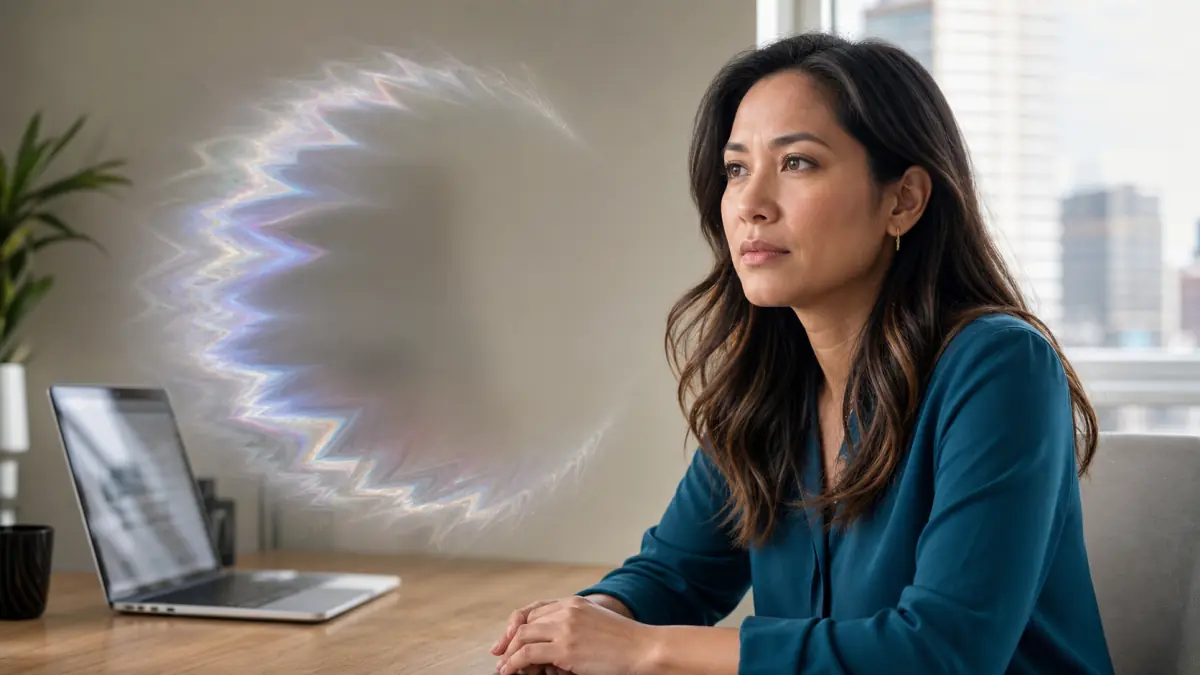
A small blurry spot appears while you are reading. Its edge begins to shimmer, forming a jagged crescent that slowly expands across one side of your view. Twenty minutes later it breaks apart, perhaps followed by a headache—or perhaps by no pain at all. This can be a migraine visual aura, but a first episode of temporary visual disturbance should not be diagnosed from a description alone.
Migraine aura is a temporary neurological event. The most common form affects vision because changing electrical and chemical activity moves across the brain’s visual cortex. The phenomenon usually belongs to both eyes’ shared visual field even when it seems to occupy only the left or right side. It is different from retinal migraine, a rare diagnosis involving truly monocular visual symptoms, and from vascular or retinal problems that can also cause transient vision loss.
Timing, pattern, whether one or both eyes are involved, accompanying neurological symptoms, age, medical history, and examination findings all matter. New vision loss, a curtain or shadow, weakness, speech difficulty, or an abrupt unfamiliar pattern requires urgent medical assessment. Optima Eye Care offers emergency eye-care guidance for North York patients and can help determine when ocular, neurological, or emergency referral is appropriate.
“Ocular migraine” is an imprecise term
People use “ocular migraine” to describe several different experiences: a shimmering binocular aura, temporary blur, light sensitivity during a headache, or vision loss in one eye. Because the term has no single consistent meaning, it can create false reassurance.
Two conditions are commonly placed under that label:
- Migraine with visual aura begins in the brain’s visual-processing pathways and usually affects corresponding areas of the visual field in both eyes.
- Retinal migraine is an extremely rare diagnosis involving fully reversible visual disturbance in one eye and associated migraine features, after other causes of transient monocular vision loss have been excluded.
When calling a clinic, describe exactly what you experienced instead of saying only “ocular migraine.” Explain whether you saw zigzags, flashing, a dark curtain, missing vision, blur, or coloured shapes; how quickly it began; how long it lasted; whether each eye was affected; and whether headache or neurological symptoms occurred.
A typical visual aura builds gradually
The classic aura often starts as a small area of altered vision near the centre and enlarges over several minutes. It may drift toward the periphery, leaving a temporarily blurred or missing area behind it. Common descriptions include:
- shimmering or flickering zigzag lines;
- a jagged crescent or semicircle;
- a bright or silvery border around a blind spot;
- sparkling dots, stars, or geometric shapes;
- a heat-wave or broken-glass distortion;
- difficulty seeing letters or part of a face; or
- a patch of missing vision that changes position or size.
An aura can include positive symptoms—seeing light or patterns that are not physically present—and negative symptoms, such as a blind area. Many episodes contain both. The pattern often evolves rather than appearing at full intensity in one instant.
International diagnostic criteria describe typical aura symptoms as developing over at least several minutes, remaining fully reversible, and generally lasting between 5 and 60 minutes. Real patients do not always fit every criterion perfectly, especially during a first reported event. A duration outside that range is a reason for assessment, not proof that the event is or is not migraine.
Why it can feel as though only one eye is affected
Each side of the brain’s visual cortex receives information from the corresponding side of space seen by both eyes. An aura occupying the left half of the visual field may therefore feel like “the left eye,” even though the left-sided disturbance remains when either eye is covered.
If it is safe and you have already received medical guidance about recurrent aura, you can cover one eye and then the other without pressing. Note whether the same pattern remains in the scene with either eye open. A phenomenon present with each eye individually is binocular in origin, even if it occupies only one side.
Do not perform prolonged self-testing while driving, crossing a street, operating equipment, or caring for someone in a risky setting. Pull over or stop the activity safely. A first episode, true vision loss in one eye, or an atypical event still needs professional evaluation regardless of the home observation.
Aura can occur before, during, or without headache
Visual aura often precedes migraine headache, but the sequence varies. Head pain may begin during the aura or within the following hour. Some people experience aura without any headache, sometimes called typical aura without headache or “silent migraine.”
A migraine attack can also include nausea, vomiting, sensitivity to light, sound, smell, or movement, neck discomfort, difficulty concentrating, fatigue, and a need to rest. Headache is often throbbing and one-sided but can be bilateral or non-throbbing.
Aura without headache is not automatically harmless simply because pain is absent. A new painless visual event can resemble a transient ischemic attack, retinal circulation problem, or focal seizure. This distinction becomes especially important when aura begins for the first time later in life or when the pattern changes.
Aura is not ordinary glare or eye strain
Dry eye, an outdated prescription, uncorrected astigmatism, contact-lens deposits, cataract, and bright headlights can create blur, glare, halos, and starbursts. Those optical symptoms tend to remain linked to the light source or focusing task and do not usually form a gradually expanding neurological pattern.
Screen use may contribute to a migraine attack in a susceptible person through brightness, flicker, posture, prolonged concentration, missed breaks, or associated stress. It does not mean the eyes generated the aura or that permanent damage is occurring each time.
Closing the eyes does not always remove an aura because the activity is being generated within the visual system. The pattern may remain visible against a dark background. This differs from a physical floater, which drifts with eye movement, or an afterimage that follows staring at a bright or high-contrast object.
Retinal migraine is rare and affects one eye
Retinal migraine is defined by repeated, fully reversible attacks of positive or negative visual symptoms confined to one eye, usually developing gradually, lasting 5 to 60 minutes, and occurring with or near a migraine headache. Other causes of temporary monocular blindness must be excluded.
That final requirement is crucial. Sudden one-eyed dimming, a dark shade, missing patch, or blackout can result from reduced blood flow to the retina or optic nerve, carotid or cardiac emboli, giant cell arteritis, retinal disease, optic-nerve disease, or other urgent conditions. Most transient monocular vision loss should not be casually labelled retinal migraine.
If you are certain the disturbance remains only when one particular eye is open, seek urgent assessment—especially for a first episode. Do not wait for a headache to appear before deciding whether the event matters.
A retinal tear creates a different pattern—but overlap is possible
Retinal traction can produce brief flashes, often described as lightning streaks or camera flashes at the side of vision. A posterior vitreous detachment may also create new floaters. A retinal tear or detachment can add a sudden shower of dots, a curtain, shadow, veil, or missing peripheral field.
Migraine aura more often forms an evolving pattern that expands across the field and resolves. Retinal flashes may be very brief, repeat with eye movement or darkness, and remain associated with one eye. These are useful tendencies, not rules reliable enough for self-diagnosis.
New flashes or floaters require a dilated retinal assessment, particularly with a shadow, trauma, high nearsightedness, previous retinal tear, or recent eye surgery. See our flashes and floaters guide for more detail.
A transient ischemic attack or stroke must be considered
Migraine aura often develops gradually and adds shimmering positive phenomena. A transient ischemic attack, retinal artery event, or stroke more often causes sudden loss of function: a dark curtain, missing field, weakness, numbness, or speech difficulty that begins near maximum intensity. However, there can be overlap, and positive versus negative symptoms do not safely settle the diagnosis.
Call 911 for visual disturbance accompanied by:
- new weakness or numbness on one side;
- facial droop;
- trouble speaking, understanding, or finding words;
- severe imbalance, collapse, or loss of coordination;
- confusion or reduced consciousness;
- a sudden, severe, unusual headache; or
- persistent loss of vision or a visual field.
Do not drive yourself. Symptoms that resolve can still represent a transient ischemic attack and need emergency evaluation because the risk does not end when vision returns.
Speech, tingling, and sensory aura can accompany vision changes
Migraine aura is not exclusively visual. Tingling may begin in a hand and slowly move up the arm or involve one side of the face. Some people temporarily struggle to find or understand words. Different aura symptoms may occur in sequence.
These features can be frightening and overlap with stroke or seizure. A known history of migraine does not protect someone from having a new vascular event. Sudden onset, persistent weakness, loss of consciousness, a first episode, a major pattern change, or an event unlike the person’s established aura needs emergency assessment.
Motor weakness is not part of ordinary visual aura and belongs to a less common migraine subtype only after specialist diagnosis. Do not assume new weakness is “just hemiplegic migraine.”
Seizure-related visual symptoms can look similar
Electrical activity from the visual areas of the brain can produce brief flashes, coloured shapes, or other visual phenomena during a focal seizure. Episodes may be very short, stereotyped, and accompanied by altered awareness, involuntary movement, confusion, or other neurological features, but presentations vary.
An eye exam can exclude many ocular causes, yet a normal eye exam does not distinguish every neurological condition. A physician or neurologist may consider brain imaging or electroencephalography when the timing, repetition, associated symptoms, or examination does not fit a typical migraine pattern.
Record what witnesses observed as well as what you experienced. Do not continue driving or operating machinery until a clinician has assessed any episode involving altered awareness or loss of control.
The eye examination is still valuable
Migraine visual aura begins in the brain, so the eyes often look normal between and during attacks. An eye examination is valuable because retinal tears, optic-nerve disorders, acute glaucoma, uveitis, corneal disease, and other eye conditions can also produce flashing, blur, pain, or missing vision.
The assessment may include:
- visual acuity and prescription;
- pupil size and responses;
- eye alignment and movements;
- colour vision;
- confrontation or automated visual fields;
- slit-lamp examination of the front of the eye;
- eye-pressure measurement; and
- a dilated examination of the vitreous, retina, macula, blood vessels, and optic nerve.
Optical coherence tomography, retinal photography, or other imaging may be added based on symptoms. If a field defect or visual reduction persists after the event, further testing and urgent medical referral may be needed.
Diagnosis relies heavily on an accurate timeline
There is no single blood test or eye scan that proves a typical migraine aura. The diagnosis is based on a recurring pattern, complete reversibility, timing, associated migraine features, neurological and eye examinations, and exclusion of more dangerous explanations when appropriate.
Write down:
- the exact start and finish time;
- whether onset was sudden or gradually spreading;
- where the pattern began and how it moved;
- colours, shapes, shimmer, blur, or missing areas;
- whether it persisted with each eye covered;
- headache timing and location;
- nausea, light or sound sensitivity;
- tingling, speech difficulty, weakness, or imbalance;
- recent injury, illness, pregnancy, or medication change; and
- sleep, meals, hydration, caffeine, and stress that day.
A drawing can be more informative than trying to find the perfect word. Sketch the outline and direction of movement soon after the event. Do not try to photograph the aura; a phone camera records the external scene, not the brain’s visual perception.
A normal exam does not mean the event was imagined
Because aura is temporary, visual fields, retinal images, and neurological tests can be normal after it resolves. Normal results are reassuring when the history fits a recognized pattern and urgent mimics have been considered. They do not imply the patient exaggerated the experience.
Conversely, a history that sounds like migraine does not make examination optional when warning signs are present. Diagnosis is strongest when the symptom pattern and objective assessment fit together.
If episodes remain atypical, change over time, or begin later in life, follow through with the recommended primary-care, neurology, emergency, or vascular evaluation even if the first eye exam is normal.
Triggers are individual and often additive
Migraine is a neurological disorder, not a failure of discipline. A “trigger” does not cause migraine in everyone and may not produce an attack every time. Several factors may combine to lower the threshold on a particular day.
Commonly reported influences include irregular sleep, missed meals, dehydration, stress followed by relaxation, hormonal changes, illness, alcohol, changes in caffeine intake, intense light, odours, and prolonged sensory stimulation. Weather changes are reported by some patients but cannot be controlled.
Use a diary to look for repeated relationships rather than banning a long list of foods after one event. Overly restrictive diets can create stress and missed meals, which may be counterproductive. Maintain a regular sleep and meal schedule, drink according to ordinary health needs, and change caffeine gradually.
What to do during a familiar aura
If the episode matches a previously assessed aura and no new warning signs are present:
- Stop driving, cycling, cooking over heat, climbing, or operating equipment.
- Move to a safe, comfortable place.
- Note the start time and pattern.
- Reduce harsh light and screen brightness without forcing complete darkness.
- Follow the acute migraine plan provided by your physician.
- Arrange help with children, travel, or work if the field defect makes tasks unsafe.
Do not stare into bright lights to “test” the blind spot. Avoid rubbing or pressing the eyes. Sunglasses may improve comfort, but they do not stop the neurological wave.
If the aura lasts longer than the limit discussed in your care plan, differs from prior events, affects only one eye, or includes weakness or persistent speech difficulty, seek urgent assessment.
Treatment belongs to a migraine care plan
Management depends on how often attacks occur, whether headache follows, degree of disability, other health conditions, pregnancy plans, and medicines already used. A primary-care physician or neurologist may recommend an acute treatment taken during an attack, preventive treatment used regularly, a neuromodulation device, or a combination.
Some headache medicines are most effective when taken early, but the timing in relation to aura and headache varies by product and patient. Follow the prescriber’s instructions rather than using someone else’s migraine medication. Overusing acute pain medicine can contribute to medication-overuse headache.
Frequent aura without headache may still justify neurological review. Do not start aspirin on your own in an attempt to prevent aura; bleeding risk, other medications, age, and the actual diagnosis must be considered.
Tinted and blue-light lenses have limits
A carefully selected tint may reduce photophobia or visual discomfort for some people with migraine. Standard sunglasses outdoors protect against UV and can make bright environments more tolerable. Very dark lenses worn continuously indoors may increase dark adaptation and make ordinary light feel harder to tolerate over time.
Blue-light-filtering glasses are marketed as a migraine cure, but they do not treat the cortical process that creates aura. Screen comfort depends on brightness, contrast, flicker, glare, working distance, blinking, posture, and breaks as well as spectral colour.
An optometrist can correct refractive error and discuss tint options, but clear vision through a lens does not exclude migraine and a perfect prescription cannot prevent every neurological attack.
Migraine with aura affects other health conversations
Tell medical clinicians that aura is part of your migraine history. It may influence discussions about smoking, blood pressure, cardiovascular risk, pregnancy, hormonal contraception, and menopausal hormone therapy. The safest choice depends on age, aura frequency, vascular risk factors, and the reason a medication is being considered.
Do not abruptly stop prescribed contraception or hormone treatment after reading a general warning online. Contact the prescriber for an individualized review. Seek urgent care for new neurological symptoms regardless of whether the medication has changed.
Smoking adds avoidable vascular risk and should be addressed with evidence-based cessation support. Routine blood-pressure, diabetes, and cholesterol care also matters, but controlling these factors does not make new monocular vision loss safe to ignore.
Children and teenagers can experience visual aura
Young people may describe sparkles, colours, blurry spots, or “weird vision” without being able to map the field precisely. Headache may be shorter than in adults, and nausea, abdominal symptoms, pallor, or a need to sleep can be prominent.
A first event in a child still deserves medical assessment, especially with weakness, confusion, fever, stiff neck, seizure, head injury, persistent vomiting, or vision loss in one eye. Parents should not assume that screen time caused the episode or give adult migraine medicine.
Track the child’s words without leading the description. School staff can help record duration, behaviour, and whether the child could see with either eye. A pediatric eye exam and medical evaluation can then be matched to the history.
New aura after age 50 needs assessment
Some people experience aura without headache later in life, and a previous migraine pattern can evolve. However, a first visual aura after age 50 overlaps with transient ischemic attack, retinal circulation problems, and giant cell arteritis.
Urgent assessment is particularly important with scalp tenderness, jaw pain while chewing, unexplained fever or weight loss, new shoulder or hip aching, or temporary vision loss. Giant cell arteritis can threaten vision in both eyes and requires immediate medical treatment.
Do not wait for a second episode to make the pattern “recurrent.” A new event later in life deserves a timely eye and medical evaluation even if it resolved completely.
Warning signs that should not wait
Seek urgent same-day eye or medical assessment for:
- a first visual episode that has never been evaluated;
- symptoms definitely confined to one eye;
- a sudden dark curtain, blackout, or missing field;
- new flashes with floaters or a shadow;
- visual disturbance lasting less than 5 minutes or more than 60 minutes;
- a major change from the established aura pattern;
- persistent blur or field loss after the shimmer resolves;
- onset after age 50;
- visual symptoms after head or eye injury; or
- a painful red eye, severe eye pain, or halos with nausea.
Call 911 for weakness, facial droop, speech or comprehension difficulty, severe imbalance, altered consciousness, seizure, sudden severe headache, or persistent sudden vision loss. Temporary improvement does not remove the need for emergency care.
Migraine visual-aura assessment in North York
Typical visual aura gradually builds, often combines shimmer with a changing blind area, belongs to both eyes’ visual field, and resolves within about an hour. Retinal migraine is rare. Sudden or truly one-eyed vision loss must be evaluated for vascular, retinal, optic-nerve, and other causes before migraine is accepted as the explanation.
Optima Eye Care can assess the eyes, retina, optic nerves, pressure, prescription, and visual fields for North York patients and coordinate medical, neurology, or emergency referral when the pattern warrants it. A normal eye exam can support a neurological migraine explanation after ocular causes have been considered.
If you have experienced a new zigzag, blind spot, flash, or temporary loss of vision, request an eye examination and bring a written timeline or drawing. If vision loss is sudden, monocular, persistent, accompanied by a curtain or new neurological symptoms, seek urgent or emergency care now rather than waiting for a routine appointment.