

Eye Care Resources
Low Vision Rehabilitation in North York: Practical Support for Everyday Independence
August 4, 2025
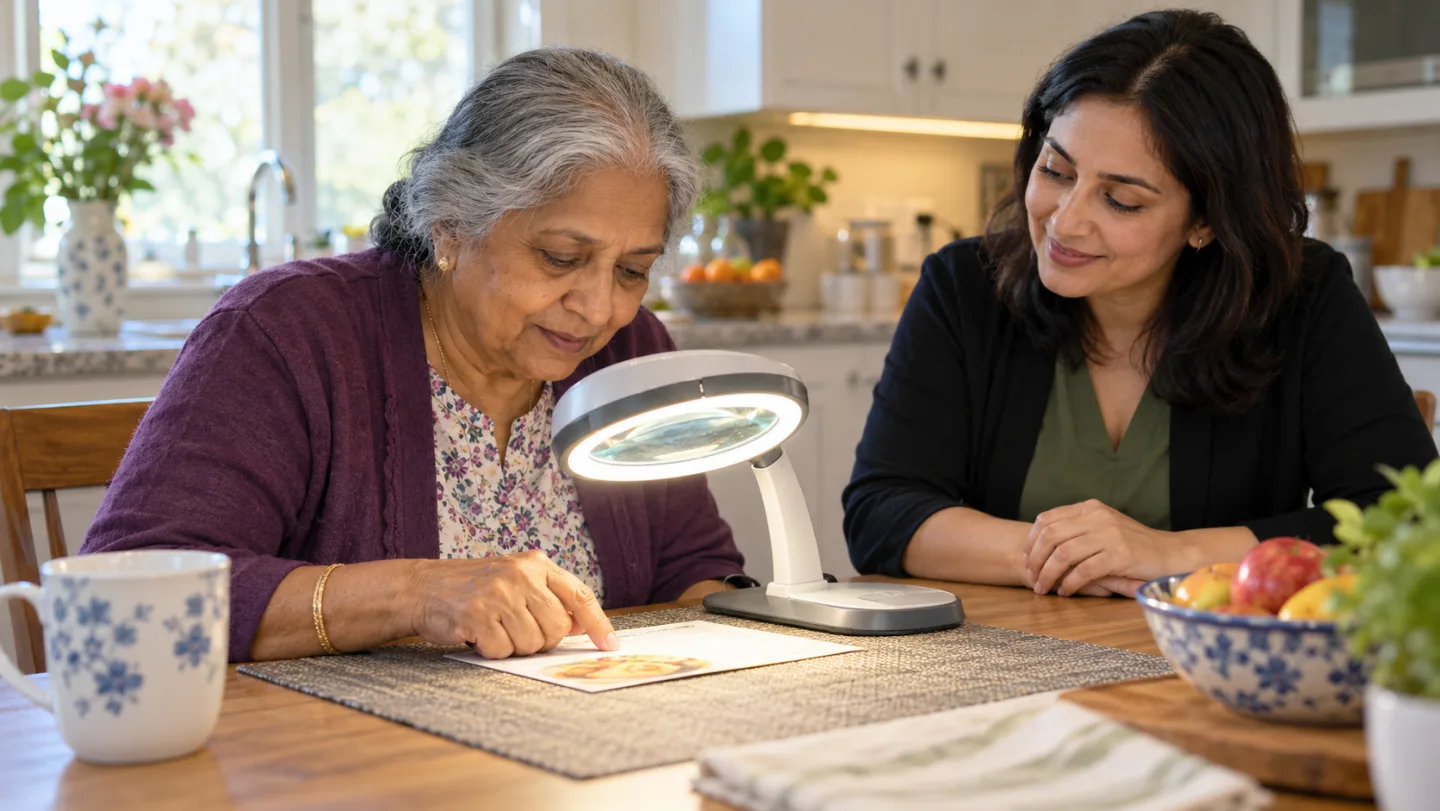
When glasses no longer make an everyday task easy, it can be tempting to stop trying it. Reading the mail gets handed to someone else. Cooking becomes more limited. A familiar trip feels less comfortable. These changes can happen gradually, long before a person thinks of asking about vision rehabilitation.
Low vision rehabilitation begins with those activities. The question is not only how many letters you can read on a chart, but what you want to do and what is getting in the way. Support can involve a different technique, changes to the environment, an appropriate device and time to learn how to use it.
For people exploring low vision rehabilitation in North York, a useful first step is to tell the eye-care team which tasks have become difficult. You do not need to arrive knowing the name of a device or having decided that you have reached a particular level of vision loss.
What low vision means in daily life
Low vision describes visual difficulty that cannot be fully corrected with ordinary glasses, contact lenses or standard medical treatment. It may affect central detail, side vision, contrast or other aspects of seeing. The National Eye Institute low vision overview explains how it can interfere with reading, recognizing faces and other activities.
Two people with the same diagnosis may need different help. One may read slowly but navigate familiar places comfortably. Another may manage large print yet struggle to notice objects at the side. A rehabilitation assessment should connect the visual pattern with the person’s own priorities.
Avoid measuring your eligibility by comparing yourself with someone who has more severe loss. Difficulty with an important task is worth discussing. The purpose of support is to improve function where possible, not to require you to prove that daily life has become impossible.
Continue medical eye care at the same time. Rehabilitation does not mean that treatment or monitoring has been abandoned. Ask how the two parts of care will work together and which clinician is following the underlying condition.
Start with three activities you want to improve
Choose concrete goals. Reading a prescription label, following a recipe, using a phone to contact family or finding a particular bus stop is more useful than a broad wish to see better. A specific task gives the rehabilitation team something practical to assess.
Describe where and when the difficulty occurs. Reading a menu in a dim restaurant is different from reading a large document under a desk lamp. A method that works at home may not be convenient in a shop or on transit.
Bring a sample when possible. A piece of ordinary mail, an empty food package or the phone you use can make the assessment realistic. Remove private information from examples that do not need to contain it.
Rank the goals according to your preferences. Family members may focus on what worries them, while you may most want to return to a hobby or manage a personal routine. Both perspectives can be discussed, but the plan should remain centred on what matters to you.
Ask about assessment before buying equipment
Magnification is useful for some tasks, but more magnification is not automatically better. The working distance, amount of text visible, lighting, hand steadiness and comfort all affect whether a device is practical. Try the actual task with guidance rather than choosing only by a large number on a product description.
Tell the assessor if holding a device is tiring or if you need both hands for the task. A stand, a different position or another approach may be worth exploring. The goal is something you can use comfortably, not merely a momentary improvement during a demonstration.
Ask about training, trial arrangements, return policies and support before making a purchase. If funding may be available, clarify the assessment and paperwork requirements first. Do not assume that buying independently will satisfy a program’s rules afterward.
Vision Loss Rehabilitation Canada describes services that include functional assessment and instruction with devices. A device and the skill to use it should be considered together.
Make lighting and contrast work for the task
Consider the object, its background and the direction of light. A pale item on a pale surface may be harder to locate than the same item against a contrasting background. A bright lamp can help one task but create glare on a glossy page or screen.
Ask the rehabilitation professional to help you compare arrangements. Move the task light rather than simply adding more brightness, and notice whether a shadow falls where you need detail. The best setup is the one that supports your particular vision and activity.
For a kitchen task, try a clear work area with only the items needed. For paperwork, use a consistent reading location and keep important documents organized. These changes are easier to evaluate when you alter one part of the setup at a time.
Do not make major home changes without involving the person who uses the space. A well-meaning rearrangement can remove the familiarity that made a room manageable. Agree on the change, practise it and keep the arrangement consistent.
Technology can offer more than larger text
Phones and computers may provide adjustable text, magnification, spoken output, voice input and contrast settings. Which combination helps depends on the task and the user’s comfort with the device. Ask for instruction on the equipment you already own before assuming that a new purchase is necessary.
Begin with one useful activity, such as reading a message or calling a saved contact. Practise the sequence until it feels familiar, then add another function. Trying to learn every accessibility feature in one session can be frustrating.
Write or record the steps in a format you can use. A family member may understand the settings quickly but should avoid changing several options without explaining them. The person using the device needs a way to repeat the task independently.
Be cautious about relying on automated text recognition for safety-critical information. Medication names, doses and instructions should be confirmed through a reliable accessible system with the pharmacist. Technology can support access, but errors in a photographed label can have consequences.
Medication and household routines deserve specific help
If identifying medicine is difficult, ask the pharmacy about accessible labelling or packaging arrangements. Keep the system consistent and avoid identifying tablets by colour alone. Do not move medicines into unlabelled containers to simplify the cupboard.
Tell the rehabilitation team about the actual home tasks that concern you, such as using an appliance, organizing clothes or preparing a drink. Training can address safe methods and organization rather than assuming that another person must take over.
Choose a stable place for essential items. Keys, a phone, glasses and important paperwork are easier to locate when everyone in the household respects the arrangement. Ask helpers to return things to the agreed location instead of tidying them somewhere new.
For potentially hazardous tasks, request direct instruction. Reading general tips is not a substitute for individualized training with hot liquids, sharp tools or unfamiliar appliances. Explain what you want to continue doing so that the support can be practical.
Mobility support can focus on your real routes
Vision rehabilitation may include orientation and mobility training, such as using mobility tools, navigating environments and travelling on public transit. These are among the services described by Vision Loss Rehabilitation Canada.
For a North York resident, the priority might be reaching a local grocery store, finding an appointment entrance or making a familiar transit connection. Bring the actual destination and the part of the journey that feels difficult. The trainer can assess the route and suitable strategies.
Do not practise unfamiliar road crossings alone based on written advice. Mobility training should account for your vision, hearing, balance and environment. Ask about appropriate support while you are learning.
If a friend or family member accompanies you, ask how they can guide safely and respectfully. Grabbing an arm or pulling someone forward without warning is not helpful. Agree on how assistance will be offered and let the person direct what they need.
A referral does not require waiting for total sight loss
Vision Loss Rehabilitation Ontario states that it does not use a minimum visual acuity threshold for referral and encourages referral when vision loss interferes with everyday tasks. A completed professional referral is required to begin services, although people may contact the organization to ask questions. See the Ontario section of its referral information.
Ask your eye-care professional whether a low vision assessment or rehabilitation referral would be useful now. Describe the tasks that changed rather than asking only whether your chart score is bad enough.
Clarify who will send the referral and what information is needed. Ask how you will be contacted and whether communication can be provided in an accessible format. If you have not heard within the expected interval, follow up with the referring office.
Service arrangements and funding can vary, so confirm the details directly. Avoid assuming that every device, visit or type of support is covered in the same way. A clear plan can include both the clinical assessment and the practical arrangements needed to access it.
Family support should preserve choice
Ask the person what kind of help they want before stepping in. Reading a label aloud may be welcome; taking over an entire activity may not be. Allow time for a new technique rather than judging it by the speed of someone with different vision.
For appointments, a companion can take notes or help remember questions, but the clinician should still speak directly to the person receiving care. Preferences about goals, equipment and daily routines belong to them.
Vision changes can also affect confidence and mood. Raise those concerns with the care team. Practical rehabilitation and emotional support can be pursued together, and needing either is not a personal failure.
For a discussion of changing visual function, request an appointment with Optima Eye Care or call (416) 497-3705. Bring three activities you want to make easier. Sudden new vision loss still needs urgent assessment; for established difficulties, a focused conversation can open the door to appropriate rehabilitation and useful daily support.