

Eye Care Resources
Light Sensitivity in North York: Common Causes and When Photophobia Needs Care
May 7, 2026
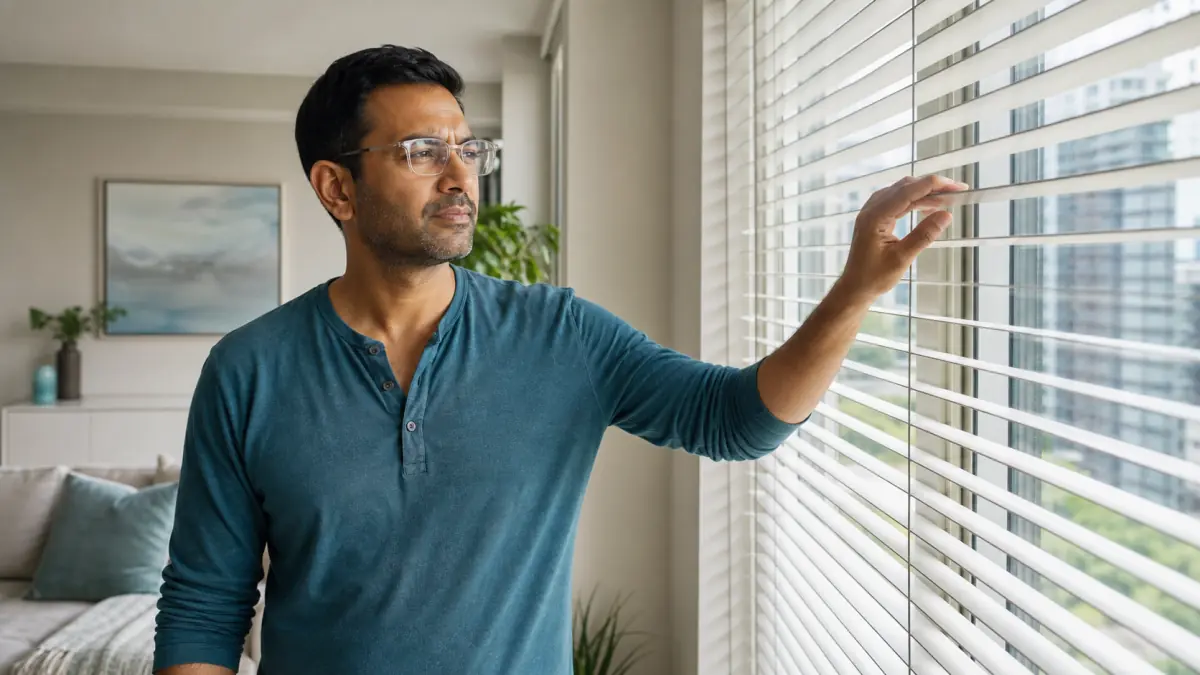
Walking from a dim subway station into bright daylight can make almost anyone squint for a moment. That normal adjustment is different from needing to close one eye under ordinary office lighting, turning every screen to minimum brightness, or feeling pain when sunlight enters the room. When light causes unusual discomfort or avoidance, clinicians often call the symptom photophobia.
Photophobia is not a fear of light, and it is not a diagnosis by itself. It is a clue that can occur with conditions affecting the eye, the surface of the eye, or the nervous system. Sometimes the explanation is a manageable problem such as dry eye or a recent pupil-dilating examination. In other situations, new light sensitivity accompanies a corneal injury, inflammation inside the eye, infection, migraine, or another problem that should not be watched at home.
For people experiencing light sensitivity in North York, the safest response depends on the pattern. How suddenly it began, whether one or both eyes are involved, and whether there is pain, redness, blur, headache, nausea, injury, or contact-lens use all help determine the next step. A comprehensive eye exam can evaluate the ocular causes while identifying situations that need urgent medical or neurological care.
What does photophobia actually feel like?
People use “light sensitivity” to describe several different experiences. One person may be bothered only by reflections from snow or wet pavement. Another may see starbursts around headlights without pain. Someone else may develop a deep ache when a lamp is switched on.
Useful descriptions include:
- discomfort that makes you squint, blink, tear, or turn away;
- aching or sharp eye pain that becomes worse in light;
- a headache that intensifies in bright environments;
- glare that washes out detail even though the light is not painful;
- delayed adaptation when moving between dark and bright places; or
- a new need for sunglasses in conditions that were previously comfortable.
These experiences can overlap, but they do not always share a cause. Glare from an early cataract is different from painful light sensitivity caused by inflammation. Screen discomfort after hours of reduced blinking is different from sudden one-sided pain and redness. Describing the sensation precisely is more useful than simply reporting that your eyes are “sensitive.”
Why healthy eyes react to bright light
The pupil controls how much light enters the eye. In brightness, it becomes smaller; in darkness, it enlarges. The retina detects light and sends visual information to the brain, while related nerve pathways contribute to the discomfort response that makes us turn away from an intense source.
A brief squint when facing summer sun, oncoming high beams, or a bright reflection is protective and does not automatically mean something is wrong. After being in a dark room, the eyes also need time to adapt to a brighter environment. The concern rises when ordinary light is newly difficult, the response lasts, or light provokes significant pain.
Natural eye colour can influence brightness tolerance, and people vary in their preferred lighting. That variation does not explain every change. If your baseline has shifted, especially in one eye, look for the cause rather than assuming that you have simply become more sensitive.
Dry eye can make light feel harsh
The tear film is the eye’s first optical surface. Each complete blink spreads tears across the cornea, creating a smooth layer that supports comfort and stable vision. When tears evaporate too quickly, are produced in insufficient quantity, or do not have a healthy balance of components, the surface can become irregular and irritated.
Dry eye may cause burning, grittiness, intermittent blur, watering, redness, and light sensitivity. Vision may briefly improve after a full blink and become hazier as you stare. Symptoms often build during screen work, reading, driving, or time in heated and air-conditioned rooms. Direct airflow from a car vent, desk fan, or HVAC register can accelerate evaporation.
North York residents may notice the pattern during dry winter heating, spring allergy season, long commutes, or sustained computer work. Contact lenses, eyelid inflammation, some medications, hormonal changes, autoimmune disease, and previous eye procedures can also contribute.
Dryness is common, but it should not become a label for every painful eye. Marked redness, strong one-sided pain, a sudden drop in vision, or an inability to keep the eye open needs prompt assessment. An examination can evaluate the eyelids, tear volume, tear stability, and corneal surface rather than relying on symptoms alone.
The cornea is highly sensitive
The cornea is the clear front window of the eye, and it has a rich nerve supply. A scratch, foreign body, ulcer, infection, or other corneal condition can therefore cause substantial pain, tearing, blur, and sensitivity to light.
A corneal abrasion may follow a fingernail, branch, paper edge, makeup tool, pet paw, or particle under the eyelid. Sometimes the moment of injury is obvious. Sometimes the eye simply begins to feel as though something is trapped in it. Rubbing may worsen an abrasion or drive material more deeply into the surface.
Contact-lens wear changes the urgency. Pain, redness, discharge, blur, or light sensitivity in a lens wearer can signal a corneal complication, including infection. Remove the lens, do not reinsert it, and seek same-day guidance. Do not use a leftover antibiotic, steroid, or another person’s drops; inappropriate medication can delay healing or make certain infections more dangerous.
Chemical exposure requires immediate irrigation with plenty of clean, lukewarm water and urgent medical direction. Do not pause rinsing to search for a home remedy. A high-speed metal or glass injury, a visibly embedded object, or an eye that has been cut or punctured requires emergency care without pressing on the eye.
Inflammation inside the eye can be urgent
Uveitis is inflammation inside the eye. Anterior uveitis, sometimes called iritis, affects structures near the front and can produce a combination of deep eye pain, redness, blurred vision, floaters, and sensitivity to light. Symptoms may develop rapidly and may affect one or both eyes.
The redness may be most noticeable around the coloured part of the eye rather than limited to the lids. The pupil can appear different, and light entering either eye may be uncomfortable. However, appearance alone cannot confirm or exclude the condition. A slit-lamp examination is needed to look for inflammatory cells and related signs.
Uveitis can occur without an obvious cause. It may also be associated with infection, injury, medication, or systemic inflammatory disease. Because untreated inflammation can threaten vision, a painful red light-sensitive eye should be assessed promptly. It is not a situation for whitening drops or a trial of someone else’s prescription medication.
Migraine is a neurological cause of light sensitivity
Photophobia is a common feature of migraine. Light may feel unpleasant before, during, or after the headache phase, and it can intensify nausea or head pain. Some people also become sensitive to sound, smell, or movement.
Migraine aura is not the same as glare. Aura can include shimmering patterns, zigzag lines, bright spots, blind areas, tingling, or speech symptoms that usually develop gradually and are temporary. A first episode of visual disturbance, a pattern that has changed, or vision loss that seems confined to one eye should receive medical assessment rather than being self-diagnosed as migraine.
Keep a record of timing, headache features, food and hydration, sleep, menstrual cycle if relevant, stress, weather, medication, and visual symptoms. A diary can reveal a repeated pattern and help a primary-care provider or neurologist assess possible migraine. An eye examination is also valuable when symptoms are new because eye disease can cause overlapping complaints.
Call 911 for a sudden severe “worst” headache, new weakness or numbness, facial drooping, confusion, fainting, seizure, trouble speaking, severe imbalance, or abrupt double vision. Headache with fever and neck stiffness also requires urgent medical care. Do not assume that light sensitivity makes a dangerous new neurological symptom “just a migraine.”
Head injury and concussion need a separate plan
Light sensitivity may follow a concussion or other head injury, sometimes along with headache, dizziness, nausea, difficulty focusing, visual motion sensitivity, or problems concentrating. The eyes may look normal even when visual tasks feel difficult.
After a recent head impact, follow the medical advice provided for concussion care. Worsening headache, repeated vomiting, increasing drowsiness, confusion, weakness, seizure, slurred speech, unequal pupils, or loss of consciousness requires emergency assessment. Driving yourself is not appropriate when vision, balance, or alertness is affected.
Persistent post-concussion visual symptoms may require coordinated care involving a physician and, when appropriate, eye-care or rehabilitation professionals. Simply wearing very dark glasses all day does not address the full problem and may make it harder to understand which visual tasks or environments provoke symptoms.
Cataracts often cause glare rather than eye pain
The natural lens inside the eye should focus light clearly. A cataract clouds that lens and scatters incoming light. People may notice that sunlight or headlights seem too bright, halos surround lamps, contrast is reduced, colours look faded, or night driving becomes more difficult.
This pattern usually develops gradually and is not typically a sudden painful red eye. It may be more obvious in one eye or under specific conditions, such as driving toward low sun or looking through a rain-covered windshield. A new glasses prescription can sometimes improve early blur, but it cannot remove a cataract.
A dilated examination can determine whether a cataract is present and whether it explains the degree of glare. Cataract surgery is generally considered when the visual effects interfere with daily activities and the expected benefit outweighs the risks—not simply because a small cataract exists.
Medication and pupil dilation can change brightness tolerance
Dilating drops used during an eye examination temporarily enlarge the pupils, allowing more light into the eyes and reducing near focus. Brightness may feel uncomfortable until the drops wear off. Sunglasses outdoors and avoiding driving until vision feels safe are sensible precautions. The duration varies with the drop and the individual, so follow the clinic’s instructions.
Prescription and non-prescription medicines can also contribute to light sensitivity directly or by affecting the pupils, tear film, or nervous system. Do not stop a medication on your own. Record the drug name, dose, timing, and date the symptom began, then speak with the prescriber and eye-care provider. Include supplements, skin treatments, eye drops, and recent medication changes; products that seem unrelated may still matter to the history.
Are screens causing photophobia?
A screen does not need to be unusually bright to feel uncomfortable when the surrounding room is dark, the tear film is unstable, or the display contains reflections. Prolonged concentration also reduces blink frequency, which can worsen dryness and fluctuating vision.
Start by matching screen brightness to the room rather than turning it to an extreme. Reduce reflections, increase text size, position the monitor comfortably, take brief distance breaks, and blink fully. If the device is beside a bright window, adjust the workstation so your eyes are not constantly switching between very different luminance levels.
Blue-light filtering is often marketed as a universal solution, but light sensitivity has many possible causes. A coating or colour setting cannot treat corneal inflammation, migraine, dry eye, or cataract. Screen adjustments are useful environmental tools, not substitutes for diagnosis when symptoms are persistent, painful, or new.
Sunglasses and tints should be used thoughtfully
Outdoors, well-fitting sunglasses that provide appropriate ultraviolet protection can reduce brightness and glare. A brimmed hat or visor can also block overhead light. Polarized lenses may reduce reflected glare from roads, water, or snow, though they do not replace UV protection and can make some digital displays harder to see.
Darker is not automatically safer. A very dark lens without proper UV protection can reduce visible light without adequately filtering ultraviolet radiation. Choose protection based on verified lens performance, fit, and activity rather than colour alone.
Indoors, keeping every environment very dark may not be the best long-term strategy for unexplained sensitivity. Some people with diagnosed migraine or neurological light sensitivity benefit from a clinician-guided tint, but the colour and density should reflect the individual condition and task. Before buying multiple specialty lenses, first determine whether the symptom comes from the ocular surface, prescription, lens of the eye, inflammation, or a neurological pattern.
Warning signs that need urgent attention
Seek same-day eye-care guidance for new light sensitivity accompanied by:
- moderate or severe eye pain, especially in ordinary or low light;
- a red eye, reduced vision, significant tearing, or inability to keep the eye open;
- contact-lens wear plus pain, redness, discharge, blur, or a white spot on the cornea;
- a scratch, foreign-body sensation, chemical splash, burn, or other eye injury;
- new floaters, flashes, a shadow, or a curtain-like area in the vision;
- halos with severe eye pain, headache, nausea, or vomiting;
- recent eye surgery or injection with increasing pain, redness, or reduced vision; or
- symptoms that are strongly one-sided, rapidly worsening, or unlike your usual pattern.
Use emergency medical services for sudden loss of vision, a serious penetrating injury, major chemical exposure, or light sensitivity with stroke-like or other severe neurological symptoms. If you are unsure where to go, call the clinic or a medical triage service and describe every associated symptom rather than booking a distant routine appointment online.
What an eye examination can assess
The optometrist will ask when the sensitivity began, what kinds of light trigger it, whether it affects one or both eyes, and whether there is pain, redness, blur, discharge, headache, nausea, injury, or medication change. Bring your glasses, contact-lens details, eye drops, and a current medication list.
Testing may include visual acuity, prescription, pupils, eye alignment and movement, peripheral vision, eye pressure when appropriate, and a slit-lamp assessment of the lids, tears, conjunctiva, cornea, iris, and lens. Fluorescein dye can highlight areas of corneal surface damage. A dilated retinal examination may be recommended based on the history and findings.
The purpose is not merely to prove that bright light is uncomfortable. It is to locate a likely source, identify threats to vision, and decide whether treatment, monitoring, or referral is appropriate. If ocular findings do not explain the symptom, the pattern may point toward primary care, neurology, emergency medicine, or another service.
Prepare a useful symptom record
Before an appointment, note:
- The exact day and situation in which the change began.
- Whether one eye remains more sensitive when each eye is covered in turn.
- Whether the sensation is glare, ache, burning, stabbing pain, headache, or visual washout.
- Any redness, tearing, discharge, blur, halos, flashes, floaters, nausea, or neurological symptom.
- Contact-lens wear, recent eye examination, surgery, injury, illness, or chemical exposure.
- New medicines, dose changes, drops, supplements, or recreational substances.
- Which environments make the problem better or worse and how long recovery takes.
Do not repeatedly test a painful eye with a bright phone flashlight. The record should help the assessment without provoking symptoms or delaying care.
Light-sensitivity care in North York
Occasional squinting in harsh sunlight is normal. New or persistent photophobia is different, particularly when it comes with pain, redness, blur, headache, injury, or contact-lens wear. The safest plan begins with the whole symptom pattern, not the brightness setting on your phone or the darkest pair of glasses you can find.
Optima Eye Care provides eye examinations and emergency eye care services for North York patients with unexplained light sensitivity. The assessment can check the tear film, cornea, prescription, pupils, lens, and internal eye health while helping determine whether another medical pathway is needed.
If ordinary light has become difficult or your usual glare has changed, request an appointment and describe the onset and accompanying symptoms when you contact the clinic. For sudden vision loss, severe injury, or neurological warning signs, seek emergency medical care immediately.