

Eye Care Resources
High-Index Lenses in North York: Balancing Thickness, Comfort and Fit
June 25, 2025
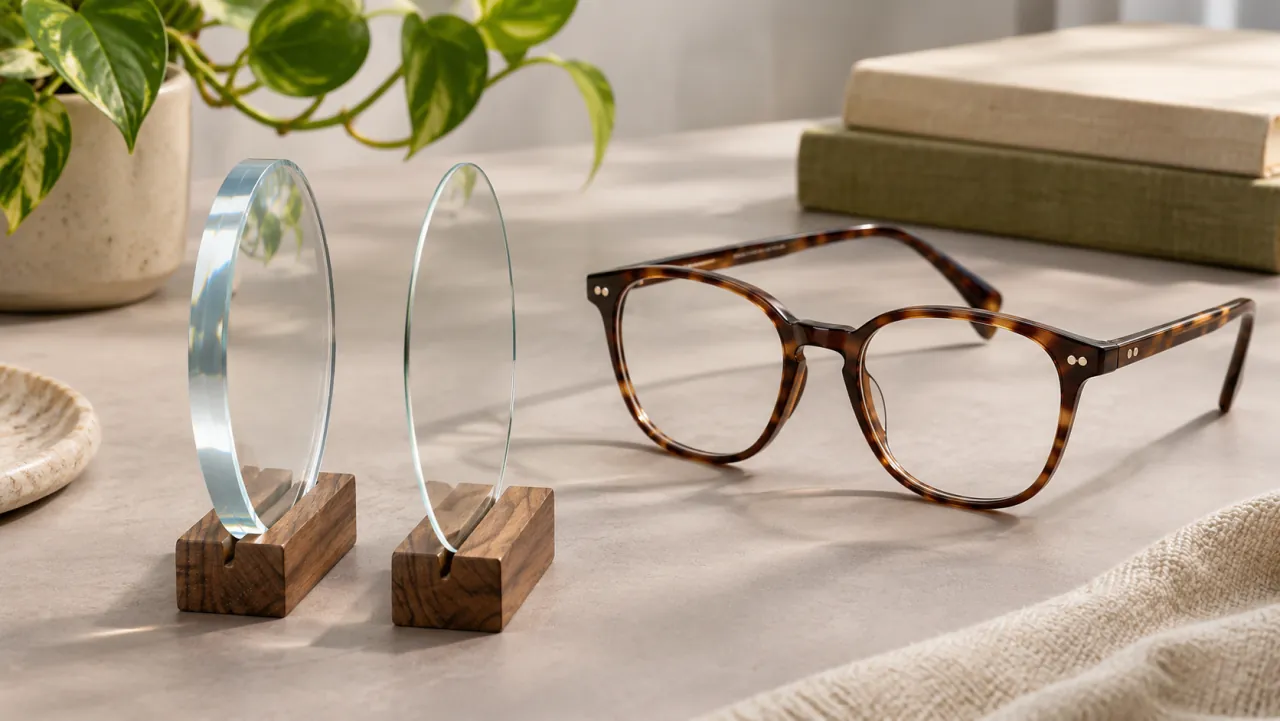
The edge of a lens can become the first thing someone notices when choosing new glasses. If an older pair is thick or heavy, a higher-index material sounds like a straightforward upgrade: choose the largest number and the problem should disappear. The actual result is more dependent on the whole pair of glasses.
Refractive index matters, but so do prescription power, lens shape, frame size, optical positioning and the design of the surfaces. A material choice that makes a worthwhile difference in one frame may have a modest effect in another. Thinner also does not automatically mean more comfortable in every situation.
For people comparing high-index lenses in North York, a useful conversation begins with the problem you want to solve. Is it a visible lens edge, pressure on the nose, an oversized frame, or dissatisfaction with peripheral vision? Naming that problem makes it easier to compare options without treating one specification as a complete measure of quality.
What the index number means
Refractive index describes how a material bends light relative to air. Lens materials with a higher index can achieve a given optical power using different, often flatter curves than a lower-index material. This can reduce the thickness needed for some prescriptions and lens shapes.
Common spectacle material labels include numbers such as 1.50, 1.60, 1.67 and 1.74. These are material properties, not the prescription strength and not a score for the wearer’s vision. A person does not have “1.74 eyes” because that material is recommended for their glasses.
The manufacturer ZEISS explains the relationship between index and lens thickness. Its comparisons illustrate the principle, but an advertised maximum reduction is not a prediction for every finished pair. Ask how the comparison applies to your prescription and chosen frame.
Minus and plus prescriptions create different thickness patterns
A typical minus lens is thinner centrally and thicker towards its edge. A typical plus lens has more thickness centrally and becomes thinner towards the edge. Astigmatism correction and the final shape can make the distribution less uniform than a simple diagram suggests.
This matters because the part you want to improve may be different. A nearsighted wearer may be concerned about the edge protruding from a thin rim. A farsighted wearer may be more aware of central thickness or the appearance of the eyes through the lenses.
Ask the dispenser to discuss the finished shape, not just the blank lens material. A sample that demonstrates a different prescription may show the general idea while exaggerating or understating the difference you will see. The most useful estimate keeps your own prescription and measurements constant.
Frame size can make a large difference
Larger lenses extend farther from the optical centre, which can increase the thickness required in important areas. A smaller, well-positioned frame can therefore be an effective part of reducing lens bulk. Choosing the largest possible fashion frame and then expecting a material upgrade to undo all of its optical consequences is often unrealistic.
Size should still be balanced with comfort and coverage. A frame that is too narrow for your face is not a sensible tradeoff simply because it produces a smaller lens. Look for a shape that fits properly and positions the eyes reasonably within the lens openings.
When reviewing eyewear options, compare two suitable frame sizes before committing to the material. The combination of a sensible frame and an appropriate index may give a better result than changing the index alone after the frame has already been chosen.
Shape and centring belong in the same discussion
The width printed inside a temple does not describe every dimension that influences a finished lens. A long corner, deep shape or unusual bridge position can change the amount of material needed. The relationship between your pupils and the frame openings matters too.
If the optical centres need to sit far from the geometric centres of the frame, the lens has to be cut accordingly. That can affect thickness distribution. The goal is not to make your eyes conform to a fashionable frame; it is to choose a frame that supports your measurements and visual needs.
Ask whether a slightly different shape would make the lens more balanced. A rounded frame with appropriate dimensions may perform differently from a broad angular one even when their advertised widths look similar. A professional estimate can be more informative than judging the empty display frame alone.
Weight depends on more than thickness
A thinner lens uses less volume, but lens materials also differ in density. The finished weight depends on both, as well as prescription and shape. It is therefore unwise to assume that the highest-index option will always be the lightest possible pair.
The frame contributes weight too. A heavy decorative front or poorly supported bridge can remain uncomfortable after the lenses become thinner. If nose pressure is your main concern, discuss the full frame-and-lens combination rather than expecting material alone to solve it.
Ask where the weight is being carried. Wider, well-positioned contact areas and a stable fit can change comfort without changing the prescription. Bring the old pair so the dispenser can see whether the difficulty is actual weight, poor balance, slipping or a localized pressure point.
Lens design is a separate choice
Aspheric and other optimized surface designs can influence lens shape and optical performance. A high-index material and an aspheric design describe different features, even though they may be supplied together. Similarly, a progressive design is not defined by its material index.
The ZEISS single-vision aspheric information gives examples of combining material and surface design. It is a product explanation, not evidence that one design is necessary for every wearer or available in every practice.
When comparing quotations, ask what each includes. Two options both described as “1.67 lenses” may differ in design, coatings and customization. A meaningful comparison should identify the actual features rather than assuming the same index guarantees the same finished experience.
Optical comfort can involve tradeoffs
Lens materials differ in properties beyond refractive index, including how they disperse different wavelengths of light. Depending on the material, prescription and viewing position, some wearers may notice coloured fringes or other peripheral effects. Accurate centration and appropriate frame selection remain important.
Describe your previous experience if you have had trouble with a particular material or pair. “The edges looked coloured when I glanced sideways” is more useful than saying the lenses felt generally cheap. Bring the old glasses if possible so the actual material and configuration can be reviewed.
This does not mean high-index lenses are inherently uncomfortable. Many people wear them successfully. It means the decision should balance appearance, weight, optical experience and the task, with room to investigate symptoms rather than assuming a higher number must always feel better.
Ask about reflections and surface treatments
Anti-reflective treatment can be a useful part of a high-index lens package because surface reflections are relevant to the final viewing and cosmetic experience. Ask whether it is included, how to care for it, and what other layers are part of the treatment.
A hard coating and an anti-reflective coating do different jobs. Neither makes the lens immune to scratches, and neither corrects an inaccurate prescription. Water- or oil-repellent finishes may make cleaning easier, but they do not eliminate the need for a clean cloth and compatible products.
Confirm ultraviolet protection separately as well. The Canadian lens-material information from Essilor shows how manufacturers combine materials with other properties. Read the specification for the actual lens ordered rather than assuming every product within a broad material category is identical.
Impact protection is a different requirement
If the glasses are for a child, an active sport or a hazardous workplace, tell the dispenser before comparing thinness. Impact needs can influence material and frame selection. An ordinary everyday pair should not be treated as certified protective eyewear just because its lenses are described as durable.
For work or sport, the complete device must be appropriate for the hazard and relevant requirements. A thinner cosmetic result is not a reason to choose an unsuitable protective assembly. Bring written workplace or activity requirements where available.
Even for ordinary daily wear, consider how the glasses will be used. A delicate rimless design, a pair repeatedly removed during physical work and a frame worn mainly at a desk place different demands on the final construction. Ask which materials and mounting styles are compatible with the chosen frame.
Decide whether the visible difference is worth it to you
There is no universal prescription threshold at which every person must buy the highest index. The benefit depends on the frame, prescription, design and personal priorities. A modest reduction may be valuable to one wearer and barely noticeable to another.
Ask for a practical estimate of edge or centre thickness where the ordering system supports it. Compare the same frame and prescription across realistic options. Then compare a different suitable frame if size appears to be driving much of the bulk.
Be clear about budget without feeling that a less expensive appropriate option represents poor eye care. Request an itemized explanation of what changes between choices. You can make a more confident decision when the additional cost is connected to a concrete benefit rather than a vague promise of premium quality.
Check the result on your face
At collection, look through the glasses at the distances they are intended to support. Check that the frame sits level and remains stable when you look down. Ask for an adjustment if the bridge or temples produce pressure rather than assuming you need to endure an uncomfortable fit.
Some optical changes can feel unfamiliar, but significant blur, persistent headaches or the need to hold the frame in a special position deserve review. The material, prescription, lens design, measurements and fit can be assessed together.
If the cosmetic result differs from what you expected, describe the difference specifically. A discussion about visible edge thickness is different from one about nose pressure or peripheral clarity. Keep the order details so the dispenser can compare the delivered lenses with the intended specification.
Choose a complete solution for everyday wear
High-index lenses are useful tools within a larger eyewear decision. They are most helpful when the reason for choosing them is clear and the frame, design and measurements support that reason. The best starting point is your current pair and a practical description of what you would like to improve.
If the prescription itself may have changed, arrange a prescription update or comprehensive eye exam before settling on new lenses. Appearance and comfort matter, but clear vision and eye health belong in the same plan.
You can request an appointment in North York and bring both the glasses you like and the ones you find uncomfortable. Comparing real examples often makes the choice easier than comparing index numbers alone, because the discussion stays connected to the pair you will actually wear every day.