

Eye Care Resources
Glaucoma Screening: Why Eye Pressure Is Only Part of the Story
December 4, 2025
Glaucoma is often discussed as an eye pressure problem, but that is only part of the story. Glaucoma is a group of eye diseases that can damage the optic nerve, the structure that carries visual information from the eye to the brain. Eye pressure is an important risk factor, but some people develop glaucoma with pressures that are not dramatically high, while others have elevated pressure without optic nerve damage. This is why a complete glaucoma screening looks beyond a single number.
One of the challenges with glaucoma is that early stages often have no obvious symptoms. Vision may seem normal because central vision can remain clear while peripheral vision is affected gradually. By the time a person notices missing side vision, damage may already be significant. Regular eye exams help detect risk and early changes before symptoms appear.
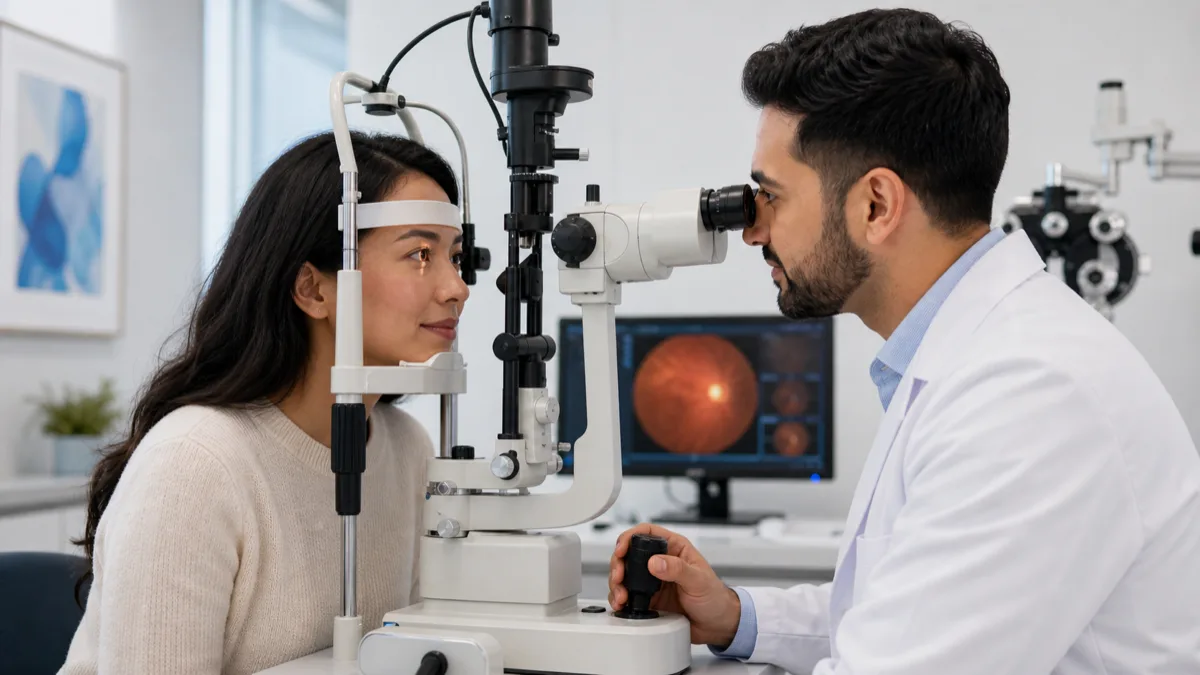
At Optima Eye Care in North York, glaucoma screening may include eye pressure measurement, optic nerve assessment, retinal imaging, visual field testing when indicated, and review of personal risk factors. The goal is to understand whether your eyes are healthy, whether they need monitoring, or whether referral is appropriate.
What is the optic nerve?
The optic nerve is like a communication cable between the eye and brain. The retina captures light information, and the optic nerve transmits that information so the brain can interpret it as vision. If optic nerve fibres are damaged, vision can be affected.
In glaucoma, optic nerve damage often follows a characteristic pattern. Your optometrist may look at the optic nerve head, cup-to-disc ratio, nerve fibre layer, and surrounding retinal tissue. These details can offer clues about whether the nerve looks healthy or suspicious.
Optic nerves vary naturally. Some people have larger cups without glaucoma, while others have subtle changes that need careful monitoring. This is why comparison over time is valuable. Photos or scans can help show whether the nerve is stable or changing.
Why eye pressure matters
Eye pressure, or intraocular pressure, reflects the pressure inside the eye. The eye produces and drains fluid continuously. If drainage does not keep up, pressure can rise. Higher eye pressure can increase the risk of optic nerve damage, but there is no single pressure number that guarantees safety or disease.
Some patients with glaucoma have normal-range pressures. Others have ocular hypertension, meaning eye pressure is elevated but the optic nerve is not showing damage. Both situations require professional judgment and monitoring.
Measuring eye pressure is important, but it should be interpreted alongside optic nerve appearance, corneal thickness, family history, age, ethnicity, visual field results, and other risk factors. A quick pressure reading alone is not a complete glaucoma assessment.
Open-angle and angle-closure glaucoma
The most common type is open-angle glaucoma. It often develops slowly and painlessly. The drainage angle in the eye remains open, but fluid drainage is not efficient enough for that person’s optic nerve health. Because symptoms are usually absent early, routine exams are essential.
Angle-closure glaucoma is less common but can be urgent. It happens when the drainage angle becomes blocked. Symptoms may include severe eye pain, headache, nausea, halos around lights, red eye, and sudden blurred vision. This requires emergency care.
Most glaucoma screening focuses on detecting chronic risk and early optic nerve changes, but eye exams can also identify anatomical features that may increase angle-closure risk. If you ever experience sudden severe eye pain with vision changes, seek urgent care.
Who is at higher risk?
Risk factors for glaucoma include older age, family history, elevated eye pressure, certain ethnic backgrounds, thin corneas, high myopia, previous eye injury, long-term steroid use, and some medical conditions. Having a risk factor does not mean you will develop glaucoma, but it may influence how closely your eyes should be monitored.
Family history is especially important. If a parent or sibling has glaucoma, tell your optometrist. It may change your recommended exam schedule or testing plan.
People with high prescriptions, diabetes, past eye trauma, or optic nerve concerns should also keep regular exams. Glaucoma risk is personal, and your eye care plan should reflect your history.
What happens during glaucoma screening?
A glaucoma screening may start with questions about family history, medications, health conditions, previous eye injuries, and symptoms. Eye pressure is measured. The optic nerve is examined with lenses or imaging. Your optometrist may recommend retinal imaging or optical coherence tomography to assess the nerve fibre layer.
Visual field testing may be used to check peripheral vision. This test can detect patterns of vision loss that may not be obvious to the patient. It requires concentration and may need to be repeated for reliable results.
Corneal thickness may also be measured because corneal thickness can influence eye pressure interpretation. A thin or thick cornea can affect how pressure readings are understood.
Why repeat testing matters
Glaucoma diagnosis is not always based on one visit. Sometimes the first exam shows a suspicious optic nerve or borderline pressure. Your optometrist may recommend repeat testing to see whether findings are stable. This can feel frustrating, but it is often the safest approach.
The goal is to distinguish normal variation from true change. A single visual field test may be affected by fatigue, learning curve, or attention. A single pressure reading may vary by time of day. Repeated measurements create a clearer picture.
If changes are progressive or concerning, referral to an ophthalmologist may be recommended. If findings are stable, continued monitoring may be appropriate.
Glaucoma and vision loss
Glaucoma-related vision loss usually starts in the peripheral field. Because the brain fills in missing information and both eyes work together, early loss may go unnoticed. This is why people can have glaucoma damage while still reading the eye chart well.
Once vision is lost from glaucoma, it cannot usually be restored. Treatment aims to slow or prevent further damage. Depending on the case, treatment may involve prescription eye drops, laser procedures, surgery, or monitoring. The earlier glaucoma is detected, the better the opportunity to protect remaining vision.
This does not mean every suspicious finding is an emergency. It means regular care matters. Quiet conditions require consistent monitoring.
What patients can do
Keep regular eye exams, especially if you have risk factors. Know your family history. Use prescribed glaucoma drops exactly as directed if you have been diagnosed. Tell your eye care team about side effects, missed doses, or difficulty using drops. Do not stop treatment without guidance.
Maintain general health, including blood pressure and diabetes care when relevant. Protect eyes from injury during sports, home repairs, and work tasks. If you use steroid medications, mention them during your exam.
Most importantly, do not rely on symptoms. Glaucoma screening is preventive. Feeling fine does not prove the optic nerve is healthy.
Eye pressure myths
One myth is that normal eye pressure means no glaucoma. Another is that high eye pressure always means glaucoma. Both are too simple. Eye pressure is one part of the risk profile, not the entire diagnosis.
Another myth is that glaucoma always causes obvious tunnel vision early. In reality, early changes can be subtle and detected only through exam and testing. People may function normally while damage begins.
Patients sometimes ask whether reading, screens, or glasses cause glaucoma. Ordinary visual tasks do not cause glaucoma. The condition is related to optic nerve vulnerability and eye pressure dynamics, among other factors.
When to book an exam
Book routine eye exams based on your age, risk factors, and optometrist’s recommendation. Book sooner if you have a family history of glaucoma, high eye pressure, high myopia, diabetes, previous eye injury, or long-term steroid use. Seek urgent care for sudden severe eye pain, halos, nausea, red eye, or sudden vision changes.
If you have not had an eye exam in years because your glasses seem fine, glaucoma screening is one reason to return. A comprehensive exam checks more than prescription.
Bring a list of medications and tell your optometrist if anyone in your family has glaucoma. Small details can influence risk assessment.
If you have older test results or remember being told your pressure was “borderline,” mention that too. Past information can help your optometrist decide whether new testing should be compared, repeated, or monitored more closely.
The bottom line
Glaucoma screening is about protecting the optic nerve before noticeable vision loss occurs. Eye pressure matters, but optic nerve appearance, visual fields, imaging, corneal thickness, and risk factors all contribute to the picture.
Optima Eye Care provides comprehensive eye exams in Toronto and North York, including glaucoma risk assessment and monitoring. If you are due for an exam or have a family history of glaucoma, booking a visit is a practical step toward preserving long-term vision.