

Eye Care Resources
Glasses Frame Fit in North York: When an Adjustment Makes a Difference
June 20, 2025
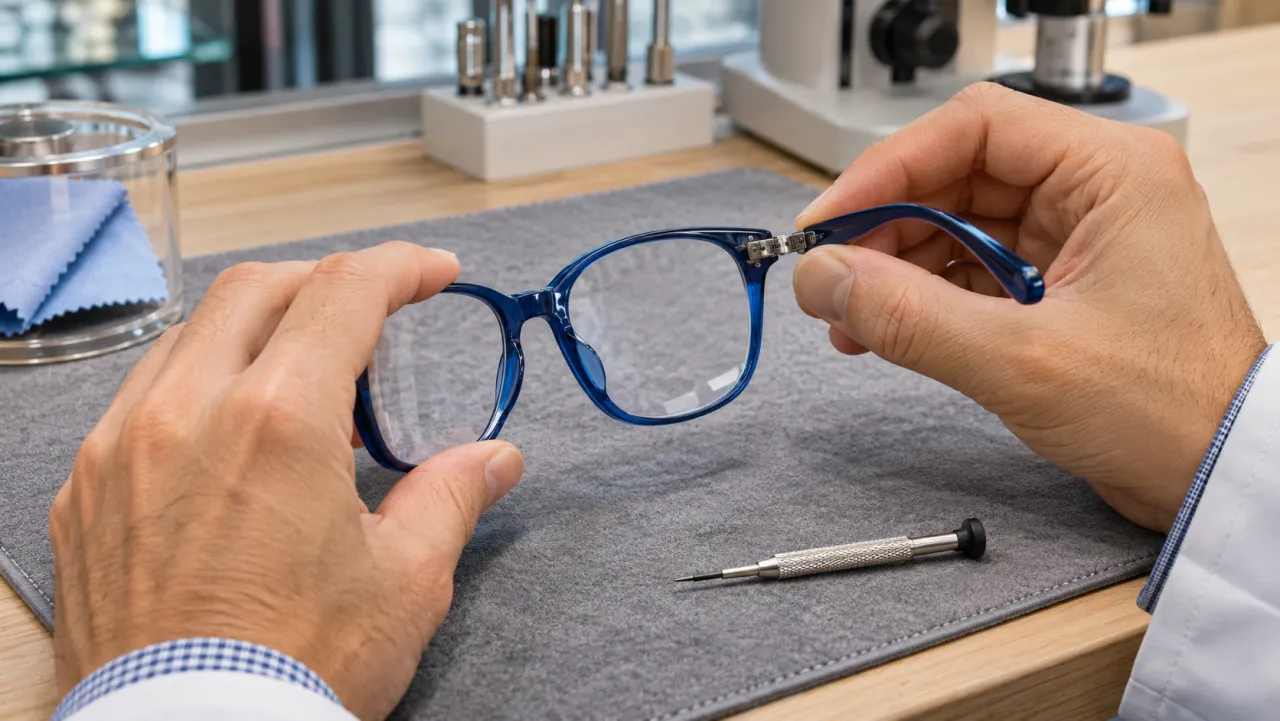
Pushing glasses up the nose can become such a familiar movement that you stop noticing how often you do it. The frame slips while you read, moves when you smile, and ends the day lower than it began. A small annoyance becomes part of your routine, even when the lenses themselves seem perfectly clear.
Frame fit deserves more attention than that. Glasses need to remain comfortable and position the lenses appropriately in front of the eyes. A frame that pinches, twists or slides can interfere with both goals. Sometimes a careful adjustment helps; sometimes the original size or shape is not a good match.
For anyone seeking help with glasses frame fit in North York, the useful starting point is a description of what happens during normal wear. Where does it hurt? When does the pair move? Does the view improve when you lift or tilt it? Those observations help distinguish a routine fitting issue from a lens or eye-health concern.
Comfort and optical position are connected
Your prescription describes lens powers, but the finished view also depends on how the lenses sit. Their horizontal and vertical placement, distance from the eyes and angle can matter, especially with stronger prescriptions and more complex designs.
Progressive lenses make the connection easy to recognize because their different areas support different viewing distances. If the frame drops, the near and intermediate zones may no longer be where you expect them. You may compensate by changing your posture rather than realizing the frame has moved.
The American Academy of Ophthalmology’s overview of eyeglasses describes how different lens designs serve different needs. A fitting conversation adds another layer: the intended design needs to be positioned in a stable, comfortable frame for your particular face and tasks.
Slipping does not always mean the arms are too loose
It is tempting to solve every slipping problem by tightening the temples behind the ears. The actual cause may involve the bridge, frame width, lens weight, nose-pad position or an uneven adjustment. Making one area tighter can create pressure without solving the underlying mismatch.
Skin oil, sunscreen and moisture can also change how a frame behaves. Cleaning the contact points may help, but a pair that consistently slides still deserves a fit assessment. Do not assume that you need to choose between slipping and painful tightness.
The manufacturer ZEISS discusses bridge and temple fit, including why excessive pressure can be counterproductive. Describe when the slipping occurs so the professional can assess the whole frame rather than adjusting one part in isolation.
The bridge should distribute support comfortably
The bridge is a major support point. On some frames it is formed directly in the plastic; on others, adjustable nose pads provide the contact. A shape that sits comfortably on one person may perch, slide or concentrate pressure on another.
Look for persistent sore spots rather than judging fit only by whether the glasses leave any temporary impression. Deep pressure marks, tenderness or skin damage should not be accepted as an unavoidable feature of wearing glasses. The frame’s weight and balance may need review as well as the bridge itself.
Adjustable pads offer some flexibility, but they cannot make every frame suitable for every face. A fixed bridge has its own limits. If repeated adjustments never create comfortable support, choosing a different bridge shape may be more effective than continuing to bend the same frame.
Temple pressure should be specific, not constant
The temples need to help keep the glasses stable without squeezing the sides of your head. Pressure can arise from a frame that is too narrow, an inappropriate bend behind the ear, or interaction with another item such as a headset.
Notice whether the discomfort begins immediately or builds after an hour. Tell the fitter if one side is worse, if the problem appears only with headphones, or if a particular part of the temple touches the ear. These details guide an adjustment more effectively than saying the frame is generally uncomfortable.
Avoid assuming that soreness will simply disappear as you get used to the pair. Mild awareness of a new frame can occur, but persistent pain warrants attention. A professional can determine whether a small adjustment is reasonable or whether the frame dimensions are the larger issue.
An uneven frame is not always an uneven face
Faces are naturally asymmetrical. The heights of the ears and the shape of the nose may differ slightly from side to side. A frame may need an individualized adjustment to sit correctly on the wearer rather than look perfectly symmetrical on a tabletop.
At the same time, glasses can become bent after being dropped, slept on or repeatedly removed with one hand. A lens sitting higher than the other may reflect frame damage rather than normal anatomy. The cause matters because the adjustment should restore a useful fit without placing unnecessary stress on the frame.
Bring the glasses in their current condition and explain any incident you remember. Do not straighten them first to make them look less damaged. Seeing the actual problem gives the professional more information and avoids additional strain from an attempted home repair.
Watch what happens when you smile and look down
A frame that looks good while you stare directly into a mirror may behave differently during conversation. Smiling can lift a frame that touches the cheeks. Looking down can reveal slipping that is not obvious while the head is level.
Try ordinary movements during a fitting. Read something in your lap, look at a distant object, turn your head and smile naturally. Check whether the eyelashes brush the lenses or whether the frame contacts the cheeks when you speak.
These are practical observations, not a demand for a frame that never touches any part of the face. The aim is stable, comfortable support without repeated displacement or irritation. If a design works only while you hold a carefully neutral expression, it may not be the right everyday fit.
Progressive wearers should describe posture changes
If you need to raise your chin to see a monitor or push the glasses up to read, mention it. The issue may involve frame position, fitting height, lens design or the working distance. A frame adjustment may help, but it should be considered alongside the optical information.
Bring the distance from your eyes to the screen and explain its height relative to your gaze. A laptop on a low desk and a large monitor at eye level require different viewing strategies. The fitter needs to know which task you are trying to solve.
Do not keep bending the frame until one distance becomes clear. An adjustment that helps the monitor may make distance vision or walking less comfortable. The complete lens design and your normal posture should be assessed together, particularly when several tasks are affected.
Children need fit checks as they grow
A child may not explain that a temple pinches or the near part of the lens is difficult to find. Instead, they may remove the glasses, look over the frame or keep touching it. Those behaviours can have several causes, so comfort should be checked before assuming the child is simply unwilling to wear the pair.
Look for a frame that sits level and remains in position during ordinary play and reading. Growth, rough handling and changes in activity can alter the fit. A pair that was suitable at collection may need review later.
Follow the prescribed wearing schedule and ask the clinician about persistent resistance. Glasses may be supporting visual development as well as clarity. A fitting problem is a reason to arrange help, not to discontinue the prescribed use without guidance.
Bring the accessories that change your fit
Headphones, hearing aids, helmets, masks and work equipment can all affect how glasses sit. If discomfort happens only with one of these items, the professional needs to see the combination or at least know the exact arrangement.
A frame may be comfortable on its own but pressed inward by a headset after a long call. A helmet may shift the temples. A mask can redirect breath towards the lenses. Solving the problem may involve selecting compatible equipment as well as adjusting the glasses.
For protective equipment, do not modify required seals or components casually. Follow the workplace or activity-specific instructions. Everyday frame comfort is important, but an adjustment must not undermine the function of equipment that protects against a defined hazard.
Home heating and bending can create new problems
Online adjustment instructions often make frames look interchangeable. In practice, materials, hinges, mounting methods and lens treatments vary. Heat that softens one frame may damage another, and pressure applied in the wrong place can loosen or crack a component.
Avoid boiling water, hair dryers, open flames and forceful bending. Do not use strong glue around a loose lens or hinge and assume the repair is complete. A temporary improvised repair can also make later professional repair more difficult.
If a screw is loose or a part has detached, keep the pieces in a small container and contact the dispenser. Ask what to do until it can be assessed. A spare pair can be useful, provided it still offers suitable vision for the tasks you need to perform.
Know the difference between a fit problem and a symptom
Pressure where the frame touches the nose is different from pain within the eye. Blur that changes when the glasses slide is different from a sudden loss of vision. A fitting visit can identify mechanical issues, but it should not delay assessment of a possible eye-health problem.
Seek prompt advice for sudden vision changes, new double vision, significant eye pain, new flashes or floaters, or a curtain-like shadow. If symptoms occur with weakness, facial drooping or speech difficulty, seek emergency medical attention.
For gradual blur or persistent strain, a comprehensive eye examination or prescription review may be needed. The frame and lenses can be checked while the clinician considers whether the eyes themselves have changed.
Make the adjustment visit specific
Bring the pair that bothers you, an older comfortable pair if available, and any equipment associated with the problem. Describe the location of pressure and the task that changes the view. Mention when the issue began and whether the frame was dropped or repaired.
After adjustment, wear the glasses for ordinary movements and check the relevant distances before leaving when practical. Ask what degree of change to expect and how to return if the problem continues. Repeated unsuccessful adjustments may point towards a different frame rather than a need to tolerate discomfort.
You can review eyewear information and request an appointment in North York to discuss persistent fit or vision concerns. The goal is a pair that supports daily life quietly: stable enough to read through, comfortable enough to keep on, and well positioned without needing your hand to hold it there.