

Eye Care Resources
Daily or Monthly Contact Lenses in North York: Choosing a Routine That Fits
June 5, 2025
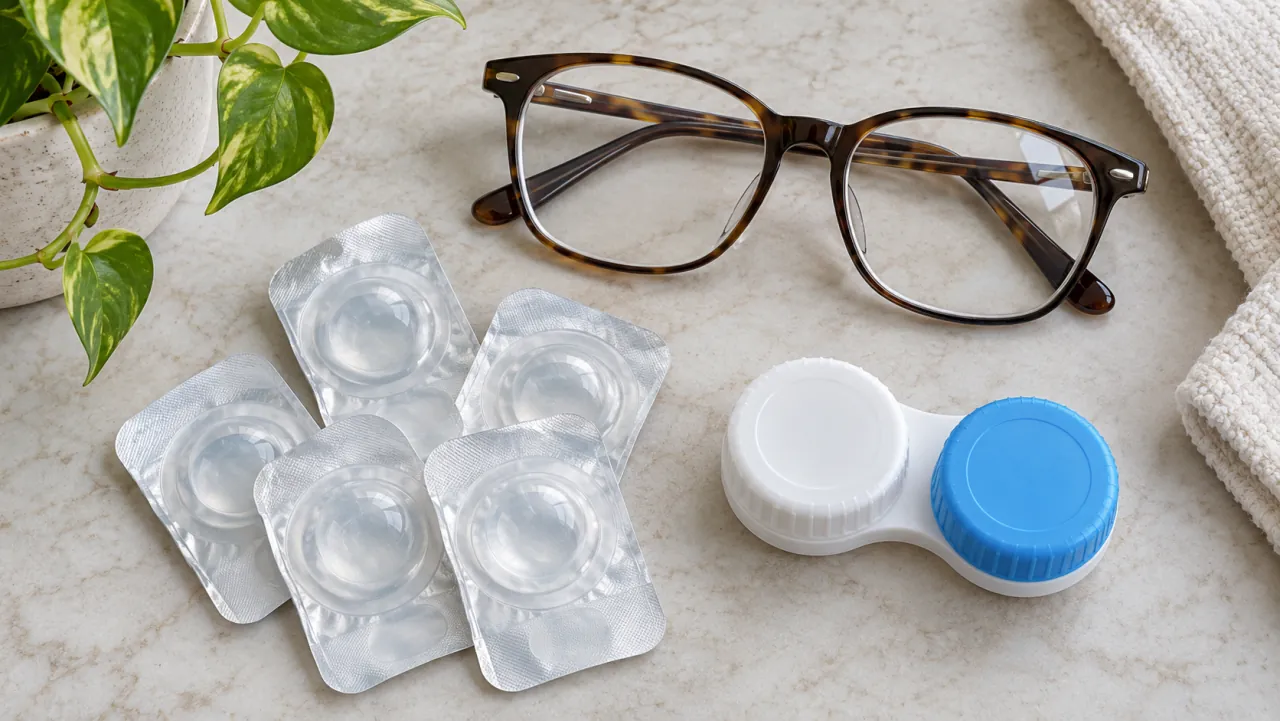
A contact lens decision often begins with a simple question: should I buy daily lenses or monthly lenses? The answer becomes more useful when you describe an actual week. Someone who wears contacts only for a Saturday activity has different needs from someone who wears them through five workdays. A person who travels with a small overnight bag may value different things from someone with a predictable evening routine.
For contact lens wearers in North York, the choice can also involve long commutes, changing work locations, sports, and winter days spent moving between cold air and heated rooms. Those details do not select a lens by themselves. They help an optometrist choose a realistic trial and identify where a care routine might break down.
Daily disposables and monthly reusable lenses can both be appropriate when properly fitted and used as directed. Neither category guarantees comfort, and neither removes the need for eye examinations. A useful comparison considers vision, fit, replacement timing, maintenance, and what happens when plans change.
Two different clocks govern contact lens wear
The words on a contact lens box can be confusing because replacement frequency and wearing duration describe different things. Replacement frequency tells you when a lens must be discarded. Wearing duration tells you how long it may remain on your eye during an individual period of use.
A daily disposable is intended for a single day of use and then disposal. A monthly lens is reused over its prescribed replacement interval, with cleaning and disinfection between permitted wearing periods. Monthly replacement does not mean continuous wear for a month. Most everyday wearers remove their lenses before sleeping, regardless of how often the lenses are replaced.
The National Eye Institute’s explanation of lens types separates these categories. At a fitting, ask for your own instructions in plain language: when to remove the lenses, when to throw them away, and what to do after an unplanned break. Knowing the product name alone is not enough.
What a daily disposable changes
A daily disposable provides a fresh lens for each new wearing day. Because it is discarded after use, there is no overnight storage case or disinfection cycle for that lens. This removes several maintenance tasks, which may suit occasional wearers or people whose evenings are unpredictable.
There are still responsibilities. You need clean, dry hands, an adequate supply of the correct prescription, and a way to see after removing the lenses. A fresh blister pack does not compensate for handling a lens with unwashed fingers or falling asleep while wearing it.
Think about the moment you usually switch back to glasses. If that happens immediately after work, daily disposal can make the transition straightforward. If you frequently remove a lens during the day and expect to put it back later, discuss that habit at your fitting. Do not create a storage routine for a single-use product. A spare pair and clear instructions are more useful than improvising with a borrowed case.
What a monthly lens asks of you
A monthly lens makes cleaning and storage part of every wearing day. The routine must work when you are tired, staying elsewhere, or arriving home late. It also depends on having the prescribed solution and a clean, suitable case available.
The replacement clock ordinarily follows elapsed time after opening, as directed for your particular product. It is not a collection of thirty separate wearing days. If you open lenses for a family gathering and then leave them stored for several weeks, the time in the case still matters. The solution instructions also determine how long stored lenses can remain untouched before another disinfection cycle is needed.
Some people find this routine easy and prefer the feel of a particular reusable lens. Others discover that the maintenance is the difficult part. Be candid about this. A lens plan should account for your actual habits without relying on a promise that every evening will suddenly become more organised.
Comfort cannot be predicted from replacement frequency alone
Two lenses with the same power may feel different because of their material, shape, thickness, edge, and interaction with your tear film. A well-fitted monthly lens may work better for one person than a particular daily lens, while another person may benefit from starting with a fresh surface each day.
The examination also matters because discomfort may come from the eyelids or ocular surface. Changing boxes will not necessarily settle untreated inflammation, allergy, or dryness. If your vision clears briefly after a blink and then becomes hazy, describe that pattern instead of simply saying the prescription seems weak.
During a trial, notice comfort at several points: shortly after insertion, during sustained reading, and near your recommended removal time. Include whether one eye behaves differently. Useful observations are specific enough to guide a change. “The left lens starts sliding during the afternoon” tells your clinician more than a general preference for one brand.
Match the trial to a representative week
Try to judge lenses during ordinary activities rather than only during a short visit. A lens that feels comfortable while you sit in an examination room still needs to perform during your usual work and home tasks.
For example, someone working near Yonge and Sheppard might spend most of the day on a monitor, then take transit home and read on a phone. Another wearer might alternate between outdoor work and indoor meetings. These are different visual and environmental demands, even if both people have similar prescriptions.
Keep brief notes rather than a complicated diary. Record the approximate wearing period, any dryness or blur, and whether symptoms settled after removal. Do not extend the prescribed wearing time to create a more demanding test. The purpose is to discover a comfortable routine, not measure how much discomfort you can endure.
Consider the whole cost of the routine
Comparing the price of two boxes can be misleading. A realistic discussion includes the number of days you expect to wear contacts, the number of lenses supplied, care solution, replacement cases, and any lenses discarded because they were lost or damaged.
An occasional wearer and a daily wearer may reach different conclusions from the same quoted prices. Ask the clinic to compare supplies for your expected pattern of use. Avoid assuming that a monthly product is automatically the least expensive option or that daily lenses always cost a fixed amount more.
Cost should never be managed by stretching a replacement interval, sharing lenses, or saving yesterday’s solution. If the recommended plan is difficult to sustain financially, explain that before ordering a large supply. It is reasonable to discuss a smaller amount of contact lens wear, a different suitable product, or greater use of glasses.
Water and sleep remain important with either choice
A daily disposable is not protection against the risks of sleeping, showering, or swimming in contact lenses. Water exposure can introduce organisms to the lens and eye, while sleeping in lenses increases the risk of serious infection. The CDC’s prevention guidance recommends removing lenses before water activities and following the prescribed wearing schedule.
Build removal into the activity rather than waiting until you are halfway through it. Put glasses where you change for a shower. For swimming, discuss prescription goggles instead of treating disposable lenses as swim equipment. If you regularly nap during a long journey, plan to travel in glasses.
These choices are particularly useful when your day ends away from home. A backup pair of glasses in your work bag gives you a practical alternative to keeping an uncomfortable lens in place just to navigate the journey back.
Reusable lenses require compatible products
If monthly lenses are recommended, ask which care system suits the lens and your eyes. Multipurpose solution, saline, lubricating drops, and peroxide systems are different products. A bottle that looks familiar is not necessarily interchangeable with the one you were taught to use.
Hydrogen peroxide systems need their designated case and the full neutralisation process. Unneutralised peroxide must not go directly into the eye or be used to rinse a lens immediately before insertion. The FDA’s peroxide safety guidance explains this distinction.
Before travel, check that replacement supplies are available in appropriate packaging. Do not pour lens solution into an unlabelled cosmetic bottle. If another household member uses a different care system, store the products so they cannot be confused during a rushed morning. Small organisational choices can make a correct routine much easier to maintain.
Astigmatism and reading needs influence the choice
Replacement frequency is only one part of a prescription. People with astigmatism may need a toric design that maintains a suitable orientation. People developing near-vision difficulty may consider multifocal lenses or another carefully assessed approach.
Available powers and designs vary between products. A daily lens and a monthly lens carrying similar marketing language may provide different visual performance for your particular eyes. Let the fitting establish whether you can see comfortably at the distances that matter to you.
Bring examples of demanding tasks: fine print, a dashboard display, computer work, or seeing clearly during evening activities. Our guide to contact lenses for astigmatism explains why stable fit is important, and a contact lens fitting can connect those visual requirements to an appropriate trial.
A successful choice still needs follow-up
Comfort and clear sight are helpful, but they do not reveal everything about the cornea or lens fit. Follow-up allows the clinician to check the eye’s response and revisit any problems with handling, care, or wearing time.
Return sooner if you develop recurring redness or find yourself needing more drops just to finish the day. Remove lenses and obtain prompt advice for pain, light sensitivity, discharge, or a new reduction in vision. Do not assume that opening a fresh daily pair makes it safe to continue wearing lenses on a symptomatic eye.
Your preferred schedule can also change. A new job, an increase in allergies, or a decision to wear contacts only for certain activities may justify reviewing the plan. That is a routine adjustment to changing needs, not evidence that your earlier choice was wrong.
Bring the decision back to your own routine
Before an appointment, write down how often you want to wear contacts, when you usually sleep or nap, and where you would clean or remove them. Bring your current glasses, existing lens boxes if applicable, and the names of any eye drops you use.
At Optima Eye Care, the existing contact lens services include assessment of vision, fit, comfort, and care needs. You can request a fitting or lens review to compare suitable options. The most useful outcome is a clear plan you can explain and carry out: the right lens, a defined wearing period, a realistic replacement schedule, and an easy transition to glasses whenever your eyes need one.