

Eye Care Resources
Contact Lenses and Seasonal Allergies in North York: Managing an Itchy-Eye Season
May 21, 2025
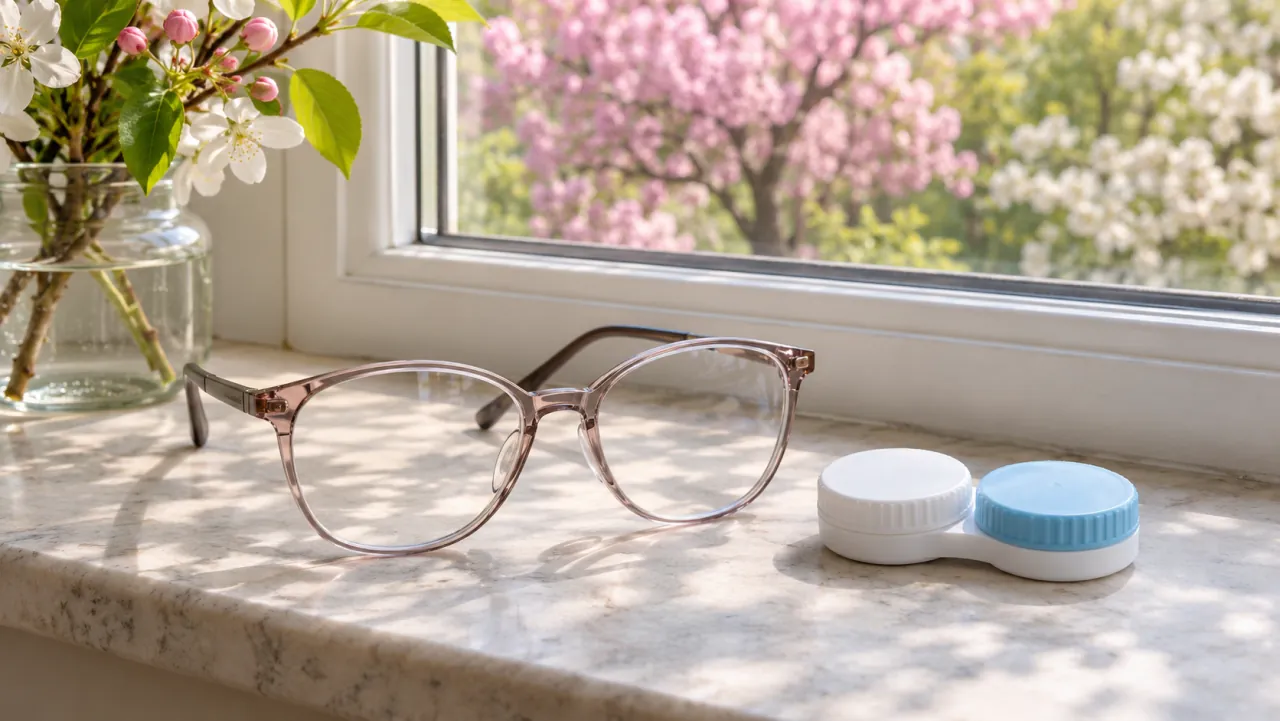
The first uncomfortable contact lens day of spring can feel puzzling. A prescription that worked throughout winter suddenly seems harder to tolerate. The eyes itch on the way to work, water during an outdoor lunch, and feel dry again when you return to a screen.
Seasonal allergy may be part of that pattern, but it is not the only explanation. Contact lens deposits, dryness, an unsuitable fit, or infection can also cause irritation. Having pollen outside does not establish what is happening on the eye.
For contact lens wearers in North York, a useful allergy plan combines symptom assessment with practical flexibility. Some days may be comfortable in appropriately fitted lenses. Other days call for glasses and treatment of the eye surface. The aim is to preserve comfortable vision without turning contact lens wear into something you must push through regardless of symptoms.
Itching offers a clue, not a complete diagnosis
Allergic conjunctivitis often causes itching, watering, and redness in both eyes. Sneezing or a runny nose may accompany the eye symptoms. The timing may relate to outdoor exposure or a familiar seasonal pattern, although indoor allergens can produce similar problems throughout the year.
Pain, substantial light sensitivity, or reduced vision should not be dismissed as routine allergy. One eye that is much more uncomfortable than the other also deserves attention, especially in someone wearing contacts. A corneal problem can develop during allergy season just as it can at any other time.
The American College of Allergy, Asthma and Immunology explains common eye-allergy features. Use the pattern to describe what you are experiencing, rather than to diagnose yourself. “Both eyes itch after time outdoors” and “the right eye hurts even after lens removal” point toward different priorities for assessment.
Why lenses may become harder to tolerate
A contact lens interacts with tears, the inner eyelid, and material deposited on its surface. During an allergic flare, an already irritated eye may become more aware of the lens. Deposits and environmental allergens can add to the problem, while rubbing can further disturb the eye surface.
The result may be shortened comfortable wearing time rather than obvious severe redness. You may notice that a lens becomes uncomfortable halfway through a day that used to be manageable. That change is worth discussing even if the lens still provides clear vision.
Do not assume more frequent use of rewetting drops is the complete answer. The clinician may need to assess allergy, tear-film stability, lid inflammation, or the lens itself. The right adjustment depends on which parts of that system are involved.
Take the lenses out before deciding what to try next
When eyes become itchy or irritated in lenses, remove the lenses with clean, dry hands and switch to glasses. Avoid rubbing through the lens or repeatedly repositioning it in search of a more comfortable spot.
If discomfort persists after removal, or if pain, light sensitivity, discharge, or blur develops, seek prompt assessment. Do not insert a fresh lens merely to check whether the first one was the problem. A new lens still rests on the same irritated eye.
For milder symptoms that settle, ask when and how to resume wear. The American Optometric Association’s allergy advice includes using glasses when contact lenses become uncomfortable. Keeping an up-to-date pair nearby makes that advice possible during a working day, rather than something you can only follow after getting home.
A brief record can reveal useful patterns
For a week or two, note when symptoms begin, whether they affect one or both eyes, and what you were doing before they appeared. Include outdoor time, lens wearing duration, cleaning products, and any drops or tablets used that day.
This need not become an elaborate tracking project. A few lines in a phone note can distinguish discomfort after gardening from irritation that starts immediately after inserting a lens. It can also show whether symptoms occur on days spent entirely in glasses.
Bring the record to a contact lens examination. It provides a more accurate starting point than trying to reconstruct several weeks from memory. If the symptoms are severe, skip the observation period and arrange care; a diary is useful only when it does not delay an assessment that is already needed.
Eye drops require more thought when you wear contacts
Allergy drops, artificial tears, and redness-relief products serve different purposes. A product intended to reduce itching is not automatically suitable for use while lenses are in place. Preservatives and other ingredients may affect the lens or the eye surface.
Follow the individual label and your clinician’s advice about removing lenses and the interval before reinsertion. There is no single waiting period that applies to every bottle. Bring the product or a photograph of the label if you are unsure which category it belongs to.
An eye-care professional may recommend an antihistamine or mast-cell stabilising approach when appropriate. Steroid eye drops require medical supervision and monitoring; they are not an option to borrow from someone else or restart from an old prescription. A temporarily whiter-looking eye does not establish that the underlying problem has been addressed.
Oral allergy medicine can change the comfort equation
Some oral antihistamines can contribute to dry-eye symptoms, even when they improve sneezing or nasal itching. This does not mean everyone should avoid them. It means lens comfort should be considered alongside the reason the medication is being used.
If your contacts become noticeably drier after starting a medicine, tell your pharmacist, prescribing clinician, and eye-care professional. Do not stop prescribed treatment without advice. They can help consider whether the symptoms reflect allergy itself, medication effects, or another problem.
The American Academy of Ophthalmology’s eye-allergy information discusses both topical treatments and the possible drying effect of oral antihistamines. When several products are involved, write down their names and timing. “I take an allergy pill” is less informative than knowing which product you use and when the eye symptoms changed.
Cool comfort is different from vigorous cleaning
A clean, cool compress over closed eyes may soothe mild itching. Use gentle contact without pressing on the eyeballs, and avoid placing ice directly on eyelid skin. Remove contact lenses first and use a clean cloth.
Do not try to scrub pollen out of the eye. Aggressive washing, fragranced wipes, and rubbing at the lash line can add skin irritation to an existing allergy problem. If there is crusting or lid disease as well, the clinician may recommend a separate eyelid-care routine suited to those findings.
Washing hands after outdoor activities is a simple way to avoid transferring material when touching the face. Keeping a separate, clean towel for facial use may also make the routine easier. These steps support comfort, but they do not replace treatment when symptoms are persistent or significant.
Adjust the environment around your ordinary activities
You do not have to abandon every outdoor activity to take allergies seriously. Consider which exposures are avoidable and which need a better plan. Well-fitting sunglasses may reduce wind and some airborne material reaching the eye, while glasses provide an alternative to contacts during a flare.
After spending time in a garden or park, wash your hands before handling lenses. Change out of heavily pollen-covered clothing and keep it away from bedding when that is relevant to your symptoms. At home or in the car, avoid directing a fan or vent straight at your face, since airflow can add dryness to itching.
North York residents may move between outdoor paths, transit, offices, and air-conditioned rooms in one afternoon. Pay attention to where symptoms change. The purpose is to identify manageable adjustments, not blame every episode on outdoor pollen without checking the eyes.
Discuss daily lenses without expecting a cure
Daily disposables may help some wearers by providing a fresh lens surface for each wearing day and removing the need to store that lens overnight. They do not prevent an allergic reaction, and they are not suitable for every prescription or every eye.
If you already wear daily lenses and still develop itching, more frequent replacement within the day is not a substitute for assessment. If you wear reusable lenses, do not change products or replacement schedules on your own. The fitting and eye-surface findings should guide any switch.
There may also be a role for shorter wearing periods or taking a temporary break from lenses. Ask what improvement should occur before resuming your usual schedule. A clear endpoint is more helpful than repeatedly trying contacts every morning and stopping only after the irritation becomes difficult to tolerate.
Persistent lens intolerance may have another name
Some contact lens wearers develop inflammation and enlarged bumps on the inner upper eyelid, often discussed as contact lens-associated papillary conjunctivitis. Symptoms can include itching, mucus, greater awareness of the lens, or a lens that moves differently.
This requires an examination of the eyelid and lens interaction. It cannot be confirmed by looking at the outside of the eye in a bathroom mirror, and it should not be treated as ordinary seasonal allergy by default. The management may involve a pause in lenses, changes to the lens routine, and appropriate medical treatment.
Likewise, allergy can coexist with contact lens discomfort from other causes. An assessment is particularly useful when last year’s approach no longer works, symptoms continue outside the expected season, or only one eye repeatedly becomes difficult to wear a lens in.
Know when the plan needs urgent attention
Remove lenses and arrange urgent eye care for pain, marked light sensitivity, a new reduction in vision, significant discharge, or a rapidly worsening red eye. A visible white spot on the clear front surface is also concerning. If severe symptoms cannot be assessed promptly through an eye-care service, seek emergency medical care.
Do not wait for an allergy tablet to work before responding to those warning signs. The question is whether the cornea or another part of the eye needs treatment, not whether allergy is also present.
For recurrent mild itching, a scheduled review is reasonable. Bring your lens packaging, care products, medication list, and any notes about symptom timing. You can arrange an appointment at Optima Eye Care to review your eye surface and lens routine. A useful seasonal plan gives you comfortable options on good days and clear instructions for the days when glasses are the better choice.