

Eye Care Resources
Contact Lens Exam vs. Eye Exam: What Is the Difference?
November 6, 2025
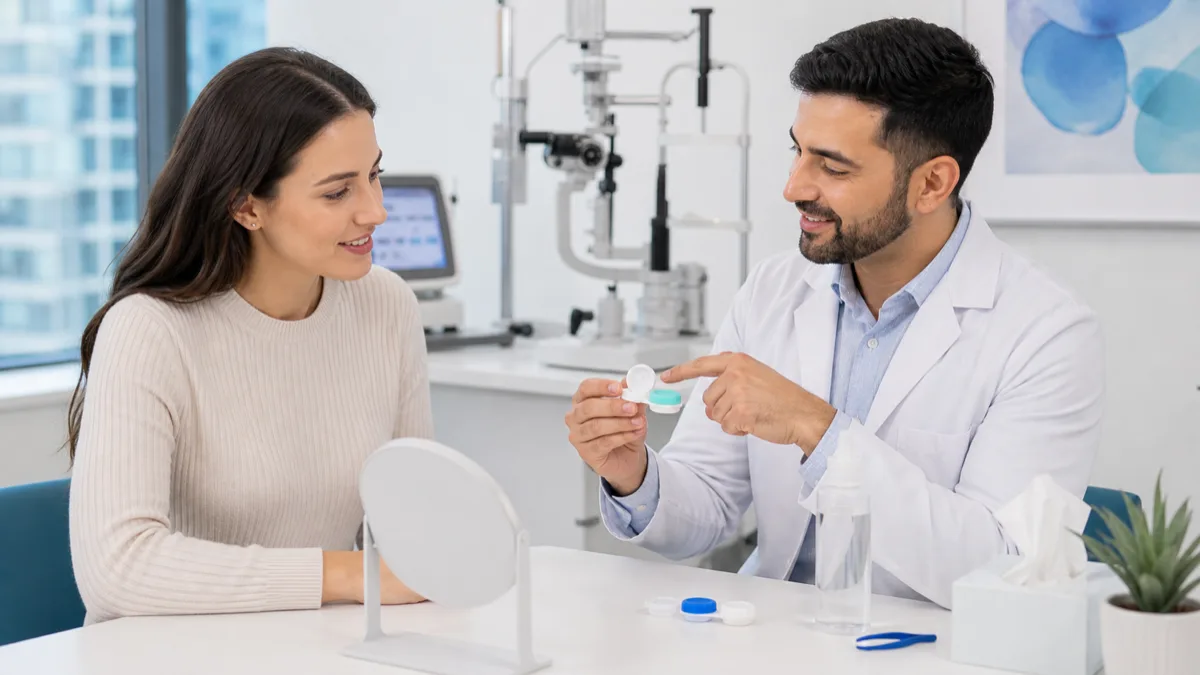
Many patients are surprised to learn that a contact lens prescription is not the same as a glasses prescription. If you have a current eye exam and know your glasses numbers, it may seem logical that contact lenses should be simple to order. But contact lenses sit directly on the eye, move with each blink, interact with the tear film, and require careful sizing and material selection. That is why a contact lens exam or fitting is a separate part of eye care.
A routine comprehensive eye exam evaluates your vision and eye health. It checks how clearly you see, whether your prescription has changed, and whether there are signs of eye disease or other concerns. A contact lens fitting builds on that information and asks a different set of questions: Which lens design fits your eye safely? Does it move properly? Is the vision stable? Are the lenses comfortable after hours of wear? Can you insert, remove, clean, and replace them correctly?
At Optima Eye Care in North York, contact lens care is designed to support both convenience and safety. Contacts can be excellent for work, sports, events, and everyday life, but they need to be treated as medical devices, not cosmetic accessories.
What happens during a routine eye exam?
A comprehensive eye exam usually includes a review of your symptoms, health history, medications, family history, and visual needs. Your optometrist measures visual acuity, checks your prescription, assesses eye focusing and coordination when needed, and examines the health of the eye. Depending on your age, health, and symptoms, additional tests such as eye pressure measurement, retinal imaging, dilation, or dry eye evaluation may be recommended.
The glasses prescription from this exam is designed for lenses that sit in a frame in front of the eyes. The distance between the lenses and your eyes affects the prescription. Glasses also stay relatively stable in one position, while contact lenses rest on the tear film and move with blinking.
This means the numbers for glasses and contacts may differ. A contact lens prescription also includes details that glasses prescriptions do not, such as lens brand, base curve, diameter, material, and replacement schedule.
What happens during a contact lens fitting?
A contact lens fitting begins with measurements and a discussion of your goals. Are you new to contacts? Do you want daily wear for sports or occasional use for events? Do you need lenses for astigmatism? Are you interested in multifocal contacts? Do you have dry eye symptoms? Do you work long hours on screens?
Your optometrist may evaluate the curve of the cornea, tear film quality, eyelids, and surface health. Trial lenses are selected based on your prescription and eye shape. After the lenses settle, the fit is assessed. The lens should centre well, move appropriately, and provide clear, stable vision. A lens that is too tight, too loose, poorly centred, or unstable may cause discomfort or increase risk.
The fitting may take more than one visit. Sometimes the first trial lens is not the final lens. Adjustments may be needed for comfort, clarity, dryness, or handling. This process is normal and helps ensure the lens is appropriate for your eyes.
Why contact lens prescriptions include brand and size
Contact lenses are not interchangeable simply because the power is the same. Different brands can use different materials, edge designs, water content, oxygen transmission, thickness, and surface properties. A lens that works well for one person may feel dry or unstable for another.
Base curve and diameter describe lens shape and size. These details influence how the lens sits on the eye. If the lens does not fit properly, vision may fluctuate or the eye may become irritated. Poor fit can also affect oxygen delivery and tear exchange.
Because contacts are medical devices, your prescription includes the specific lens that was evaluated and approved for your eyes. Ordering a different lens without assessment may seem harmless, but it can change fit and safety.
Contact lenses for astigmatism
Astigmatism means the eye has different focusing powers in different meridians. Glasses can correct astigmatism easily because the lens stays fixed in the frame. Contact lenses for astigmatism, called toric lenses, need to sit in a stable orientation on the eye. If the lens rotates too much, vision may blur or fluctuate.
A toric lens fitting checks both the prescription and the lens rotation. Your optometrist may adjust the axis or lens design based on how the trial lens behaves on your eye. This is one reason astigmatism fittings can require extra care.
Patients sometimes assume they cannot wear contacts because they have astigmatism. Many can. The key is finding the right lens design and confirming that it remains stable during real-world wear.
Multifocal contacts and presbyopia
After around age 40, many adults notice that near focus becomes harder. This is called presbyopia. Reading glasses, progressive glasses, and multifocal contact lenses are common options. Multifocal contacts can be convenient, but they require realistic expectations and careful fitting.
Multifocal contacts use different optical zones to help with more than one distance. The brain adapts to the lens design over time. Some patients love the freedom from readers, while others prefer a different approach, such as monovision or glasses over contacts for certain tasks.
Your work habits matter. If you spend long days on detailed near work, your needs may differ from someone who uses contacts mainly for social activities or sports. A good fitting includes a conversation about what vision tasks matter most to you.
Comfort is not the only safety sign
Comfort is important, but a lens can feel comfortable and still not be ideal. Some lens-related problems develop quietly. That is why follow-up matters. Your optometrist checks the cornea, eyelids, tear film, and lens movement, not only how the lenses feel.
Redness, pain, light sensitivity, discharge, sudden blur, or a feeling that something is stuck in the eye should not be ignored. Remove your lenses and call for advice. Contact lens-related infections can become serious, especially if care is delayed.
Never sleep in contacts unless they are specifically prescribed for overnight wear. Avoid swimming or showering in contacts. Do not top off old solution. Replace lenses and cases as directed. Wash and dry hands before handling lenses.
Daily disposables, biweekly lenses, and monthly lenses
Different replacement schedules have different advantages. Daily disposable lenses are worn once and discarded. They can be convenient and may reduce issues related to cleaning and storage. They are often helpful for part-time wearers, allergy sufferers, or patients who prefer a fresh lens each day.
Biweekly and monthly lenses can work well too, but they require consistent cleaning, storage, and replacement. Wearing lenses longer than recommended can increase deposits and discomfort. Using old solution or a dirty case can increase risk.
Cost, convenience, prescription availability, comfort, and eye health all influence the best schedule. The cheapest option is not always the best value if the lenses feel uncomfortable or lead to repeated problems.
Why annual contact lens checks matter
Even if your prescription feels stable, your eyes and lens needs can change. Tear quality, allergies, medications, screen use, work environment, and age can all affect contact lens comfort. A yearly contact lens assessment helps confirm that the lenses still fit properly and that your eyes remain healthy.
If you order contacts repeatedly without follow-up, small issues may be missed. Dryness, corneal staining, inflammation, or poor lens movement may not be obvious until symptoms appear. Regular care helps catch problems earlier.
Bring your contact lens boxes or prescription details to your appointment. If you are having trouble, note when symptoms occur: morning, afternoon, after screen work, outdoors, during driving, or after a certain number of wearing hours. Those details help guide adjustments.
New wearers need training
If you are new to contacts, insertion and removal training is part of safe care. It is normal to feel awkward at first. The goal is to learn clean, confident handling before you leave with lenses. Rushing this step can lead to frustration or unsafe habits.
Training includes handwashing, lens inspection, insertion, removal, cleaning if needed, replacement schedule, storage, and what to do if a lens feels uncomfortable. You should understand when to stop wearing lenses and call the clinic.
Contacts can be life-changing for many patients, but success depends on both lens fit and daily habits. A good start makes long-term wear much easier.
The bottom line
A routine eye exam and a contact lens fitting are related, but they are not the same. The eye exam checks your vision and eye health. The contact lens fitting confirms which lenses sit safely and comfortably on your eyes. Both are important if you want clear vision and healthy contact lens wear.
If you wear contacts or want to try them, book an appointment with Optima Eye Care. We can assess your prescription, eye shape, tear film, lifestyle, and comfort needs to find a contact lens option that makes sense for you.