

Eye Care Resources
Concussion and Vision in North York: Blur, Light Sensitivity, and Reading Problems
August 22, 2026
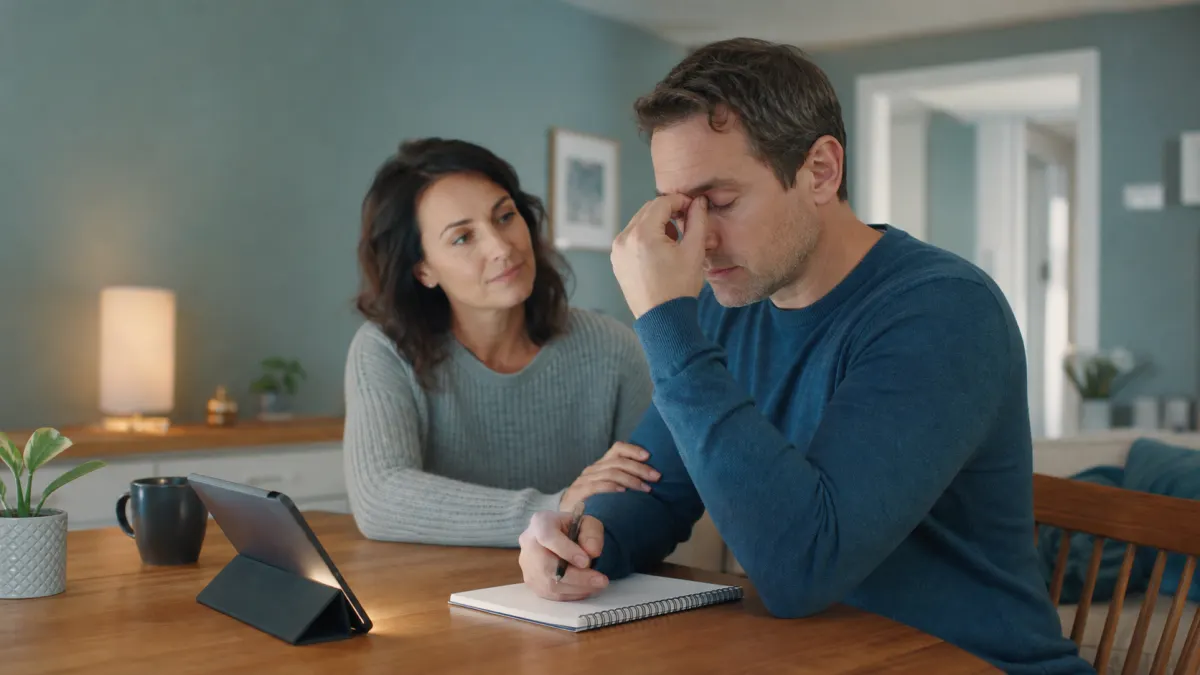
After a concussion, a phone screen may look clear for the first minute and then become exhausting. Lines of text seem to drift, the grocery store feels visually overwhelming, headlights are painfully bright, or concentration collapses after a short email. A basic distance chart may still read 20/20.
A concussion is a mild traumatic brain injury caused by a blow or jolt to the head—or a hit to the body that rapidly moves the head and brain. Vision depends on much more than the eyes resolving small letters. The brain must coordinate focusing, eye alignment, eye movements, visual attention, balance, and motion processing. A concussion can disrupt one or several of these functions.
Visual symptoms belong within a broader medical assessment. Anyone with a suspected concussion should be evaluated by an appropriate healthcare provider. An optometric examination can identify ocular injury and measure visual functions that affect reading and daily activity, but it does not replace emergency neurological care or the clinician directing concussion recovery.
Emergency signs come before a vision appointment
After a head or body impact, call 911 or go to an emergency department for:
- a headache that worsens and does not go away;
- repeated vomiting;
- seizure or convulsion;
- increasing confusion, agitation, or unusual behaviour;
- slurred speech;
- weakness, numbness, or reduced coordination;
- inability to recognize people or places;
- increasing drowsiness, loss of consciousness, or difficulty waking;
- one pupil larger than the other;
- new double vision with other neurological signs;
- fluid or blood from the nose or ears; or
- severe neck pain or suspected serious injury.
Do not drive the injured person if an ambulance is the safer option. Symptoms can evolve over hours, so follow the monitoring instructions given by the medical team even when the person initially seems well.
An eye injury can occur at the same time as a concussion. Sudden vision loss, a curtain or shadow, severe eye pain, an irregular pupil, blood inside the eye, or a suspected penetrating object also requires emergency care.
Common visual symptoms after concussion
People may report:
- blurry or fluctuating vision;
- double vision;
- eyestrain or headache with reading;
- losing place or rereading lines;
- difficulty shifting focus from near to far;
- light sensitivity;
- motion sensitivity or dizziness;
- poor tolerance for screens;
- discomfort in supermarkets or crowds;
- slower visual processing;
- reduced concentration; or
- balance difficulty made worse by visual environments.
Symptoms may appear immediately or become obvious when school or work resumes. Their severity can vary through the day. Fatigue, poor sleep, pain, anxiety, migraine, and medication effects can overlap with visual dysfunction.
Focusing is an active neurological task
Accommodation is the eye’s focusing response for near targets. After concussion, it may be weak, slow, unstable, or difficult to sustain. A person can clear a single word briefly but cannot hold it comfortably across a page. Looking from a notebook to a board or from a dashboard to the road may take longer to become clear.
Standard refraction still matters because uncorrected nearsightedness, farsightedness, or astigmatism adds demand. Yet prescribing more minus power to force momentary clarity can be counterproductive in some cases. Measurements may fluctuate while the visual system is symptomatic.
The examiner may test focusing amplitude, accuracy, flexibility, and response over time. Temporary task-specific lens support is sometimes considered as part of an individualized plan, but it should be coordinated with the overall recovery strategy.
Eye teaming can make near work uncomfortable
For reading, both eyes turn inward so their images align. Convergence insufficiency means this inward coordination is inadequate or difficult to sustain. Symptoms can include eye strain, frontal headache, words that move or double, loss of place, closing one eye, and avoidance of reading.
Convergence is only one part of binocular vision. Alignment at distance and near, vertical balance, fusional reserves, sensory fusion, and the relationship between focusing and teaming may all be assessed. A small pre-existing issue can become symptomatic when concussion reduces the system’s reserve.
Not every post-concussion headache is caused by convergence, and not every reduced test value requires the same treatment. Findings should match the patient’s symptoms and functional goals.
Eye movements affect reading and visual search
Saccades are quick eye movements that shift gaze between targets, such as from word to word. Pursuits smoothly follow a moving target. After concussion, these tasks may provoke symptoms or become less accurate, especially when combined with attention and head movement.
A person may read slowly, skip lines, lose place, or struggle to scan shelves and traffic. These complaints do not necessarily mean the eye muscles are weak. Eye movements are controlled by distributed brain networks and interact with cognition, vestibular function, and fatigue.
Testing needs to be paced. Provoking severe symptoms for the sake of completing every measure is not useful. Results also need context because attention, sleep, medication, pain, and pre-existing learning or binocular conditions can influence performance.
Light sensitivity is real but constant darkness can backfire
Photophobia is common after concussion. Indoor lighting, sunlight, reflections, and screens may feel harsh. A hat brim, controlled brightness, anti-reflective lenses, and strategically selected tint can improve function for some people.
Wearing very dark sunglasses indoors all day may increase dark adaptation and make ordinary light harder to tolerate. The goal is usually graded, tolerable exposure rather than permanent avoidance, under the guidance of the treating team.
Blue-light filtering is often marketed for concussion, but screen intolerance involves brightness, flicker, contrast, motion, cognitive load, working distance, and duration—not only blue wavelengths. A filter may feel comfortable for an individual without being a cure for the injury.
Dizziness may involve visual and vestibular systems together
Balance depends on the eyes, inner-ear vestibular system, and body-position signals working together. Following concussion, head motion, scrolling content, passing traffic, patterned floors, or crowded stores may create dizziness, nausea, or disorientation.
The visual system should not be assessed in isolation when motion is the main trigger. Vestibular physiotherapy, medical assessment, occupational therapy, and optometric care may need to coordinate. New hearing loss, severe spinning, inability to walk, weakness, speech difficulty, or worsening neurological symptoms requires urgent medical review.
Avoid driving while dizziness, double vision, slowed processing, or visual-field symptoms could compromise safety. Return-to-driving decisions belong in the healthcare plan, not in a quick self-test around the block.
Screen use should be paced by symptoms and medical guidance
Complete prolonged isolation in a dark room is no longer the universal model for concussion recovery. After a short initial period, healthcare providers often guide a gradual return to ordinary activity that does not substantially worsen symptoms. The exact pace depends on the person and injury.
For visual tasks, practical pacing may include:
- shorter work periods with planned breaks;
- larger text and increased spacing;
- reduced screen brightness and glare;
- one screen instead of several;
- listening to material when appropriate;
- printed work in manageable sections;
- stable rather than rapidly scrolling content; and
- stopping before symptoms become overwhelming.
Symptom pacing is not a contest. A small, temporary increase may be acceptable within a clinician’s plan, while a major or prolonged worsening suggests the load was too high. Keep a simple record of task, duration, symptoms, and recovery time.
School and workplace accommodations can be specific
“Reduce screen time” is vague. More useful temporary accommodations describe what the person can do: enlarged print, audio options, reduced visual clutter, extra time, scheduled breaks, fewer pages per session, limited copying from a distant board, alternative lighting, or a quieter workspace.
Needs often change during recovery. A student may tolerate listening before sustained reading. An employee may manage email but not a visually dense spreadsheet. Communication among the patient, medical provider, school or workplace, and rehabilitation team prevents contradictory expectations.
An eye-exam report can document measured visual findings, but the clinician managing the concussion determines medical restrictions and return-to-learn, work, sport, and driving progression.
Sports return requires medical clearance
No athlete should return to play on the same day as a suspected concussion. A second injury before recovery can be dangerous. Follow the staged return-to-sport protocol and clearance requirements provided by the appropriate medical professional and sports organization.
Normal visual acuity does not equal neurological recovery. Reaction time, balance, processing, symptoms with exertion, and visual-vestibular integration all matter. Protective eyewear can reduce certain eye injuries but cannot prevent every concussion.
Report symptoms honestly. Hiding blur or headache to return sooner increases risk and makes targeted support harder.
What a post-concussion eye examination may include
The visit begins with the injury timeline, emergency assessment already completed, symptoms, previous concussions, migraine history, glasses or contacts, medications, work or school tasks, and recovery plan. Testing may include:
- visual acuity and refraction;
- pupils and colour vision;
- visual fields;
- eye health and signs of trauma;
- distance and near alignment;
- convergence and divergence;
- focusing function;
- saccades and pursuits;
- symptom response to near tasks; and
- coordination with head or motion tasks when appropriate.
Testing may be split across visits if fatigue is significant. A dilated exam or retinal imaging may be recommended based on the injury and symptoms. Abnormal pupils, field loss, optic-nerve signs, or unexplained reduced vision can prompt urgent medical or neurological referral.
Glasses, prisms, tints, and therapy are not one-size-fits-all
An accurate everyday prescription removes avoidable blur. Temporary near support, prism, partial occlusion, tint, or other lens strategies may be considered for selected findings. Each has trade-offs and should be based on examination, function, and planned follow-up.
Vision therapy or rehabilitation may be recommended for persistent, measurable problems in some patients. The plan should set specific goals, monitor symptoms and function, and coordinate with vestibular, occupational, neurological, or medical care. More treatment is not automatically better; timing and tolerance matter.
Be cautious of claims that one lens, tint, or exercise diagnoses or cures every concussion. Recovery is multidimensional, and symptoms can have several contributors.
When lingering symptoms need review
Many people improve over days to weeks, but recovery varies. Contact the treating healthcare provider if symptoms worsen with return to activity, do not improve as expected, or persist beyond the timeframe you were given. Do not simply increase rest indefinitely without review.
New symptoms after initial improvement deserve attention. Repeated vomiting, worsening headache, increasing confusion, weakness, seizure, unequal pupils, or difficulty waking remains an emergency at any point.
Persistent visual difficulty can justify reassessment even when the initial eye exam was normal. The demands at two weeks may reveal issues that were not testable or symptomatic on the first day.
Concussion-related vision care in North York
Optima Eye Care can examine ocular health, prescription, focusing, alignment, and other visual functions for North York patients after appropriate medical concussion assessment. Bring emergency or physician instructions, your glasses, medication list, and notes about which tasks trigger symptoms.
For stable but lingering blur, light sensitivity, reading fatigue, or difficulty shifting focus, request an eye examination and tell the clinic the symptoms follow a concussion. For worsening headache, repeated vomiting, unequal pupils, seizure, weakness, slurred speech, confusion, or inability to wake, call 911 or go to an emergency department now.