

Eye Care Resources
Cleaning Eyeglasses in North York: A Routine That Protects Your Lenses
October 30, 2026
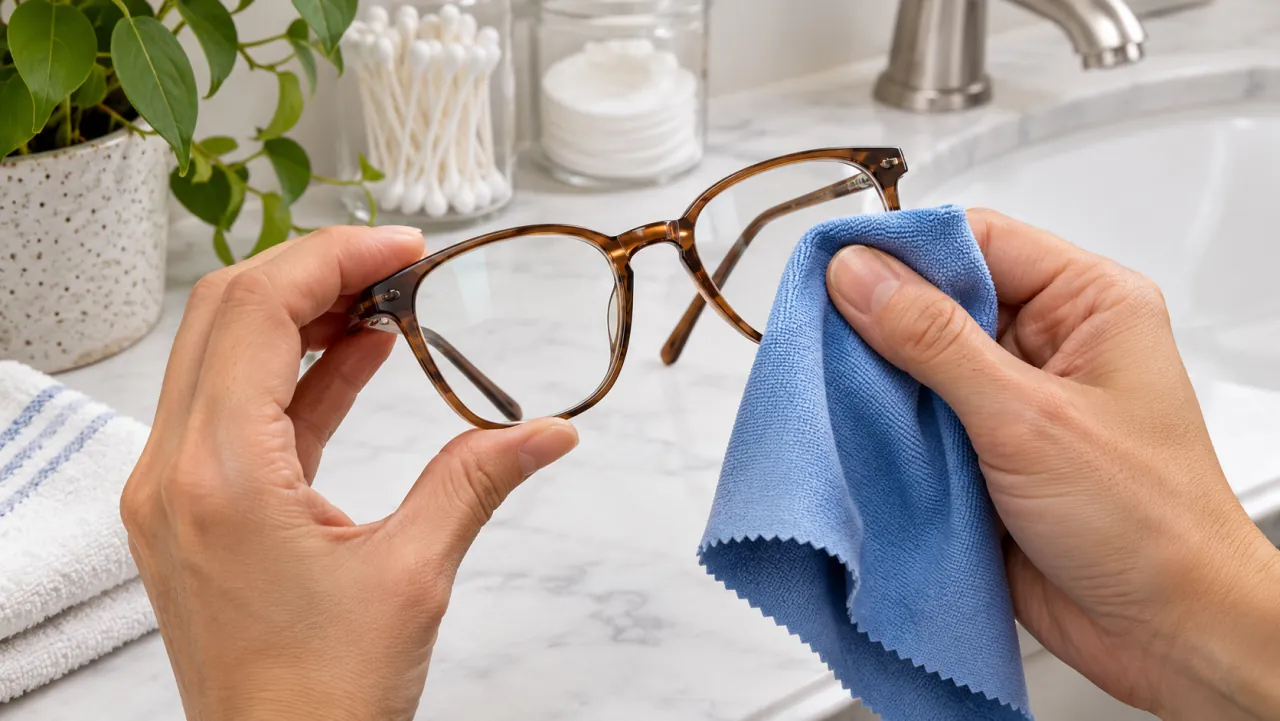
A fingerprint has a way of announcing itself at exactly the wrong moment: in front of an oncoming headlight, across a presentation slide, or while reading a small label. The temptation is to wipe it away with whatever fabric is closest. A sleeve seems harmless, especially when the lenses already have a protective coating.
The problem is that cleaning is an interaction between the lens, the dirt and the material doing the wiping. A soft-looking shirt can carry grit. A familiar microfibre cloth can be full of skin oil. More pressure can spread residue or drag particles across the surface rather than solve the problem.
For people cleaning eyeglasses in North York, the routine does not need to be elaborate. It should be easy enough to repeat after a commute, before a drive, or when sunscreen has reached the frame. The aim is a clear view and well-maintained eyewear, with care adapted to the lenses and frame you actually own.
Know what you are cleaning
Most modern spectacle lenses have more going on than a single exposed piece of material. They may carry a hard coating, anti-reflective treatment, water-repellent surface or other finish. The frame can combine plastic, metal, painted surfaces, nose pads and small mechanical parts.
This is why a cleaner that works on a kitchen window is not automatically suitable for glasses. The question is not simply whether it removes grease. It is whether the product is compatible with the lens treatments and frame materials. Keep the care instructions supplied with your eyewear, and ask the dispenser if the recommended cleaner is unclear.
The lens manufacturer ZEISS provides guidance on cleaning and storing glasses. Its practical advice includes gentle cleaning, appropriate microfibre cloths and avoiding excessive heat. Manufacturer directions for your specific eyewear should take priority over a generic household recipe.
Give visible particles somewhere to go
Before wiping, look at the lenses. Dust from a renovation, salt residue from winter weather, sand from a beach bag and a simple oily fingerprint are different cleaning problems. If particles are visible, do not rub them around with a dry cloth.
For ordinary washable eyewear, a gentle rinse with lukewarm running water can remove loose material before further cleaning. Check first if the frame has unusual decorative materials or specific restrictions. Avoid a strong jet that makes it difficult to hold the glasses securely, and keep the water comfortably lukewarm rather than hot.
Wash and rinse your hands as well. Hand lotion, cooking oil and soap residue can move straight from your fingers onto freshly cleaned lenses. A clean starting point saves the frustrating cycle of wiping a mark away only to replace it with another.
Use a small amount of a suitable cleaner
If the eyewear instructions permit it, a small amount of mild, lotion-free washing-up liquid can help remove ordinary grease. Work gently with clean fingertips, then rinse thoroughly. Avoid products with abrasive ingredients or added moisturisers that may leave a film.
A cleaner made for your lens coatings is another option. Follow its directions for application and drying. Some products are designed to be applied to a cloth; others specify the lens surface. More product is not necessarily better, particularly around hinges or small mounting points where liquid can collect.
Treat convenient substitutes with caution. Hand sanitiser, household disinfectant, window cleaner, nail-polish remover and an improvised mix of solvents are not interchangeable with a validated lens-care product. Even when a substance seems to clean well once, compatibility with the coatings and frame over repeated use may be uncertain.
Dry without twisting the frame
Use a clean microfibre cloth intended for optical lenses. Hold the frame near the area you are cleaning so the pressure does not twist the whole front. Work gently, keeping fingers off the optical surfaces as much as possible.
Do not use the lens as a handle, particularly in a rimless or delicate frame. If a lens feels loose, a screw is missing, or a hinge is wobbling, stop treating the problem as a cleaning task. A fitting or repair assessment is more appropriate than repeated handling that could make the damage worse.
Check the result against a plain background in good light. A remaining streak may mean a little soap is still present or the cloth is oily. Rinsing again with a fresh cloth is preferable to increasing the pressure. Cleaning should not require force.
Your cloth needs a cleaning routine too
A cloth often gets blamed less than the lenses it keeps smearing. Yet it spends the day absorbing fingerprints, sitting at the bottom of a bag and sometimes sharing space with keys or crumbs. Once saturated with oil or contaminated with grit, it cannot perform its original job well.
Wash reusable cloths according to their instructions. Avoid fabric softener when the care guidance calls for it, because residues can interfere with cleaning. Rinse thoroughly and allow the cloth to dry in a clean place. Replace one that has become rough, damaged or difficult to clean reliably.
Keep a clean cloth in a small protective pouch or a clean section of the glasses case. It is sensible to have a spare rather than use the same one indefinitely. A cloth used to wipe a greasy screen or a dusty work surface should not immediately become the cloth used on your glasses.
Make an out-of-home kit that you will actually carry
A small bottle of compatible lens cleaner and a clean cloth can live in a work bag. Individually packaged lens wipes may be convenient if they are approved for your lens and frame materials. A tissue from a café or the hem of a coat is less predictable.
The manufacturer’s lens and screen cleaning information illustrates why purpose-made products specify the surfaces they are designed to clean. Check that wording rather than assuming every wipe sold for electronics has the same formulation or suitability.
If you have no appropriate supplies, it may be better to wait until you reach a safe place to clean properly. Pull over before trying to clean glasses needed for driving. Removing a smear while moving through traffic or balancing on a station staircase creates a larger problem than the mark itself.
Remember the parts that touch your skin
Nose pads and temple tips collect skin oil, sunscreen and makeup. Cleaning those areas can improve comfort and reduce residue being transferred back to the lenses. Use a method suitable for the frame, then dry it carefully.
Avoid digging around tiny parts with a pin or scraping deposits with a blade. A stubborn deposit under a nose pad may be better handled by an optical professional who can inspect the pad, mounting and frame condition. Discolouration is not always removable dirt; it may reflect wear in a component.
If a frame causes persistent redness, broken skin or an itchy rash, do not keep tightening it or applying more cleaner. Fit, material sensitivity and skin conditions can each contribute. Seek appropriate advice and describe where the irritation occurs, how long it lasts and whether it changes when you remove the glasses.
Scratches are not a polishing project
A mark that remains after gentle cleaning may be a scratch or damaged coating. Household tips involving toothpaste, baking soda or abrasive polish can remove or alter material. That is particularly unhelpful on a lens made to deliver a precise optical power through a treated surface.
Do not assume a scratch can be buffed out without changing the lens. Have the glasses inspected, especially when the mark is in your line of sight or creates distracting scatter around lights. The answer may be continued use, a replacement lens, or another option depending on the location and extent of damage.
Photographing the lens in good light can help you describe the concern when contacting the dispenser, but a photograph may not show the full surface condition. Bring the actual glasses for a practical assessment. Avoid experimenting first with a repair method that makes it harder to identify the original problem.
Heat is a storage issue as well as a cleaning issue
A parked vehicle can expose eyewear to much more heat than a comfortable indoor room. Leaving glasses on the dashboard also puts them where they can slide, be sat on later, or accumulate dust. A case protects against some mechanical damage but does not turn a hot location into suitable storage.
Keep eyewear away from hair dryers, heaters, saunas and very hot water unless the manufacturer has specifically approved an exposure. Using heat to reshape a frame at home can affect both the frame and its lenses. Professional adjustment is a better route when the arms or bridge need attention.
In winter, give yourself a moment after moving from outdoors into a warm building. If condensation obscures the lenses, pause in a safe place. An approved anti-fog treatment may help in some circumstances, but it should be compatible with the coatings and used according to its own directions.
Build storage into the moments you remove your glasses
The riskiest moment for a pair often arrives when it is taken off “just for a second.” A bed, coat pocket or café table can become a place where the frame is crushed or the lenses meet a rough surface. Choosing a predictable home for the glasses makes these small accidents less likely.
Use a protective case that fits without squeezing the frame. Keep the case itself clean, and avoid storing loose jewellery or other objects alongside the glasses. If you briefly put the pair down outside its case, choose a stable, clean surface with the lenses facing upward.
Use both hands when putting glasses on or taking them off when practical. Repeatedly pulling one side can change the fit. A frame that becomes uneven may also encourage more handling and lens touching as you constantly push it back into place.
When clean lenses still do not provide a clear view
Once the surfaces are clean, persistent blur deserves a different line of thought. The frame may need adjustment, the prescription may have changed, or the eyes may need assessment. Cleaning harder is not a useful response to a visual change that remains with spotless lenses.
Notice whether the blur affects one eye, comes and goes, or is limited to a particular distance. Sudden loss of vision, new flashes or floaters, significant pain or a curtain-like shadow need prompt eye-care advice. Do not delay urgent assessment while trying a new cleaner or ordering replacement glasses.
For gradual problems, bring the pair to a prescription review or eye examination. If the lenses are worn out, discussing new eyewear can include the surface treatments and care routine most suitable for your day. You can request an appointment in North York and explain whether the concern is persistent marks, physical damage or vision that remains unclear after cleaning.