

Eye Care Resources
Children's Vision and Learning in North York: Signs Parents Should Notice
March 5, 2026
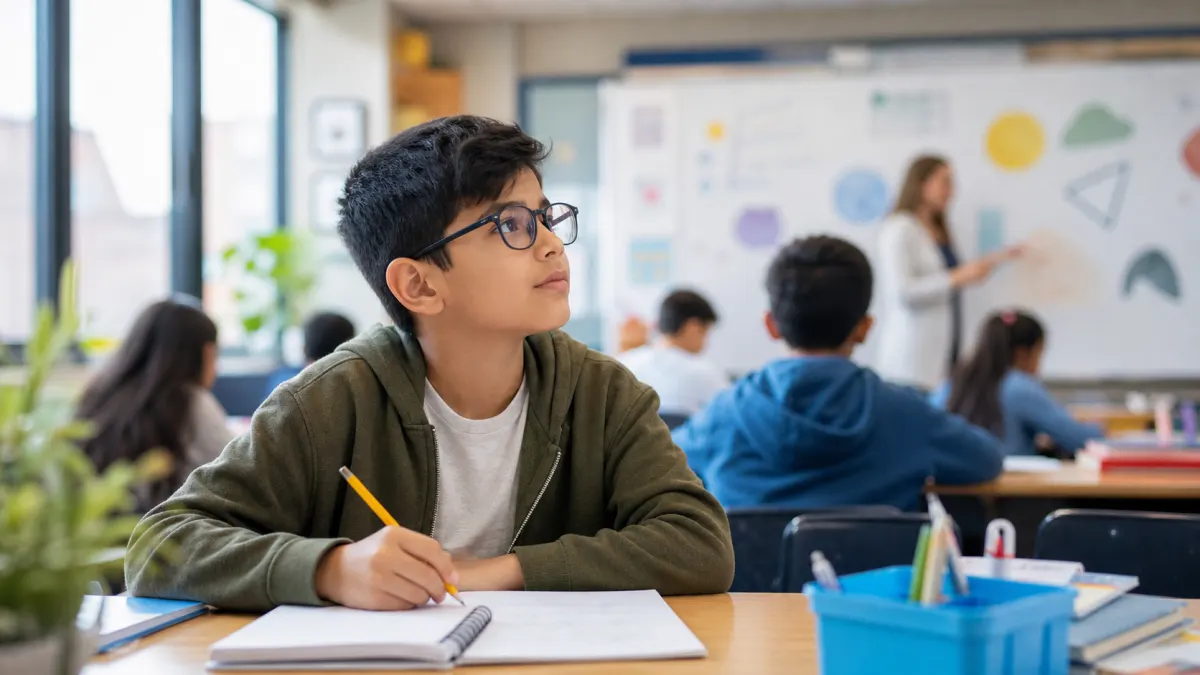
A child who cannot see the classroom board clearly may not say, “I think I am nearsighted.” They may copy from a classmate, move closer, squint, or stop volunteering to read what is displayed. A child whose eyes become tired during close work may not explain that words blur late in the day. They may rush through homework, lose their place, rub their eyes, or decide that reading is something they dislike.
Children often assume that everyone sees the way they do. They can also compensate remarkably well, especially when one eye is clearer than the other. As schoolwork becomes smaller, denser, and more visually demanding, a problem that was easy to hide in earlier years may begin to affect comfort or participation.
Clear, comfortable vision gives a child access to classroom information, books, screens, sports, faces, and the world around them. It is not the same as intelligence or learning ability, and a vision problem is not the cause of dyslexia or another primary learning disability. However, an untreated eye or vision condition can add an unnecessary obstacle to learning. For North York families, a comprehensive children’s eye exam can identify whether a prescription, eye alignment, focusing, or eye-health concern is part of the picture.
Vision is more than reading the smallest line
Distance clarity matters, but school vision involves more than seeing the board. The two eyes must aim together, shift accurately across a page, change focus between a desk and the front of the room, maintain clarity during sustained near work, and provide useful depth and peripheral awareness.
A child may read a familiar high-contrast eye chart and still have symptoms during a full day of visual tasks. Conversely, a child who struggles with reading comprehension may have completely healthy eyes and normal visual function. That is why the history and a broad examination matter more than any single classroom behaviour.
During a comprehensive exam, an optometrist can assess distance and near vision, glasses prescription, eye movements, focusing, alignment, coordination, depth perception, colour vision when appropriate, and the health of the eyes. Tests are adapted to the child’s age and communication level. A child does not need to know the alphabet or give adult-style answers to have useful parts of their vision evaluated.
Signs of distance blur in the classroom
Myopia, commonly called nearsightedness, makes distant details less clear. It often develops during the school years and can progress as a child grows. The classroom board, projected slides, sports instructions, bus numbers, or faces across a room may become blurry while books and tablets remain clear.
Possible signs include:
- squinting at the board, television, or objects across the room;
- choosing a seat near the front whenever possible;
- moving closer to screens or signs;
- copying notes from a nearby classmate instead of the board;
- misreading distant instructions or scores;
- having difficulty identifying people from far away;
- avoiding sports that depend on clear distance vision; or
- reporting headaches or tired eyes after trying to see far details.
These behaviours do not prove that a child is myopic, but they are good reasons to arrange an exam. A child may also have astigmatism, a difference between the two eyes, or another condition affecting clarity.
If myopia is found, glasses can correct the current blur. When the prescription is progressing, parents can also ask whether a myopia management assessment is appropriate. Myopia management is a separate conversation about monitoring eye growth and considering options intended to slow progression; it is not simply a stronger pair of ordinary glasses.
Signs that near work is uncomfortable
Reading and writing require sustained clarity at a close distance. Farsightedness, astigmatism, an inaccurate prescription, focusing difficulty, dry eye, or an eye-coordination problem can make near tasks uncomfortable. A child may initially see the material but lose clarity or stamina as the task continues.
Watch for frequent eye rubbing, blinking, headaches, closing one eye, tilting the head, leaning very close to the page, or needing unusually frequent breaks. Some children describe words as moving, doubling, or becoming blurry. Others say their eyes hurt or feel tired without being able to explain further.
Losing place, skipping lines, or using a finger to track can occur for many reasons. It may be a normal stage of learning, a reading or attention concern, a response to difficult material, or a visual symptom. No single sign should be used to diagnose an eye problem or a learning disorder.
The useful approach is to investigate each relevant area. An eye exam can identify and treat a visual condition if one is present. Teachers, family doctors, psychologists, speech-language professionals, or educational specialists may be needed when academic concerns continue. These roles support one another rather than compete for a single explanation.
Eye turns and the risk of a quieter eye
Strabismus occurs when the eyes are not consistently aligned. One eye may turn inward, outward, upward, or downward. The turn may be constant or appear only when the child is tired, ill, daydreaming, or focusing at a particular distance.
Amblyopia, sometimes called lazy eye, is reduced vision that develops when the brain receives unequal or abnormal visual input during childhood. It can be associated with an eye turn, a significant prescription difference between the eyes, a high prescription in both eyes, or an obstruction such as a childhood cataract.
Children may not complain because the stronger eye does most of the work. Signs can include closing one eye, an unusual head position, poor depth judgement, bumping into objects, or an eye that appears to drift. Sometimes there is no outward sign at all.
Early detection matters because the visual system develops during childhood. Treatment depends on the cause and may involve glasses, patching or other methods to encourage use of the weaker eye, and referral for additional care. A parent who notices a new or persistent eye turn should not wait for the next school year to ask about it.
Headaches, fatigue, and short attention during visual tasks
Headaches after reading or screen work can occur when a child is making extra focusing or coordination effort. Eye strain may also cause aching around the eyes, forehead tension, temporary blur, watering, or sensitivity to light. An outdated prescription and poor workstation habits can add to the demand.
However, childhood headaches have many possible causes. Vision is only one consideration. Severe, sudden, frequent, or changing headaches—especially those associated with vomiting, weakness, confusion, fever, waking from sleep, head injury, or neurological symptoms—need medical assessment rather than an assumption about glasses.
Attention is similarly complex. A child may look away from a visually uncomfortable task, but short attention can also relate to sleep, stress, hearing, task difficulty, developmental differences, or many other factors. An eye exam can answer whether vision is contributing; it cannot diagnose attention-deficit/hyperactivity disorder or explain every classroom behaviour.
Parents can help by noting whether the symptom appears mainly during reading, only late in the day, at one particular screen distance, or across many activities. A pattern gives both the optometrist and the child’s other care or education professionals better information.
Vision problems do not cause dyslexia
Dyslexia is a language-based learning disorder, not a problem in the eyes. Children with dyslexia may reverse letters, read slowly, or struggle with decoding, but those experiences are not corrected simply by strengthening eye muscles or changing the colour of a page.
A child can have dyslexia and a treatable vision problem at the same time. Correcting blur or an eye-coordination issue may make visual tasks more comfortable, but it does not replace structured, evidence-based reading instruction or an appropriate educational assessment.
Families should be cautious about claims that special tinted lenses, generic eye exercises, or an unproven visual program will cure dyslexia, improve intelligence, or resolve a learning disability. If academic concerns persist, ask the school and the child’s health professionals about qualified multidisciplinary assessment. Address any genuine eye condition found, while also giving the child the educational support they need.
This distinction protects families from false promises. It also keeps the purpose of the eye exam clear: to make sure the child can see comfortably and the eyes are healthy, not to label the source of every learning difficulty.
Screen use can reveal symptoms
Tablets and laptops place sustained demands on near focus, eye coordination, and blinking. Children may hold devices close, use small text, work in awkward positions, or continue for long periods without looking away. Concentration often reduces complete blinking, which can contribute to dryness and fluctuating clarity.
Screen discomfort can include burning, watering, heavy eyelids, headaches, temporary blur, or trouble changing focus to the other side of the room. The device may be revealing an uncorrected prescription or focusing concern, but it may also be the length and setup of the task.
Build regular breaks into homework and recreation. Encourage the child to look into the distance, change position, blink normally, and include whole-body movement. Keep the screen at a comfortable distance, enlarge text instead of letting the child move very close, and avoid strong reflections.
These habits support comfort, but they do not replace an exam when symptoms recur. Likewise, blue-light glasses are not a universal treatment for childhood eye strain. A filter cannot correct myopia, astigmatism, eye alignment, dry eye, or an unsuitable prescription.
Outdoor time and growing eyes
Children benefit from spending time outdoors for physical activity, social development, and a varied visual environment. Research also supports outdoor time as a protective factor associated with a lower chance of myopia developing. The relationship between near work, genetics, outdoor exposure, and myopia is complex, so outdoor time should be viewed as one healthy habit rather than a guarantee.
Break up long periods of close work and encourage age-appropriate outdoor play. Children should still use sun protection, including a hat and properly fitted sunglasses with ultraviolet protection when needed. Outdoor time does not reverse an existing glasses prescription or replace myopia management for a child whose prescription is progressing.
If one or both parents are nearsighted, mention that family history at the exam. Genetics can influence risk, and a baseline record helps the optometrist recognize change over time.
What teachers may notice first
Teachers see children perform visual tasks for hours each day and may notice a pattern that does not appear at home. A student may consistently miscopy board work, turn the head to use one eye, lose place during independent reading, or become fatigued during detailed tasks.
Parents should treat teacher observations as useful information, not as a diagnosis. Ask for specifics: Is the problem at distance or near? Does it happen at a certain time? Does moving the child closer help? Is one subject or type of material more difficult?
Share the relevant observations with the optometrist. After an exam, inform the teacher about glasses use and any practical recommendations. If the eyes are healthy and visual function is appropriate but the difficulty continues, that result supports looking more closely at instructional, language, attention, hearing, or other needs.
Avoid telling a child that poor grades must be caused by their eyes. That can create pressure and may delay the broader support they need. The aim is to remove a possible barrier, not to make vision responsible for school performance.
Why a school screening is not the same as an eye exam
Vision screening is designed to identify some children who may need further assessment. It can be valuable, but it is not a complete evaluation. Screening methods, test distances, and referral criteria vary, and a child may pass a distance-acuity check while still having a prescription difference, near-vision symptom, eye-health concern, or intermittent alignment problem.
A comprehensive eye exam includes a health and development history, measures vision in each eye, evaluates prescription, and assesses other visual functions based on the child’s age and symptoms. The optometrist also examines the external and internal health of the eyes and recommends treatment, follow-up, or referral when needed.
Do not wait for a failed screening if you, your child, or a teacher has noticed a concern. Likewise, do not treat a passed screening as permanent proof that nothing can change. Children’s eyes grow, school demands increase, and myopia may develop between checks.
The Canadian Association of Optometrists recommends regular comprehensive eye examinations through childhood, including annual examinations for school-age children. A child’s optometrist may recommend a different follow-up interval based on prescription, eye health, myopia progression, treatment, family history, or symptoms.
Helping a child feel comfortable at the appointment
Describe the visit in simple, positive terms: the optometrist will look at how the eyes see and work together. Avoid promising that there will be no drops or unfamiliar sensations, since the tests needed can vary. Do not quiz the child on letters before the appointment or tell them they must “pass.”
Bring current glasses, a medication list, health and birth history when relevant, family eye history, and notes from teachers. Mention eye turns seen in photos, headaches, rubbing, screen habits, sports difficulties, and any difference you have noticed between the eyes.
The optometrist may use pictures, shapes, matching, lights, objective instruments, or other age-appropriate techniques. Some measurements require a second visit or dilating drops. The goal is accurate information, not a performance from the child.
If glasses are prescribed, involve the child in choosing a comfortable frame from suitable options. A frame should stay in position, fit the bridge and ears, and use durable lenses appropriate for the prescription and activities. Clear instructions about when to wear the glasses help the family and teacher support consistency.
When a child’s eye symptom is urgent
Routine concerns can usually be booked for a regular appointment, but some symptoms need prompt care. Contact an eye care professional for a sudden eye turn, new double vision, significant eye pain, marked redness, light sensitivity, an injury, chemical exposure, or a sudden change in sight.
New flashes, many floaters, a curtain or shadow, a white or unusual pupil appearance in photographs, or an eye that looks enlarged or cloudy also need timely professional attention. Call emergency services when a visual symptom follows major trauma or occurs with weakness, confusion, difficulty speaking, loss of consciousness, or another medical emergency.
For chemical exposure, begin flushing the eye with clean lukewarm water and seek immediate poison-control or medical direction. Do not wait for an online appointment slot while a potentially urgent symptom continues.
Children’s eye exams in North York
Vision should help a child participate in school, play, reading, and family life without unnecessary blur or fatigue. Because children may adapt instead of complaining, parents and teachers often provide the first clues. Squinting, moving close, closing one eye, headaches, losing place, or avoiding a visual task all deserve thoughtful attention, but none should be used alone to diagnose the cause.
Optima Eye Care provides comprehensive children’s eye exams and myopia management for North York families. We assess prescription, focusing, alignment, eye coordination, and eye health, then explain the findings in practical language. If the eyes are not the reason for a school concern, knowing that is valuable too—it helps the family pursue the right educational or medical support without delay.
If your child is struggling to see the board, tiring during homework, holding screens unusually close, or showing a behaviour that makes you wonder about vision, request an appointment. A comfortable, age-appropriate exam can replace guesswork with a clear plan.