

Eye Care Resources
Childhood Strabismus in North York: When a Child's Eyes Do Not Line Up
September 20, 2026
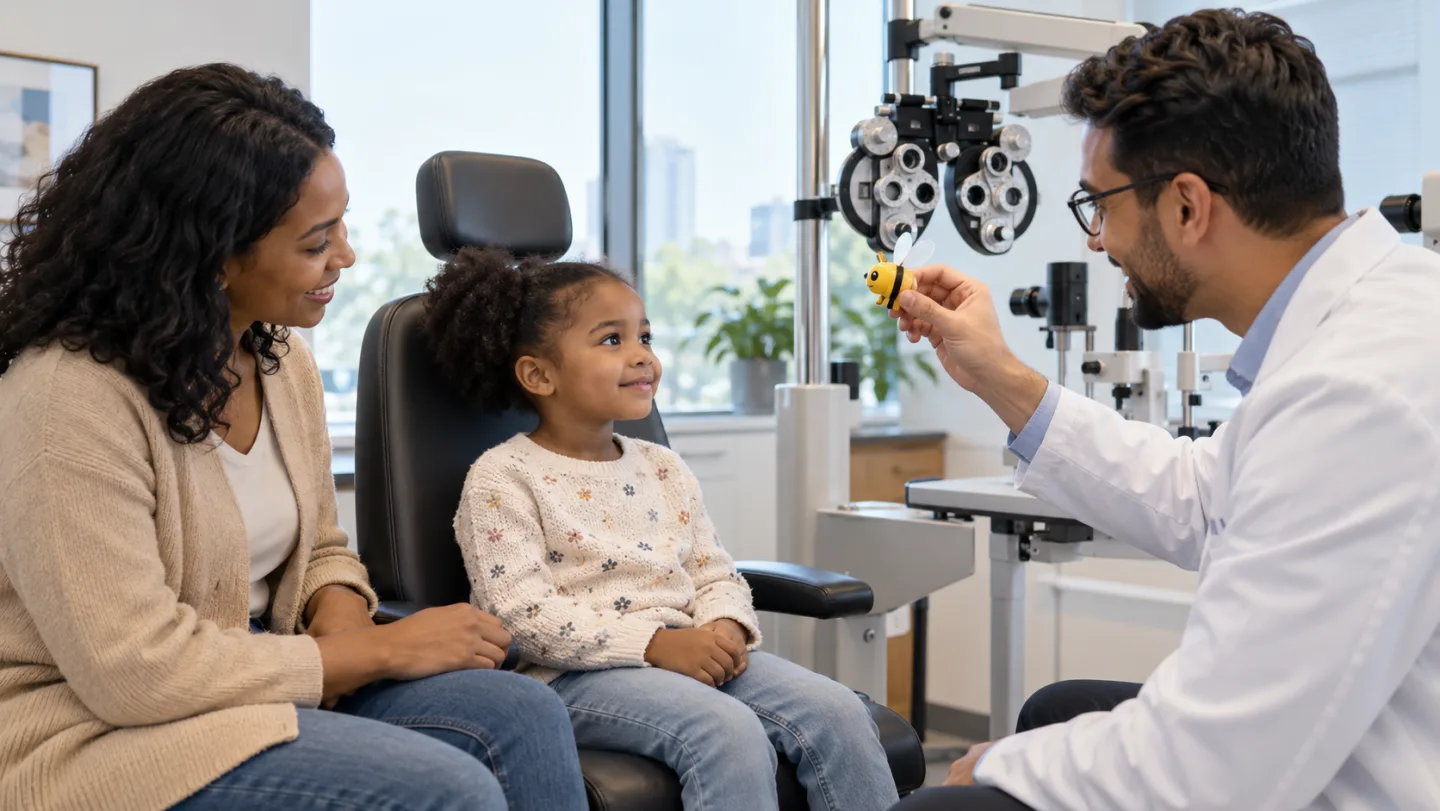
You notice it in a photograph first: one eye seems to point inward while the other looks at the camera. Or perhaps an eye drifts outward when your child is tired, then appears straight again when you call their name. Because the change comes and goes, it can be difficult to know whether to arrange an appointment or wait for a clearer pattern.
Strabismus means the eyes are not aligned with each other. It can be constant or intermittent, obvious or subtle, and present at different viewing distances. An examination is the way to determine what is happening and whether vision development is being affected. For families concerned about childhood strabismus in North York, the most useful first step is to describe the observation and arrange an assessment rather than attempting to diagnose it from pictures alone.
The American Association for Pediatric Ophthalmology and Strabismus overview of strabismus explains the main alignment patterns. This article focuses on the practical questions that follow: what to record, what the examination may involve, and how to make sense of a treatment plan.
Direction is only one part of the description
An inward eye turn is called esotropia; an outward turn is called exotropia. Eyes can also differ vertically. The clinician will consider more than direction, including which eye turns, how often it happens, whether glasses change it, and whether the child can use the eyes together.
That is why two children described as having “a turned eye” may receive different recommendations. One may need a prescription that reduces focusing effort. Another may require monitoring of intermittent control, treatment for weaker vision, or assessment by a paediatric ophthalmologist.
Try to avoid comparing your child’s plan with a relative’s operation or a friend’s glasses. Similar appearance does not establish the same cause. Ask the provider to explain the specific pattern found in your child and the purpose of the next step. A clear diagnosis should make the plan more understandable, even if it takes more than one visit to complete the assessment.
Sometimes the eyes only appear to be crossed
Facial features, including a broad nasal bridge and folds of skin near the inner corners of the eyes, can make aligned eyes look crossed. This appearance is called pseudostrabismus. Photographs taken from an angle can make the impression more noticeable.
The important point is that appearance alone cannot reliably distinguish pseudostrabismus from a true turn. An eye-care professional checks alignment using appropriate examination techniques. The AAPOS explanation of pseudostrabismus describes why the two can look similar to families.
If a previous visit found pseudostrabismus but you later notice a different pattern, arrange another assessment rather than assuming the earlier conclusion covers every future observation. Save a few representative photographs if they help show the change, but do not spend days taking repeated flash pictures or trying to create the effect. Ordinary observations are enough to start the conversation.
What parents can record before the appointment
A concise history can reveal patterns that are not obvious during a short visit. Note when you first noticed the turn, whether it appears inward or outward, whether the same eye is involved, and what the child was doing at the time.
Useful contexts include looking far away, reading, becoming tired, recovering from illness, or stepping into bright light. Also note whether the child closes one eye, tilts their head, complains of double vision, or says that things look different. These details should be shared without repeatedly asking the child to demonstrate the problem.
If you have a brief video that naturally captures the concern, bring it. A child whose eyes look aligned in the examination room may still have intermittent symptoms at home. The recording supports the history; it does not replace testing. Include existing prescriptions and information about childhood eye conditions in the family, even if you are unsure of the exact diagnosis.
Why glasses can change an inward turn
Some inward turns are linked to the effort needed to focus, particularly in children with significant farsightedness. Correcting the prescription can reduce that effort and improve alignment. This pattern is known as accommodative esotropia.
The AAPOS guide to accommodative esotropia explains the role of glasses and why an eye may still cross when the glasses are removed. Seeing the turn without the glasses does not automatically mean the treatment has failed or the glasses have made the eyes weaker.
Ask how the prescription should be worn and when the response will be checked. If the frame slides down during reading or the child looks over the lenses, a fitting adjustment may be needed. When different adults supervise the child, make sure they all understand that the glasses have an alignment role as well as a clarity role. Removing them for long periods because the child “seems to see fine” may undermine the plan.
An outward drift can vary during the day
Intermittent exotropia may be more noticeable when a child is tired, unwell, or looking into the distance. Some children close one eye in bright sunlight. The eyes can appear straight for much of the day and drift only in particular situations.
The AAPOS exotropia resource discusses how frequency, symptoms, and binocular function influence management. The clinician is interested in how well the child controls the alignment, not simply whether one photograph shows a drift.
At home, report meaningful changes rather than trying to assign a score. “It used to happen briefly after dinner, and now I notice it several times during ordinary play” is useful information. Avoid repeatedly telling a child to straighten their eye. A visible drift is not a deliberate habit, and reminders do not substitute for a clinical plan.
Eye alignment and amblyopia need separate attention
If the brain consistently favours one eye during childhood, the other eye may not develop normal visual acuity. This reduced development is called amblyopia. A child with strabismus may need treatment for amblyopia as well as treatment or monitoring of alignment.
Patching, when prescribed, usually has a specific visual-development goal. It should not be assumed to permanently straighten every type of eye turn. Likewise, straightening the eyes does not automatically eliminate an existing difference in vision.
Ask which result each part of treatment is intended to improve. Is the current priority equalizing visual acuity, improving alignment, supporting the eyes working together, or addressing more than one issue? Our amblyopia guide explains the distinction and the daily routines that may be involved. Keeping these goals separate helps families understand why glasses or patching might continue even after alignment looks better.
The examination includes more than a vision chart
Testing may involve covering each eye in turn, observing fixation, measuring alignment at different distances, and assessing eye movements. Age-appropriate tasks can help evaluate depth perception and the ability to use both eyes together. The clinician also checks the health of the eyes and the prescription.
Drops may be used to relax focusing during the prescription assessment. Tell the clinic if your child has particular sensory needs, becomes distressed by unfamiliar equipment, or needs extra time to communicate. A familiar toy, a simple explanation, and realistic expectations can make the visit easier.
Try not to rehearse answers or encourage guessing during testing. The purpose is to understand what the child actually sees. If the clinician asks you to avoid helping with a task, that is part of making the result reliable, not a criticism of your involvement. You can support your child by remaining calm and allowing the examiner to guide the activity.
When a specialist referral becomes part of care
An optometrist may identify an alignment problem and recommend paediatric ophthalmology assessment. The specialist can evaluate treatment options, investigate causes when necessary, and discuss whether surgery or another intervention is appropriate.
A referral is not a guarantee that an operation will be needed. It is an opportunity to establish the right plan with the relevant expertise. Bring the referral information, previous measurements, glasses, and any treatment instructions. If you have already seen another specialist, sharing those records can prevent important details from being lost between visits.
Before leaving any appointment, confirm who is responsible for each part of follow-up. Families can otherwise assume the specialist is checking the prescription while the primary eye-care provider assumes the opposite. Knowing which clinic to contact for broken glasses, a patching question, or a change in alignment makes ongoing care less confusing.
Making sense of a surgery discussion
Eye muscle surgery changes the position or action of muscles that move the eyes. The recommendation depends on the diagnosis and the goals for that child. It is not simply a cosmetic choice, and the decision cannot be reduced to whether a photograph looks better.
If surgery is discussed, ask what improvement is expected, what uncertainties remain, and whether glasses or amblyopia treatment will still be needed. Ask about recovery, follow-up, and the possibility of additional treatment later. The AAPOS infantile esotropia guide describes one condition in which surgery commonly forms part of management; other alignment patterns have different considerations.
Write down your child’s ordinary activities before the consultation. School, swimming, sports, music lessons, and travel plans can all raise practical recovery questions. The surgical team should provide instructions tailored to the procedure rather than leaving you to piece together advice from unrelated experiences online.
Supporting confidence without making the eyes the focus
Children may notice adults repeatedly looking at their eyes or discussing photographs. Keep conversations factual and kind. Explain that the appointment checks how the eyes see and work together, without describing an eye as bad, broken, or something the child should be able to control.
If a child wears glasses or has a treatment routine at school, share the relevant instructions with staff. Give the child a short explanation they can use if classmates ask. Address teasing promptly and avoid making cooperation with treatment a measure of character.
At the same time, do not promise that a treatment will solve every challenge in sport, reading, or confidence. Ask the clinician what functional changes are realistic for the particular diagnosis. A clear-eyed discussion of benefits is more reassuring than a sweeping promise that every difficulty will disappear once the eyes look straighter.
Which changes should not wait for a routine visit?
A newly developed or rapidly changing eye turn deserves prompt assessment, especially if it comes with double vision, headache, vomiting, weakness, unusual walking, a drooping eyelid, or a change in pupil size. Seek emergency care for severe or sudden neurological symptoms. A painful eye or sudden loss of vision also needs urgent attention.
For infants, a constant eye turn is a reason for professional evaluation rather than waiting for the child to grow out of it. The AAPOS esotropia information distinguishes occasional early infant alignment variability from concerning persistent crossing.
For a longstanding, already assessed pattern, follow the recommended schedule and call sooner if the pattern changes. Do not postpone a new concern simply because a regular appointment is several months away. When calling, describe the onset and accompanying symptoms before asking about availability.
Arranging an assessment in North York
Optima Eye Care provides children’s eye examinations and can help identify when further assessment is appropriate. Call (416) 497-3705 or request an appointment for a non-emergency concern. The clinic is at 105 Gordon Baker Road, Suite 101, in North York.
Bring a few useful observations, the child’s current glasses, and any earlier eye-care records. You do not need a perfect photograph or a confident medical label before asking for help. A description such as “the left eye sometimes drifts outward after school” is a sensible starting point.
The goal is to understand how your child’s eyes see and work together, then choose follow-up that fits those findings. Appearance matters, but the broader picture includes visual development, comfort, daily function, and a treatment routine the family understands.