

Eye Care Resources
Why a Children's Eye Exam Before School Can Make Learning Easier
November 20, 2025
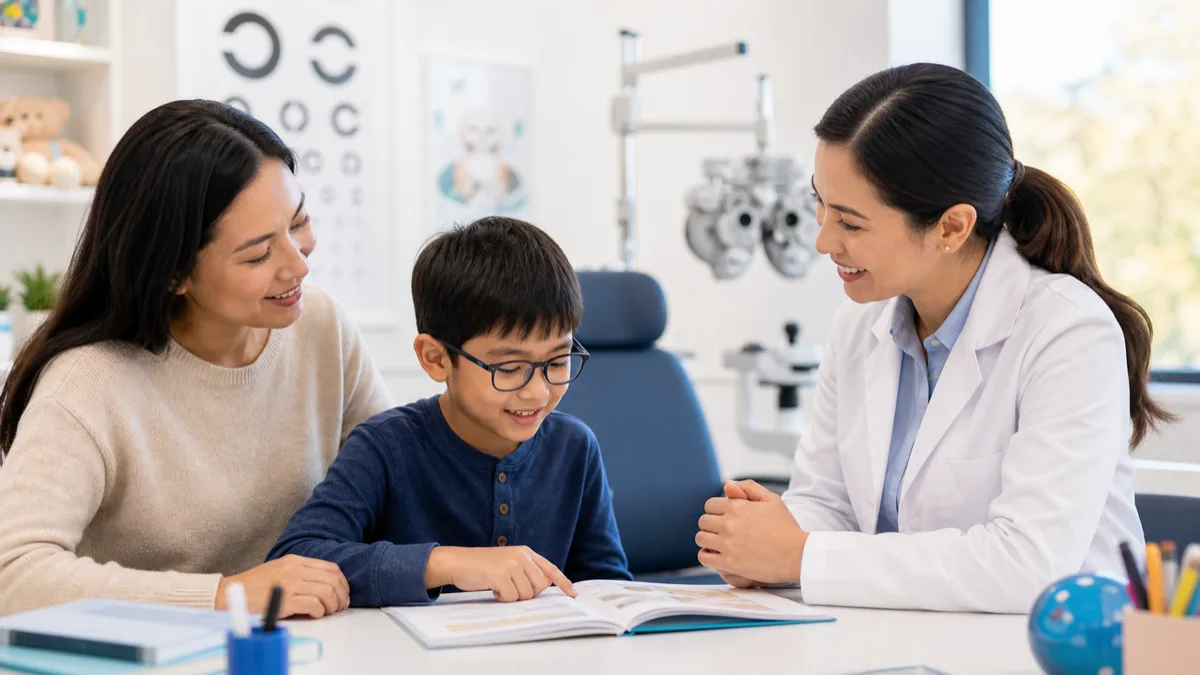
Children rely on vision for reading, writing, sports, screens, social cues, and classroom learning. Yet children do not always know how to explain a vision problem. A child who sees blurry letters on the board may assume everyone sees the same way. A child who loses place while reading may not say, “My eyes are having trouble teaming.” Instead, parents may notice avoidance, frustration, headaches, short attention span, or a sudden dislike of schoolwork.
A children’s eye exam before school can help identify vision concerns early, before they affect confidence and learning. It is not only about whether a child needs glasses. A comprehensive exam can assess prescription, eye coordination, focusing, eye health, and signs of conditions such as myopia, amblyopia, or strabismus.
At Optima Eye Care in North York, pediatric eye care is approached with patience and clear communication. The goal is to help children feel comfortable while giving parents practical information about their child’s vision.
School screenings are helpful, but limited
School vision screenings can be useful because they may identify children who need further care. However, a screening is not the same as a comprehensive eye exam. Screenings often focus on distance vision and may miss focusing problems, eye teaming issues, early prescription changes, or eye health concerns.
A child can pass a basic screening and still struggle with reading, near work, or visual comfort. Some children compensate by squinting, sitting close, tilting the head, or avoiding tasks. Others may have one eye doing more work than the other, which is not always obvious without a full exam.
Parents should think of screenings as a starting point, not a final answer. If your child has symptoms, a family history of eye problems, or school difficulties, book a comprehensive exam even if a screening seemed normal.
Signs your child may need an eye exam
Children may not complain clearly, but their behaviour can offer clues. Watch for squinting, sitting very close to the television, holding books or screens close, covering one eye, rubbing the eyes, frequent blinking, head tilting, headaches, watery eyes, light sensitivity, or trouble copying from the board.
Reading-related signs can include losing place, skipping words, using a finger to track, avoiding reading, short attention span, or saying words move on the page. Some children become frustrated because they are working harder than classmates to do the same task.
Sports and outdoor activities can also reveal vision problems. A child may misjudge distance, avoid catching, struggle to see the ball, or lose confidence in fast-moving games. Vision is not the only factor in school or sports performance, but it is important enough to check.
Myopia is becoming more common
Myopia, or nearsightedness, causes distance objects to appear blurry. A child with myopia may see books and tablets clearly but struggle with the classroom board, road signs, or a coach across the field. Myopia often begins during school years and may progress as a child grows.
If one or both parents are nearsighted, a child may have a higher risk. Visual environment may also play a role, including long periods of near work and limited outdoor time. Myopia management focuses on monitoring progression and considering strategies that may help slow the rate of change when appropriate.
Regular eye exams help track whether a prescription is changing quickly. If a child needs stronger glasses year after year, your optometrist may discuss myopia management options and lifestyle habits that support visual development.
Focusing and eye teaming
Clear vision is not only about eyesight sharpness. The eyes also need to focus and work together. When reading, the eyes converge toward the page and maintain focus at near distance. If focusing or eye teaming is inefficient, a child may experience headaches, double vision, blur, fatigue, or difficulty sustaining attention.
These issues can be mistaken for lack of interest. A child may avoid reading because it is uncomfortable, not because they are unwilling. They may do well verbally but struggle with written tasks. They may read for a few minutes and then drift away.
A comprehensive eye exam can assess how the eyes work together and whether additional evaluation or treatment is needed. Not every reading difficulty is visual, but ruling out vision problems is a smart step.
Amblyopia and strabismus
Amblyopia, sometimes called lazy eye, occurs when one eye does not develop normal vision, often because of unequal prescription, eye turn, or visual deprivation. Strabismus is an eye alignment problem where one eye may turn inward, outward, upward, or downward. These conditions are best addressed early.
Parents may notice an eye turn, but not always. Some alignment issues are subtle or intermittent. A child may close one eye in bright light, tilt the head, or show poor depth perception. In other cases, there may be no obvious sign at home.
Early detection matters because treatment options can be more effective when the visual system is still developing. This is one reason routine pediatric eye care is valuable even when a child seems to see well.
What happens during a children’s eye exam?
A pediatric eye exam is adapted to the child’s age and comfort level. Younger children do not need to read letters perfectly to have their vision assessed. Optometrists can use pictures, matching, lights, lenses, and age-appropriate techniques to gather information.
The exam may include questions about birth history, development, family history, school performance, screen habits, symptoms, and previous eye care. The optometrist checks visual acuity, prescription, eye alignment, focusing, eye movements, and eye health. Depending on findings, dilation or additional tests may be recommended.
Parents should bring any current glasses, notes from teachers, and a list of concerns. If your child has headaches, specify when they happen. If reading is hard, describe what you see at home. These details help connect exam findings to daily life.
Helping children feel comfortable
Some children feel nervous before an eye exam. Parents can help by explaining that the visit is not a test they can fail. The optometrist is checking how the eyes work and helping them see comfortably. Avoid telling children that drops or tests will be scary. Instead, keep the explanation simple and positive.
Bring glasses if the child already wears them. If your child is shy, let them know it is okay to take their time. A patient, child-friendly approach can make a big difference in cooperation and confidence.
After the exam, explain results in a way your child can understand. If glasses are needed, frame them as helpful tools rather than a problem. Letting children participate in frame choice can increase excitement and comfort.
Screen time and outdoor time
Parents often ask how screens affect children’s eyes. Screens can contribute to eye strain, reduced blinking, and long periods of near focus. They may also crowd out outdoor time. The relationship between screen use and myopia is complex, but balanced visual habits are sensible.
Encourage regular breaks from close work. Children should look up, move around, and spend time outdoors when possible. Good lighting, reasonable screen distance, and avoiding screens very close to bedtime may also support comfort.
The goal is not to create guilt. Screens are part of school and life. The goal is to build habits that protect comfort and give the eyes variety.
Glasses and confidence
Some parents worry that glasses will make a child self-conscious. Many children adapt quickly, especially when frames fit well and they are involved in choosing them. Clear vision can improve confidence, participation, and comfort.
Frames should fit securely, especially for active children. They should not slide constantly, pinch, or sit crooked. Durable materials and proper adjustments matter. Children grow, so glasses may need periodic fitting checks.
If a child resists wearing glasses, ask why. The frame may be uncomfortable, the prescription may need adjustment, or the child may need encouragement. Consistent wear is easier when glasses feel good and make a noticeable difference.
When to book
Book an eye exam before school if your child has never had a comprehensive exam, has symptoms, has a family history of eye conditions, struggles with reading, sits close to screens, squints, complains of headaches, or has a known prescription. Children with myopia may need regular monitoring to track progression.
Also book if a teacher raises concerns. Teachers often notice board copying issues, reading fatigue, or attention changes during visual tasks. Their observations can be helpful.
If your child has sudden vision changes, eye pain, injury, redness with light sensitivity, or a new eye turn, seek care promptly rather than waiting for a routine appointment.
The bottom line
A children’s eye exam before school can support learning, comfort, and confidence. Vision problems are not always obvious, and children may not know how to describe them. A comprehensive exam gives parents clearer answers than a screening alone.
Optima Eye Care provides pediatric eye care and myopia management in Toronto and North York. If your child is starting school, struggling with reading, or showing signs of vision difficulty, booking an exam can be a practical step toward a smoother year.