

Eye Care Resources
Blepharitis in North York: Why Eyelids Feel Crusty, Burning, and Dry
June 18, 2026
Your lashes are stuck together when you wake up. The eyelid edges look red, the eyes burn by late afternoon, and adding more lubricating drops never fully settles the irritation. On other days, the eyes water instead of feeling dry. This cluster of symptoms often points toward blepharitis—inflammation along the eyelid margins—but several different processes can create the same general appearance.
Blepharitis is common and usually manageable, yet it tends to behave more like a recurring condition than a one-time infection. It may affect the skin and lash follicles at the front of the lid, the oil-producing glands along the inner lid margin, or both. Dandruff, rosacea, bacterial imbalance, Demodex mites, allergies, contact-lens wear, and meibomian gland dysfunction can each influence the pattern.
The right routine depends on what is actually inflamed. A warm compress may help thick eyelid oil flow more normally, while a targeted lid cleanser may remove debris at the lashes. Prescription treatment may be appropriate in another case. Harsh scrubbing, excessive heat, or random online remedies can make already sensitive eyelid skin and eyes worse. A comprehensive eye exam can separate routine blepharitis from allergy, infection, dermatitis, dry eye, and corneal disease for North York patients.
Blepharitis affects the working edge of the eyelid
The eyelid margin is more complicated than it appears in a mirror. Eyelashes emerge from follicles near the front edge. Behind them, rows of meibomian glands release a thin layer of oil each time you blink. That oil slows evaporation of the watery tears and helps the tear film spread smoothly over the cornea.
Inflammation at the lash line is commonly called anterior blepharitis. Flakes, crusts, oily scales, redness, and irritated lash follicles may be most noticeable. Posterior blepharitis involves the meibomian gland openings farther back along the lid margin. The oil may become thick, cloudy, or difficult to express, and the gland openings may look capped.
Many patients have features of both. The categories describe where the strongest findings are, not two completely separate diseases. The surface of the eye, eyelid skin, lashes, tear film, and oil glands influence one another.
Symptoms often change from morning to evening
Blepharitis can cause:
- crusts or flakes around the base of the eyelashes;
- eyelids that stick together on waking;
- red, swollen, itchy, or tender lid margins;
- burning, stinging, or a sandy sensation;
- watery eyes despite a feeling of dryness;
- foamy or bubbly tears;
- fluctuating blur that clears temporarily after blinking;
- light sensitivity;
- more frequent blinking;
- recurrent styes or chalazia; or
- eyelashes that fall out or grow in an abnormal direction.
Morning crusting can be prominent because debris accumulates while the eyes are closed. Posterior blepharitis and evaporative dry eye may feel worse after screen use, reading, driving, or time in heated and air-conditioned rooms because blinking becomes less complete and tears evaporate faster.
Symptoms do not always match visible severity. One person may have obvious lid-margin changes with little discomfort, while another has intense burning despite subtle findings. That is why a close examination is more reliable than judging the condition from a bathroom mirror or photograph.
Why dry eyes can also water
Healthy tears have an oily outer layer, a watery middle portion, and components from the ocular surface that help the film adhere and spread. When meibomian oil is insufficient or poor in quality, tears can evaporate too quickly and develop dry spots between blinks.
The eye may respond to irritation by releasing a sudden flood of watery reflex tears. These tears can spill down the cheeks without forming a stable protective film. Blepharitis can therefore make an eye feel dry and watery at the same time.
Lubricating drops may provide temporary comfort, but drops alone do not necessarily correct blocked glands, lash debris, abnormal blinking, or associated skin inflammation. Conversely, not every dry eye requires aggressive eyelid treatment. The plan should target the findings rather than assuming that all burning has one cause.
Anterior blepharitis has several patterns
Bacteria normally live on eyelid skin. Problems can arise when the balance changes, debris accumulates, or the immune response becomes excessive. Some anterior blepharitis produces firm sleeves or crusts around the lashes, eyelid redness, and small surface complications near the edge of the cornea.
Seborrheic blepharitis is associated with oily flakes and may occur alongside dandruff affecting the scalp, eyebrows, ears, or sides of the nose. Treating the scalp or facial skin condition can be part of controlling the eyelids.
Allergic eyelid disease can also scale and itch but may involve more of the surrounding skin. Cosmetics, nail products transferred by the fingers, hair dye, fragrance, preservatives, and skin-care ingredients can all trigger contact dermatitis. Simply cleaning harder will not solve an exposure-related problem and may damage the skin barrier further.
Posterior blepharitis and meibomian gland dysfunction
Meibomian gland dysfunction, often shortened to MGD, occurs when the eyelid oil glands do not release the right quantity or quality of oil. Gland openings can plug, secretions can thicken, and long-standing obstruction may allow parts of a gland to shrink or stop functioning.
The lid margin may look red or irregular, with visible small blood vessels and capped openings. The tears may break up quickly, creating blur that changes from one blink to the next. Contact lenses can become less comfortable as the day continues.
Rosacea is an important association. A person may have facial flushing, sensitive skin, bumps, or visible facial blood vessels, but ocular rosacea can sometimes be significant even when facial signs are modest. Persistent lid-margin inflammation, recurrent styes, burning, and corneal irritation may prompt coordinated care with a family doctor or dermatologist.
Not every blocked-looking gland needs forceful squeezing. Excess pressure can bruise the lid and inflame the tissue. A clinician can assess whether warmth, gentle massage, medication, or an in-office procedure is reasonable and show the direction and amount of pressure if massage is advised.
Demodex mites can produce distinctive lash debris
Demodex are microscopic mites that can live in eyelash follicles and oil glands. Small numbers may be present without symptoms, but overpopulation can contribute to blepharitis. Cylindrical sleeves of waxy debris encircling the lash base, persistent itch, lash abnormalities, or inflammation that has not responded to a general routine may raise suspicion.
Demodex cannot be confirmed merely because the eyes itch at night or because a social-media post looks similar. The clinician examines the lash roots under magnification and considers other causes.
Do not place undiluted tea tree oil, essential oils, alcohol, vinegar, or household disinfectants on the eyelids. These can cause dermatitis, chemical injury, and corneal damage. When Demodex treatment is needed, use a product and schedule recommended for the diagnosed pattern. Prescription and professionally formulated options differ from concentrated do-it-yourself preparations.
Blepharitis is not automatically an eye infection
Blepharitis is inflammation at the lid margin and is usually chronic. Conjunctivitis affects the thin membrane over the white of the eye and inside the eyelids. A stye is a localized, tender inflamed or infected gland. Preseptal or orbital cellulitis causes more diffuse tissue infection and needs medical care.
These conditions can overlap, but they should not be treated as interchangeable. Thick discharge sealing the eye, rapidly increasing swelling, fever, pain with eye movement, a protruding eye, or reduced vision is not a routine blepharitis flare.
Blepharitis itself is generally not contagious. If a viral or bacterial conjunctivitis is also present, hygiene and transmission advice may be different. Avoid sharing towels, eye makeup, drops, or contact-lens supplies until the cause is clear.
What the eye examination looks for
An optometrist examines the lids and lashes under magnification while also checking the ocular surface. The assessment may include:
- visual acuity and current prescription;
- distribution and type of lash debris;
- missing, broken, or misdirected eyelashes;
- redness, swelling, scaling, and small blood vessels at the lid margin;
- meibomian gland openings and the quality of expressed oil;
- blink completeness and tear-film stability;
- staining of dry or damaged areas on the cornea and conjunctiva;
- signs of allergy, infection, rosacea, or contact dermatitis;
- contact-lens fit and deposits; and
- styes, chalazia, or any eyelid lesion that needs closer investigation.
Some clinics can photograph the oil glands with infrared meibography. The images show gland structure beneath the lid and may help document loss or distortion, but they do not replace symptoms and examination findings. Cultures, lash sampling, or medical referral are reserved for selected or atypical cases rather than every routine presentation.
A warm compress should feel comfortably warm, never hot
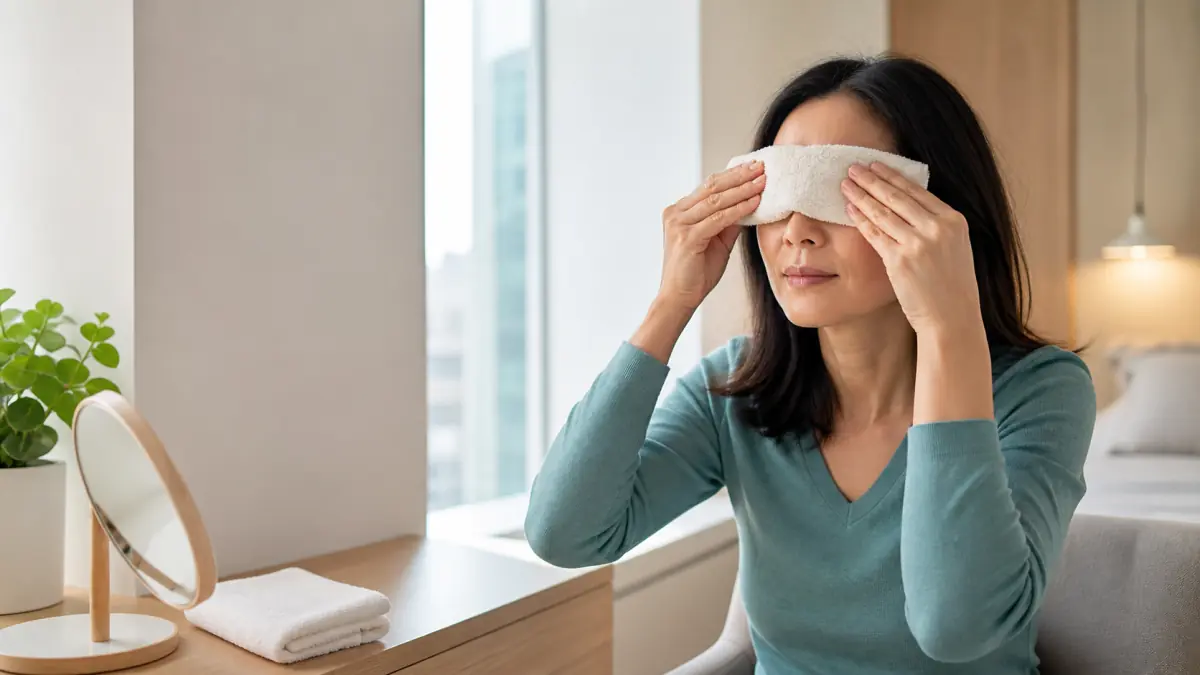
Warmth can soften thick oil and loosen crusts, but eyelid skin is thin and burns easily. Test a compress against the inside of your wrist before bringing it near closed eyes. It should feel pleasantly warm, not sharp, stinging, or difficult to tolerate.
A basic method is:
- Wash and dry your hands.
- Use a clean, soft washcloth or a reusable eye mask recommended for this purpose.
- Warm it according to the product instructions or with clean warm water.
- Close both eyes and rest the compress gently over the lids without pressing on the eyeballs.
- Maintain comfortable warmth for the duration advised by your eye-care professional, reheating a washcloth safely if necessary.
- Remove it immediately if the skin becomes painful, very red, or numb.
The correct schedule varies. More heat and longer sessions are not automatically better. People with reduced facial sensation, neuropathy, cognitive impairment, or difficulty judging temperature need extra caution and may require assistance or a different plan.
Do not put a very hot wet cloth, microwaved kitchen object, heated spoon, rice-filled sock, or chemical hand warmer over the eyes. Reusable masks can develop hot spots if overheated. Follow their instructions exactly, keep them clean, and inspect them for damage.
Lid cleaning should remove debris without scouring the skin
After warmth loosens material, cleansing may help clear the lash line. The best product and method depend on anterior debris, skin sensitivity, allergy, contact-lens use, and any prescribed medication.
With clean hands and closed eyes, apply the clinician-recommended wipe, pad, foam, spray, or diluted cleanser along the lash margin. Use light strokes rather than scraping back and forth. Avoid pushing debris into the eye and do not reuse a pad between eyes if infection is a concern. Rinse if the product directions require it.
Baby shampoo is often mentioned in older instructions because it is accessible, but “tear-free” does not mean ideal for every ocular surface. Shampoo can irritate sensitive skin and may disrupt the tear film. Commercial eyelid cleansers also differ in ingredients and are not universally tolerated. Ask which option matches your findings rather than increasing concentration when a product stings.
Use a clean towel and avoid sharing it. Launder reusable cloths after use and let them dry completely. Replace expired wipes and do not transfer products into unlabelled containers.
Artificial tears and daily habits can support the tear film
Lubricating drops can reduce friction and dilute irritants when dry eye accompanies blepharitis. A preservative-free option may be preferred when drops are needed frequently, but the formulation still depends on the tear-film problem and contact-lens status.
Blinking matters. During screen work, the blink rate often falls and the lids may not close completely. Position the monitor slightly below eye level, take brief visual breaks, and occasionally make several gentle complete blinks. Avoid squeezing the lids tightly because force is not needed to spread tears.
Air directed from a car vent, fan, or heating register increases evaporation. Redirect the airflow and consider a humidifier in a dry room, keeping the device clean according to its instructions. Hydration supports general health, but simply drinking extreme amounts of water does not clear blocked eyelid glands.
Omega-3 supplements are sometimes discussed for meibomian gland dysfunction, yet results are mixed and supplements can interact with medicines or medical conditions. Ask your doctor or pharmacist before starting them, particularly if you take blood thinners, have a bleeding disorder, or are preparing for surgery.
Medication is chosen for a specific reason
An eye-care provider may prescribe an antibiotic ointment or drops when bacterial involvement is significant. Oral antibiotics are sometimes used for selected posterior blepharitis or ocular rosacea because of both antimicrobial and anti-inflammatory effects. Dose, duration, pregnancy considerations, sun sensitivity, stomach effects, and medication interactions require individualized advice.
Steroid eye drops or ointments may reduce inflammation in selected flares, but they are not casual redness relievers. Unsupervised use can raise eye pressure, worsen an infection, delay healing, or contribute to cataract. Combination antibiotic-steroid products have the same need for examination and monitoring.
Dry-eye prescriptions, allergy therapy, or treatment for facial rosacea and scalp dandruff may be part of the plan. Medication left over from a previous episode should not be restarted automatically, because similar symptoms can come from a different cause the next time.
In-office treatments are not all the same
Some clinics offer controlled heat and gland expression, light-based therapies, mechanical cleaning of the lid margin, or other procedures for meibomian gland dysfunction and blepharitis. These treatments use different mechanisms and have different evidence, contraindications, costs, and maintenance needs.
An in-office procedure does not eliminate the need for diagnosis or all home care. It may be useful for a carefully selected patient when gland obstruction persists despite a reasonable routine, but no device can restore every gland or guarantee permanent relief. Ask what finding the procedure is intended to treat, what alternatives exist, how improvement will be measured, and what follow-up is required.
Makeup and skin-care products can perpetuate irritation
During an active flare, eye makeup can trap debris, make cleaning difficult, and introduce additional irritants. A clinician may recommend pausing mascara, eyeliner, false lashes, or lash-growth products until the surface settles.
Discard mascara and liquid eyeliner used during a suspected infection. Do not add water or saliva to a drying cosmetic. Keep liner outside the meibomian gland openings rather than applying it along the inner “waterline.” Remove makeup gently before sleep and avoid pulling repeatedly at the lashes.
New eye cream, sunscreen, retinoid, fragrance, makeup remover, nail product, or lash adhesive can trigger eyelid dermatitis even if it is applied away from the eyes. Bring a list or photographs of recently introduced products to the appointment. Stopping several products at once may calm irritation, but a dermatologist may be needed to identify a specific allergy.
Contact lenses may need a temporary pause
Blepharitis can make contact lenses feel dry, become coated, or move unpredictably. A red or painful eye in a lens wearer also raises concern for corneal infection, which can progress quickly and should not be attributed to blepharitis without examination.
Remove lenses and seek prompt guidance if you develop pain, light sensitivity, discharge, sudden blur, or a focal white spot on the cornea. Do not put the lens back in to “test” the eye. Keep the lens, case, and solution available in case the clinician wants information about them, but do not delay care to find supplies.
Once routine wear resumes, follow replacement schedules, use only approved fresh solution, clean the case, and never top off old solution. Do not sleep, shower, or swim in lenses unless specifically directed. Daily disposable lenses reduce some cleaning variables but do not prevent eyelid inflammation.
Recurring styes may be a clue
A stye develops when an eyelid gland becomes acutely inflamed or infected. A chalazion is a more chronic blocked-gland lump. Repeated bumps can be associated with blepharitis, meibomian gland dysfunction, rosacea, or rubbing.
Managing the background lid condition may reduce recurrence, but every lump should not be assumed to be the same. A lesion that persists, returns in exactly the same place, causes lash loss, bleeds, ulcerates, or has an unusual colour or shape needs examination and sometimes referral or biopsy.
Do not pop, lance, or squeeze an eyelid lump. This can spread inflammation and damage delicate tissue. Our detailed stye and chalazion guide explains safer care and warning signs.
When blepharitis symptoms need prompt care
Arrange urgent or same-day assessment for:
- moderate or severe eye pain rather than surface irritation;
- reduced or suddenly blurred vision that does not clear with blinking;
- marked light sensitivity;
- a white or grey spot on the cornea;
- thick discharge, rapidly increasing redness, or significant swelling;
- fever, severe headache, pain with eye movement, double vision, or a protruding eye;
- chemical exposure or eye injury;
- symptoms in a contact-lens wearer, especially pain or light sensitivity; or
- an eyelid that is swollen shut or an eye that cannot close fully.
Call 911 for sudden vision loss accompanied by weakness, facial droop, speech difficulty, severe neurological symptoms, or another suspected medical emergency. Optima Eye Care provides emergency eye-care guidance, but an online appointment is not a substitute for emergency-department care when severe warning signs are present.
Book a non-emergency examination when a careful home routine has not improved symptoms, flares repeatedly return, contact-lens wear is becoming difficult, lashes are falling out or turning inward, or the diagnosis has never been confirmed.
Long-term control is more realistic than a quick cure
Blepharitis often improves and flares rather than disappearing forever. Once symptoms settle, the maintenance routine may be less intensive, but stopping everything at the first comfortable day can allow debris and gland obstruction to build again. Your clinician can explain which elements are for a short flare and which are suitable for maintenance.
Track comfort, morning crusting, wearing time, redness, and fluctuating blur rather than expecting the eyelids to look perfect at every moment. If the routine is too complicated to sustain, say so. A simpler consistent plan is usually more useful than an elaborate plan performed twice and abandoned.
Reassessment matters when the pattern changes. New pain, one-sided swelling, reduced vision, or a focal lesion should not be treated indefinitely with the old blepharitis routine.
Blepharitis care in North York
Crusty lashes, burning, watering, and unstable vision may come from anterior blepharitis, blocked meibomian glands, allergy, rosacea, Demodex, contact dermatitis, dry eye, or a combination. An eye examination identifies which structures are involved and checks whether the cornea is being affected.
Optima Eye Care can examine the eyelid margins, lashes, glands, tear film, cornea, contact lenses, and related skin findings for North York patients. The resulting plan may include safe warmth, a specific cleansing method, lubrication, changes to cosmetics or lens wear, prescription treatment, or referral when appropriate.
If eyelid irritation keeps returning despite self-care, request an appointment and bring the products, drops, contact lenses, and cosmetics you currently use. If the eye is painful, light-sensitive, markedly swollen, or losing vision, seek urgent care rather than waiting for a routine booking.